





What 'Vegan' Actually Guarantees
The term 'vegan' is a strict lifestyle and dietary identifier. A product labelled as vegan contains absolutely no animal products or by-products. This means no meat, poultry, fish, dairy, eggs, or honey. The definition also extends to substances used
in processing, such as gelatin (derived from animal bones) or certain clarifying agents. In India, the Food Safety and Standards Authority of India (FSSAI) regulates this claim, requiring products to be free from animal-origin ingredients to use an official vegan logo. The primary motivation behind veganism is often ethical, centred on animal welfare, but it also carries environmental and health considerations. However, a vegan label is not a guarantee of safety for allergy sufferers. A product can be 100% vegan but still be produced in a facility that handles allergens like milk or eggs, leading to potential cross-contamination.
The Flexibility of 'Plant-Based'
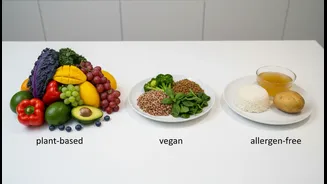
‘Plant-based’ is a broader and often more flexible term. While it sounds similar to vegan, it generally means that a food is made mostly from plants. Unlike the strict definition of vegan, some interpretations of 'plant-based' allow for small amounts of animal-derived ingredients. For instance, a 'plant-based' burger might use egg as a binding agent, or a 'meatless' meal could contain milk powder. The term often appeals to those looking to improve their health by eating more vegetables, grains, and legumes without committing to the strict avoidance of all animal products. Because there isn't a universally agreed-upon legal definition, 'plant-based' can be used more as a marketing term to highlight a product's primary ingredients. This ambiguity means consumers cannot assume a plant-based product is fully vegan or free from animal-derived allergens.
Understanding 'Allergen-Free'
This label is all about food safety. An 'allergen-free' or 'free-from' claim specifically refers to the absence of one or more of the major food allergens. These typically include milk, eggs, peanuts, tree nuts, soy, and wheat (gluten), among others. For a product to be labelled 'allergen-free', it must not only be formulated without that allergen but also be produced in a way that prevents cross-contamination. A vegan cookie, for example, is free of dairy and eggs, but it can be packed with peanuts or made with wheat flour, making it unsafe for someone with a nut or gluten allergy. Similarly, a plant-based item might be free of meat but contain soy or nuts. Confusing a vegan product for an allergen-free one can be dangerous, leading to serious allergic reactions.
Why These Distinctions Are Critical
Using these terms interchangeably poses significant risks. For the millions of people with severe food allergies, assuming a 'vegan' product is free from milk or eggs can lead to a medical emergency. Cross-contamination is a real concern in facilities that produce both vegan and non-vegan items. A label might say vegan, but a precautionary statement like 'may contain milk' indicates a risk that an allergy sufferer cannot ignore. For consumers making ethical choices, a 'plant-based' label might be misleading if the product still contains minor animal-derived ingredients. In India, the FSSAI's move to introduce a standardized vegan logo, effective from July 2027, aims to create more clarity and consumer trust. Ultimately, understanding these labels empowers you to make choices that truly align with your health needs, dietary goals, and personal values. Always read the full ingredient list and allergen warnings, no matter what the front of the package says.