





The Audacious Goal: A Flying Science Lab
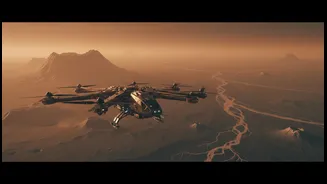
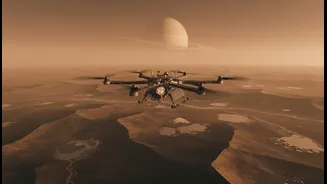
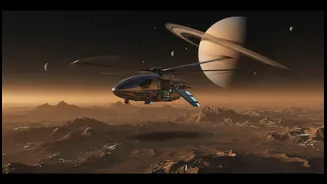
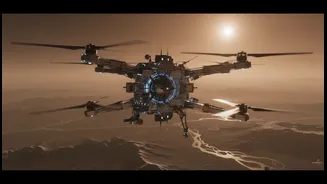
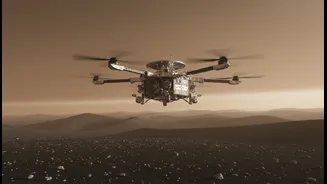
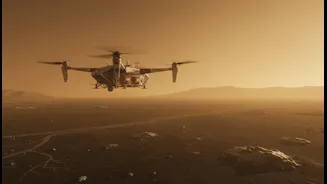
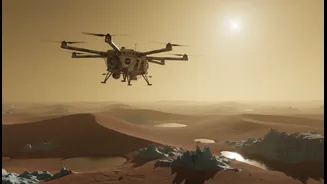
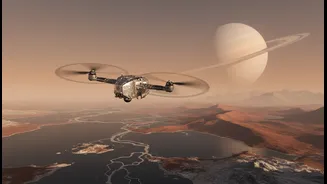
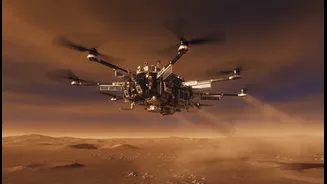
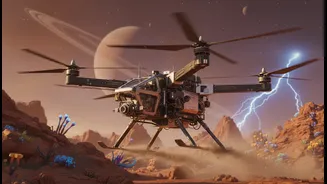
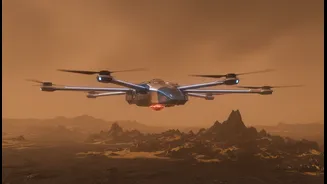
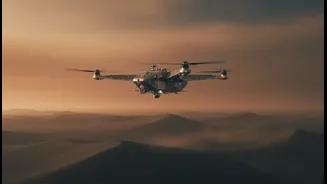
The Dragonfly mission is one of NASA's most ambitious projects. The goal is to send a rotorcraft lander to explore Titan, a moon with a dense atmosphere, frigid temperatures around minus 179 degrees Celsius, and landscapes of organic sand dunes and methane
rivers. Arriving in 2034, this drone will fly to dozens of locations to investigate prebiotic chemistry—the building blocks of life. For an aspiring engineer, the first lesson is in the mission's vision itself. Great engineering careers are built on tackling seemingly impossible challenges. Dragonfly isn't just an incremental improvement; it's a revolutionary approach to planetary exploration. The project teaches that a career in engineering isn't just about solving problems, but about having the audacity to define new, bolder problems to solve.
Simulating an Alien World on Earth
Before Dragonfly can fly on Titan, engineers must prove it can work without leaving Earth. This is where testing becomes the core of the engineering story. At NASA's Langley Research Center and the Johns Hopkins Applied Physics Laboratory (APL), teams use unique facilities to simulate Titan’s alien environment. One key facility is the Transonic Dynamics Tunnel, which can be filled with a heavy gas to replicate the high density of Titan's atmosphere, which is four times denser than Earth's. They have also built a large-scale 'Titan Chamber' to test components in the moon's cryogenic temperatures. For students, this highlights a critical career skill: rigorous simulation. Before a single piece of flight hardware is built, modern engineering relies on creating high-fidelity models and testing them relentlessly to predict performance and validate designs.
Failure, Iteration, and Redesign
The path to a final design is never a straight line. Early wind tunnel tests revealed potential issues with vibrations between the rotors. Instead of viewing this as a setback, the team used the data to innovate. They redesigned the rotors, changing them to a new configuration that mitigated the vibration issue. This process of testing, identifying flaws, and iterating is the essence of engineering. Recent vibration tests in mid-2026, where the lander's structure was suspended by bungee cords, were designed to see how vibrations from the rotors travel through the frame. The lesson for a young engineer is to embrace failure as data. A successful career isn't defined by getting everything right the first time, but by the systematic and creative process of refinement in response to challenges.
From Digital Models to Physical Hardware
As of July 2026, the Dragonfly mission is moving from blueprints to a tangible spacecraft. The primary structure, built from ultra-lightweight aluminum honeycomb panels, was delivered, and the team at APL began the integration and testing phase. This involves populating the frame with the 'nervous system'—the wiring harnesses, avionics, and instruments that will turn the structure into a functional science lab. Engineers recently performed crucial power-on tests for the Integrated Electronics Module, which acts as the rotorcraft's brain. This transition from digital design to physical assembly is a pivotal moment in any engineering project. It underscores the importance of not just theoretical knowledge, but also hands-on skills and an understanding of how complex systems come together in the real world.
Building Your Own Engineering Story
So, how can you apply these lessons? First, seek out ambitious projects, whether in university clubs, internships, or personal hobbies. Don’t just learn the theory; build something. Second, familiarize yourself with simulation and modeling software. Expertise in tools like computational fluid dynamics (CFD) is invaluable. Third, document your failures and your solutions. Being able to explain how you navigated a setback is more impressive than a flawless record. Finally, develop interdisciplinary knowledge. The Dragonfly team includes mechanical engineers, thermal engineers, software developers, and materials scientists, all collaborating to solve extreme challenges. The mission's success depends on this collaboration, just as a modern engineering career depends on the ability to work across different fields to achieve a common goal.