

Confirming the Key Dates for 2026
The main date for Krishna Janmashtami in 2026 is Friday, September 4. While the festival is on the 4th, the celebrations are centered around midnight, marking the moment of Krishna's birth. This means many rituals and darshan times extend into the early
hours of September 5. The day after, September 5, is celebrated as Nandotsav, commemorating the festivities in Krishna's childhood home. For planning purposes, consider September 4th and 5th as one extended celebration period.
Epicenter of Celebrations: Temple Timings
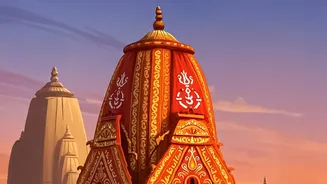
The heart of the festival is the Shri Krishna Janmabhoomi Temple complex in Mathura, the site revered as Krishna's exact birthplace. On Janmashtami, celebrations build towards the Nishita Puja, the midnight ritual, which in 2026 is expected around 11:56 PM on September 4 to 12:41 AM on September 5. The temple sees an elaborate 'Maha Abhishek' (ritual bath) of the deity at midnight. In nearby Vrindavan, the Banke Bihari Temple is another major hub. It uniquely performs its 'Mangla Aarti' only once a year on Janmashtami, around 3:30 AM, with special darshan opening around 2:00 AM after a private midnight abhishek. Be aware that temple schedules can be revised, so it's wise to confirm timings closer to the date.
Booking Accommodation and Travel
With millions of devotees flocking to the region, booking your stay well in advance is critical. Options range from budget guesthouses and ashrams to mid-range and luxury hotels. Try to book accommodations at least several weeks, if not months, ahead to secure a spot near the main temples. Mathura is well-connected by rail (Mathura Junction) and road via the Yamuna Expressway from Delhi. The nearest airports are in Agra (about 70 km away) and Delhi (about 160 km away). Given the immense festival rush, it's best to arrive at least a day before Janmashtami to settle in.
Navigating the Crowds and Local Transport
The crowds during Janmashtami are immense, and authorities implement significant traffic diversions. Expect numerous barricades and vehicle restrictions in the core temple zones. The best way to navigate locally is by using auto-rickshaws and e-rickshaws, which can get closer to the temples than private cars. It is advisable to park at designated outer lots and use shuttle services for the last mile. To avoid the heaviest rush, visit temples during the early morning or afternoon and be prepared for long queues and security checks. If traveling in a group, stick together, as it is easy to get separated.
Essential Safety and Practical Tips
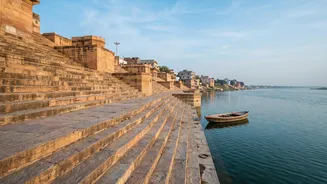
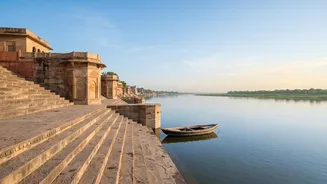
Personal safety is paramount. Keep your belongings like wallets and phones secure, especially in crowded areas like Banke Bihari Temple and the ghats. Dress modestly, covering shoulders and knees, to respect local customs and gain easy entry into temples. Women are advised to carry a scarf or dupatta. Carry bottled water to stay hydrated and be cautious about eating from street vendors to avoid getting sick. It's also wise to carry a basic medical kit. Police and volunteers are present to help, so don't hesitate to seek their assistance.
Immersing in the Festive Spirit
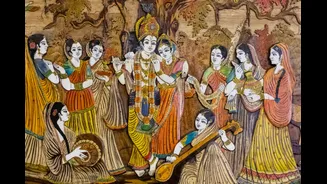
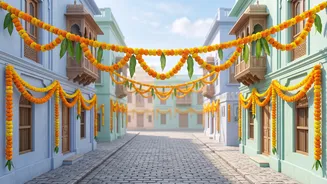
Beyond the main temple rituals, soak in the atmosphere. The entire Braj region is decorated, and the air is filled with the sounds of bhajans (devotional songs). Look out for 'Jhankis'—beautifully crafted displays depicting scenes from Krishna's life. On September 5, try to visit Gokul, where Nandotsav is celebrated with great fervor to mark the festivities at the home of Krishna's foster parents, Nanda and Yashoda. Also, don't miss the local Braj delicacies like pedas and laddoos.