







The Unavoidable New Reality
Ignoring artificial intelligence is not a viable strategy for any modern newsroom. AI tools are increasingly embedded in every stage of the journalistic process, from research and data analysis to content distribution. They offer the promise of radical
efficiency, freeing up journalists from repetitive tasks to focus on more in-depth reporting and analysis. Many major news organisations are already experimenting with AI to generate summaries, suggest headlines, and even create first-draft translations. For editors, the question is not if they will work with AI, but how. This shift requires moving past fear and toward a proactive engagement with the technology that is reshaping the media landscape.
What 'AI Literacy' Actually Means
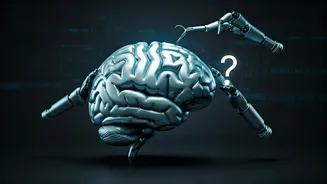
AI literacy for an editor isn’t about learning to code. It's about developing a critical understanding of how these powerful tools work. This means grasping the fundamental concepts of large language models (LLMs), which power most generative AI. They are prediction engines, designed to generate the next most probable word, not to verify truth. This leads to their most significant flaw: the tendency to 'hallucinate' or fabricate information that sounds plausible but is entirely false. A literate editor knows how to craft precise prompts, understands that AI outputs are a first draft at best, and can recognise the potential for algorithmic bias, which can amplify existing societal stereotypes.
The Enduring Power of Journalistic Suspicion
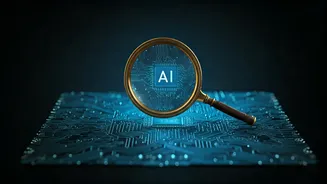
Here is where the timeless values of journalism become more crucial than ever. The most effective defense against AI’s weaknesses is a healthy dose of old-school suspicion. Every claim, every date, and every quote generated by an AI must be subjected to rigorous, human-led verification. Editors must treat AI output with the same skepticism they would an unverified anonymous source. This means cross-referencing information, checking primary sources, and applying critical thinking—skills that are the bedrock of editorial integrity. In an information ecosystem polluted by AI-generated misinformation, the editor’s role as the ultimate guardian of accuracy and credibility is not diminished, but magnified.
The New Editorial Workflow
The editor of the near future is a hybrid professional who blends technological fluency with unshakable journalistic principles. Their workflow involves using AI as a tireless assistant, not as a replacement for judgment. They might use an AI to quickly summarise a lengthy government report to identify key sections, but they will then read those sections themselves. They might ask an AI to brainstorm ten different headlines for a story, but they will use their own news judgment and understanding of their audience to choose the best one. This collaborative process—human-led and AI-assisted—ensures that efficiency gains do not come at the cost of accuracy, context, or ethical responsibility. The human editor must always remain in the loop, accountable for the final product.