





An Exceptional Month for Saturn
October 2026 is a fantastic time to turn your eyes towards Saturn. On October 4, the ringed planet reaches opposition, an event where Earth passes directly between Saturn and the Sun. This alignment makes Saturn appear at its brightest and largest for
the year, making it visible for most of the night. It will rise in the eastern sky around sunset and remain visible until sunrise, appearing as a steady, yellowish point of light to the naked eye. This provides an ample window for viewing. While you won't see its famous rings without some optical aid, just spotting the planet as a bright, unwavering light is a thrill in itself. During opposition, the rings can also appear unusually bright due to a phenomenon known as the Seeliger effect.
Gearing Up: What You Really Need
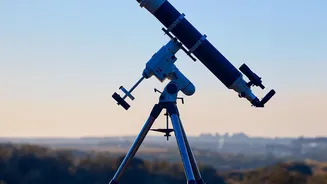
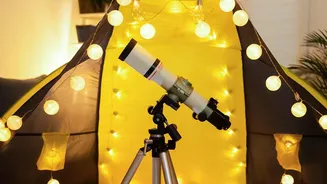
The best tool for starting your astronomical journey is one you already have: your eyes. Simply stepping out and looking up is the first and most important step. However, to enhance your view from a light-polluted balcony, a good pair of binoculars is your best friend. A standard pair, like 7x50 or 10x50, will gather more light than your eyes, revealing fainter stars and even the shape of Jupiter's moons or the fuzzy glow of the Andromeda Galaxy. Binoculars are often recommended over a telescope for beginners because they are more intuitive, portable, and offer a wider field of view, which makes finding objects easier. If you do decide on a telescope, a small 3- or 4-inch model is more than enough to resolve Saturn's rings and is manageable on a balcony.
Mastering the Balcony View
Urban stargazing comes with its main challenge: light pollution. The glow from streetlights and buildings can wash out fainter stars. To combat this, the most important thing you can do is turn off all the lights on your own balcony and, if possible, in the room behind you. Let your eyes adapt to the darkness for at least 15-20 minutes; you’ll be amazed at how much more you can see. Using a red-light flashlight helps preserve your night vision when you need to consult a chart or change an eyepiece. A balcony also offers a key advantage: elevation. Being higher up can lift you above some of the direct glare from street-level lighting, providing a clearer slice of the sky. Make the most of whatever part of the sky your balcony faces and learn the constellations that pass through it.
Your Digital Stargazing Assistant
Figuring out where to point your eyes or binoculars can be daunting, but modern technology makes it incredibly simple. There are numerous free and paid smartphone apps that act as your personal planetarium. Apps like Stellarium Mobile, Star Walk 2, and SkySafari use your phone's GPS and compass to show you a real-time map of the sky. You just point your phone at the sky, and the app will identify the stars, constellations, and planets you're looking at. Many have features that highlight the brightest objects currently visible or notify you of upcoming events like meteor showers or satellite passes. For a beginner, these apps are indispensable tools for learning the night sky without the frustration of traditional star charts.
Beyond Saturn: Other October Sights
While Saturn is the star of the show this month, it’s far from the only thing to see. Jupiter, the largest planet in our solar system, will be a brilliant sight in the early morning sky. On October 11, Mars will appear right in the middle of the Beehive Cluster, a beautiful sight for binocular users. The Draconid meteor shower peaks on October 8, and the Orionids peak on the 21st and 22nd. While city lights will obscure the faintest meteors, you can still catch the brighter ones. Later in the month, on the 27th and 28th, the Moon will pass close to the beautiful Pleiades star cluster, also known as the Seven Sisters, creating a lovely photo opportunity.