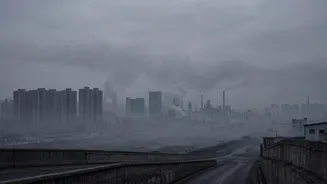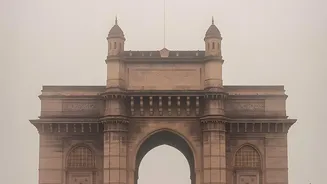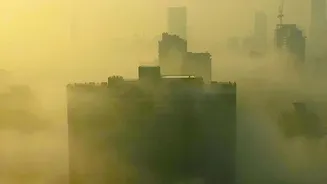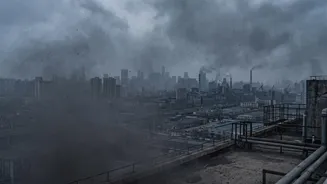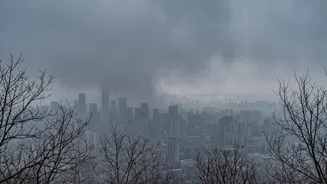





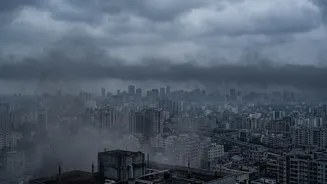


The City Under a Grey Blanket
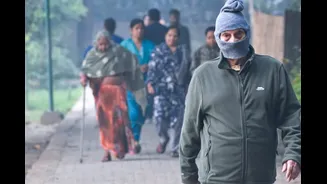
As of Friday, November 13, Delhi's air quality has plummeted into the 'severe' category, with the city's overall Air Quality Index (AQI) crossing the 400 mark and even reaching 494 in the morning. Several monitoring stations, including at IIT Delhi, recorded
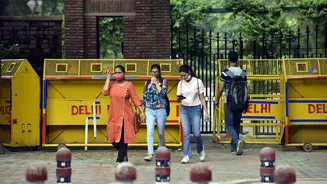
levels nearing 500. In response, authorities had already invoked Stage III of the Graded Response Action Plan (GRAP) on November 6, which includes measures like hybrid classes for younger students. This means government and private schools for children up to Class 5 are offering online classes, giving parents the option to keep their children home to shield them from the toxic air. Several Delhi University colleges have also shifted classes online to protect students and staff.
More Than Just a Cough
The immediate physical risks of this severe pollution are well-documented, especially for children. Their lungs are still developing, and they breathe more rapidly than adults, meaning they inhale a greater volume of pollutants relative to their body size. Pediatricians consistently link exposure to particulate matter like PM2.5 with a host of respiratory issues, including asthma, bronchitis, and persistent coughs. Studies show that chronic exposure can permanently reduce how large and strong a child's lungs become. But the danger isn't limited to the lungs; these tiny particles can enter the bloodstream and impact cardiovascular and even cognitive development.
The Hidden Toll: Eco-Anxiety in Children
Beyond the physical symptoms lies a growing psychological burden. Experts are increasingly concerned about 'eco-anxiety' among children in the capital. A survey by the Chintan Environmental Research and Action Group found that nearly 70% of children in Delhi-NCR reported feeling distressed, fearful, or worried due to poor air quality. This anxiety stems from multiple sources: the constant discussion of 'bad air', the visible smog, and the disruption to their daily lives. Being unable to play outside, a fundamental part of childhood, creates a sense of restriction and loss. For children, the message that the very air they breathe is harmful can be a significant source of stress.
A Screen-Time Dilemma for Parents
The switch to online classes presents parents with a difficult trade-off. While it keeps children away from the toxic outdoor air, it confines them indoors and invariably increases their screen time. Health specialists highlight this as a significant concern, as children who cannot go outside often turn to digital devices for entertainment, risking screen dependence. This situation echoes the challenges of the COVID-19 pandemic, where learning losses and the mental strain of online education became major issues. An NCERT survey conducted after the pandemic noted that only 51% of children could fully comprehend online content, raising questions about the effectiveness of this recurring emergency measure.
Navigating the Smog: What Can Parents Do?
While the larger problem requires systemic solutions, experts advise parents to focus on managing their children's immediate environment and emotional well-being. Checking the daily AQI to decide on outdoor activities is a crucial first step. On 'severe' days, strenuous outdoor play should be avoided. Indoors, efforts can be made to improve air quality by using air purifiers and avoiding burning incense or camphor. It is equally important to talk to children about what is happening without causing alarm, focusing on the practical steps the family is taking to stay safe. Establishing a routine with structured indoor activities, including games and interactive learning, can help mitigate feelings of confinement and anxiety.