


Start With The Design, Not The Flowers
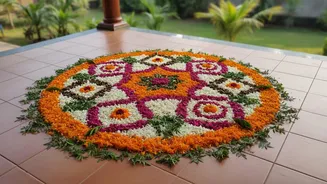
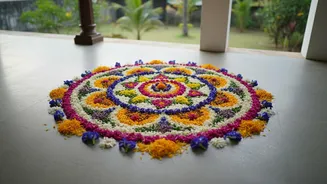
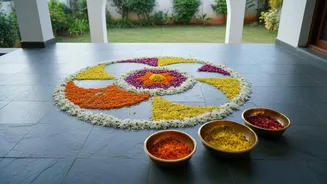
The most common mistake is buying a random assortment of colourful flowers and hoping for the best. A little planning goes a long way. Before heading to the market, sketch your design. Will it be a simple, traditional concentric circle design? Or a more
complex pattern like a peacock, star, or Kathakali face? Simple circular patterns are great for beginners and small spaces. More intricate designs require more planning and a wider variety of flowers and colours. Your design is your blueprint; it will dictate the type, colour, and quantity of flowers you need. First, draw the design on paper or lightly with chalk on the surface where it will be made. This gives you a clear visual guide to follow.
Know Your Flower Palette: Traditional & Modern
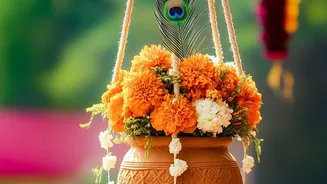
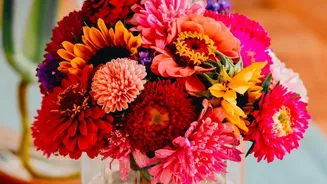
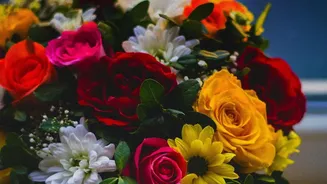
A traditional pookkalam uses flowers that are locally found in Kerala. These include the small, white Thumba (Ceylon Slitwort), red Chethi (Ixora), blue Sankhupushpam (Butterfly Pea), and others like Chemparathy (Hibiscus) and Mukuthi. These flowers were historically gathered from around the home and village. Today, for reasons of availability and vibrant colour, many people use modern alternatives. Marigolds (Jamanthi) in bright orange and yellow are extremely popular for their colour and because their petals are easy to separate and fill large areas. Rose petals, chrysanthemums, and daisies are also widely used to add different colours and textures. Don't be afraid to mix traditional blooms with readily available market flowers.
Match Petals To Your Pattern's Needs
Different parts of your design have different floral needs. For large areas of solid colour (the background fills), fluffy and dense petals from marigolds or chrysanthemums are perfect. They cover a lot of ground and are cost-effective. For sharp outlines and intricate details, you need finer materials. The petals of a red rose or the tiny white Thumba flowers work well. Some designs even use leaves, like lemon or tulsi leaves, to create green outlines or textured sections. Consider the texture as well as the colour. A ring of soft rose petals next to a ring of coarse marigold petals creates a beautiful contrast. The key is to assign a specific flower and colour to each section of your drawn design before you start.
The Art of Estimating Quantity
This is the trickiest part, but you can get better with practice. There's no magic formula, as the quantity depends entirely on the size of your pookkalam and the density of the petal layers. For a beginner's small, apartment-sized pookkalam, start with modest amounts. Think about which colour will be dominant. If your design has a large yellow background, you'll need significantly more yellow marigolds than the red roses used for a small central accent. A rough guide for a large, one-meter radius pookkalam is over 6 kilograms of flowers. For home use, it's better to estimate by area. Look at your design and identify the largest colour section, the second largest, and so on. Buy your flowers in those proportions instead of buying equal amounts of everything. It's always wise to buy a little extra of your main background colour.
Pro Tips for a Flawless Finish
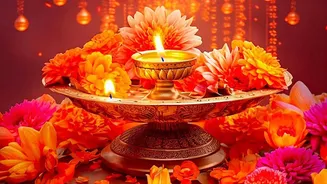
Once you have your flowers and your design, it's time for execution. To keep things neat, always start filling in your design from the centre and work your way outwards. This prevents you from leaning over and disturbing finished sections. Separate all your petals into different bowls before you begin—this makes the process much smoother. If you're working in a team, one group can separate petals while another finalises the chalk outline. To keep your pookkalam looking fresh for longer, you can lightly mist it with a water spray bottle. Finally, placing a 'diya' (lamp) or 'nilavilakku' in the centre or around the design adds a traditional and beautiful finishing touch, especially in the evening.