





Meet the Bharatiya Antariksha Station
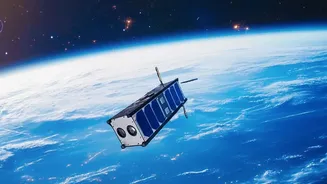
India's planned orbital outpost is officially named the Bharatiya Antariksha Station (BAS). It is envisioned as a modular research facility that will orbit the Earth at an altitude of approximately 400-450 kilometres. Unlike monolithic satellites, the station
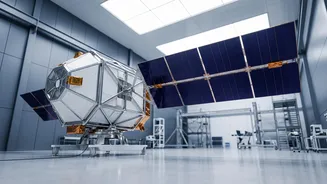
will be assembled in space, piece by piece, with different modules launched over several years. This modular design allows for a phased construction, easier upgrades, and greater flexibility over the station's operational lifespan. When complete, it will serve as a laboratory and home for Indian astronauts, known as Vyomanauts, for extended periods of three to six months.
A Phased Timeline to 2035
While the headline notes 2026, the official timeline is more gradual, reflecting the project's complexity. The Indian Space Research Organisation (ISRO) is targeting 2028 for the launch of the first component, known as the BAS-01 module. This initial module will serve as the foundation and test bed for critical technologies like life support and docking systems. Following this inaugural launch, ISRO plans to add four more modules in stages. The entire five-module station, with an estimated mass of around 52 tonnes, is expected to be fully assembled and operational by 2035.
Building on the Gaganyaan Foundation
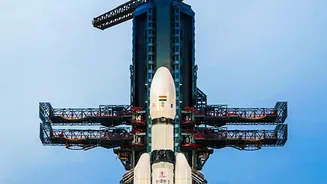
The space station is a natural extension of India's ambitious human spaceflight programme, Gaganyaan. The Gaganyaan mission, which aims to demonstrate the capability to send a crew to low Earth orbit and return them safely, is the crucial stepping stone. It is developing all the foundational technologies required for a space station, from the human-rated launch vehicle (LVM3) to life support systems and crew management protocols. In essence, Gaganyaan is teaching India how to fly, while the Bharatiya Antariksha Station will give its astronauts a place to stay.
Why a Space Station Matters
Having a permanent outpost in orbit is about more than just national prestige. The BAS will be a dedicated platform for long-duration scientific research in a microgravity environment. This will enable groundbreaking experiments in biology, materials science, and medicine, such as studying the effects of weightlessness on the human body. It will also enhance India's Earth observation capabilities for disaster management and climate monitoring. Furthermore, it provides a crucial test bed for technologies that will be needed for future deep-space missions, including India's goal of landing an astronaut on the Moon by 2040.
Joining an Elite Global Club
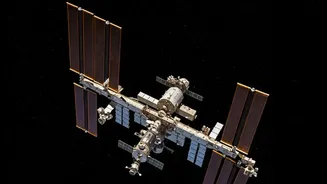
With this project, India is set to join a very exclusive group of nations capable of building and operating a space station, a list that currently includes the United States, Russia, and China. As the International Space Station (ISS) approaches its expected decommissioning around 2030, the geopolitical landscape of space is shifting. By establishing its own station, India is not just securing its autonomy in space but also positioning itself as a key partner for international collaboration in the next era of space exploration. The station signifies India’s graduation from short-term missions to a sustained human presence in orbit.