





The Anatomy of a Bottleneck
At any major Indian railway station, the minutes before a train’s departure transform pathways into pressure points. Footbridges, staircases, and lifts become bottlenecks, funnelling a massive, sudden surge of passengers into a space that is often too
narrow to handle the load. This phenomenon isn't just about the number of people; it's about the very design and rhythm of railway travel. A single train arrival can disgorge hundreds of passengers, while another train's impending departure creates a simultaneous rush to board. These two opposing flows of humanity often meet on a single footbridge, each person with luggage in tow, creating a gridlock that can be both frustrating and dangerous.
When Old Design Meets New Demands
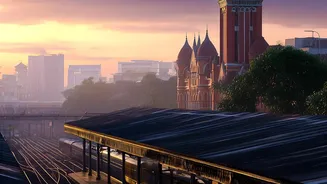
Many of India's grand old railway stations were built in an era when passenger numbers were a fraction of what they are today. The infrastructure, including the width of footbridges and the capacity of stairwells, was designed for a different reality. According to some analyses, the number of daily passenger trains has surged by over 50% in 15 years, while the physical tracks and station layouts have not expanded at nearly the same rate. This mismatch means that structures adequate for the past are now routinely overwhelmed. A narrow bridge that once served a handful of trains per hour might now be the sole artery for passengers of a dozen services, leading to inevitable congestion and safety risks. While newer stations are being built with wider bridges and better flow management, legacy stations across the country grapple with this daily challenge.
The Psychology of the Crowd
Infrastructure is only half of the story; human behaviour plays a massive role. The last-minute rush is a powerful force. Passengers waiting for platform announcements often congregate near the entrance of footbridges, creating an initial blockage. When the announcement finally comes, it triggers a sudden, synchronized dash. Add to this the natural behaviours of travel: people stopping to check their tickets, families trying to stick together, and individuals navigating heavy bags. Each small hesitation or stop has a ripple effect in a dense crowd, slowing everyone down. The unidirectional flow of a quiet hallway becomes a complex, chaotic dance of bidirectional movement, with everyone sharing the same goal but inadvertently hindering each other's progress.
Lifts and Escalators: The Vertical Challenge
Lifts and escalators are supposed to offer relief, especially for the elderly, people with disabilities, and those with heavy luggage. However, they often become bottlenecks of their own. A single lift can typically carry only a small number of people, leading to long queues during peak times. Maintenance is another significant issue; it is not uncommon to find lifts or escalators out of service precisely when they are needed most. Their speed is also a factor; designed for safety and durability rather than speed, they can feel painfully slow when a train is about to depart. This forces many able-bodied but luggage-laden passengers onto already crowded stairs, exacerbating the congestion.
How to Beat the Bottleneck
While systemic changes are underway, individual travellers can adopt strategies to make their journey smoother. The single most effective tactic is to arrive at the station well in advance. This gives you a buffer to navigate crowds without the added stress of a ticking clock. If you’re a frequent traveller from a particular station, try to identify less-used footbridges or entry points. Sometimes, walking a little further to a less popular bridge can save you time. Travelling light is also key. The less luggage you have, the more nimble you are in a crowd. Finally, use technology to your advantage. Know your platform number before you leave for the station, if possible, and use apps that can provide real-time train information to minimize uncertainty and last-minute panic.