





The Serving Size Illusion
Before comparing any two foods, it's crucial to understand the most misleading part of a nutrition label: the serving size. Manufacturers often use unrealistically small serving sizes to make calorie, sugar, or fat counts appear lower. This is especially
true for light, airy foods like puffs. A serving size might be listed as '1 cup', but the weight of that cup can vary dramatically. Puffed rice is extremely light, so a cup weighs very little (around 15 grams). Quinoa puffs are denser. This difference in weight is where the nutritional comparison gets tricky. A single serving of one might seem healthier, but when you compare them gram for gram, the story often flips. To get an accurate picture, you should always compare foods based on a standard weight, like 100 grams.
Puffed Rice Under the Microscope
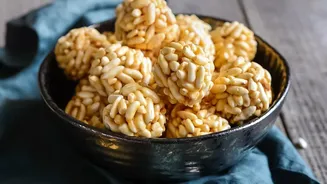
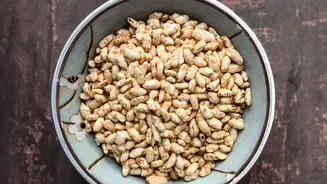
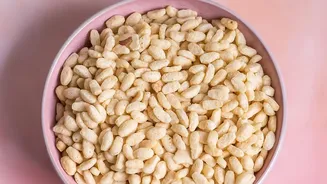
Puffed rice, known as 'murmura' or 'muri' in India, is a beloved, low-cost snack base. On a per-serving basis, it looks incredibly light. A single cup has only about 55-60 calories because it weighs so little. This makes it seem like a dieter's dream. However, looking at it per 100 grams gives a different perspective. Puffed rice contains roughly 360-400 calories per 100g. It's almost entirely carbohydrates (around 78-90g per 100g) with very little protein (about 7.5g) or fibre (around 2.6g). While it's naturally gluten-free and very low in fat, it offers minimal nutritional density beyond quick-digesting carbs. Its high glycemic index means it can cause a rapid spike in blood sugar.
Quinoa Puffs by the Numbers
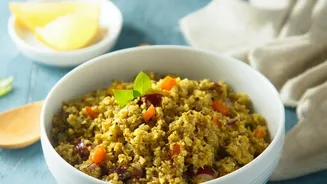
Quinoa puffs are a newer entrant in the snack market, often positioned as a healthier alternative. Nutritionally, plain quinoa puffs contain around 375-395 calories per 100g, a figure comparable to puffed rice. The major difference lies in the macronutrient profile. Per 100g, quinoa puffs pack a significant protein punch—about 14g. Crucially, quinoa provides all nine essential amino acids, making it a 'complete protein', which is rare for a plant-based food. They also offer more fibre (around 7g per 100g, though some sources state less depending on processing) and key minerals like iron and magnesium than puffed rice.
The Head-to-Head Comparison
If you only look at a single cup, puffed rice wins on calories (around 60 kcal vs. ~110-120 kcal for quinoa puffs). This is purely because a cup of puffed rice is mostly air. But this comparison is misleading. When equalised by weight (per 100g), their calorie counts are very similar. The real difference emerges in nutritional quality. Quinoa puffs provide nearly double the protein and significantly more fibre. That protein and fibre contribute to greater satiety, meaning quinoa puffs are more likely to keep you feeling full for longer. While puffed rice is a low-calorie vehicle for other ingredients in snacks like bhel puri, quinoa puffs offer more inherent nutritional value on their own.
Beyond Calories: The Verdict
For a pure, low-calorie filler, puffed rice is effective. It provides crunch and volume for very few calories per serving, making it a good choice for light snacking if you're disciplined with portion sizes. However, for anyone seeking genuine nutritional benefits from their snack, quinoa puffs are the superior choice. The higher content of complete protein, dietary fibre, and essential minerals like iron and magnesium makes them a more satiating and nourishing option. The moderate glycemic index of quinoa also means a gentler impact on blood sugar levels compared to the spike from puffed rice. While they may be more expensive, the nutritional payoff is clear for health-conscious consumers.