



The New Cosmic Sensation
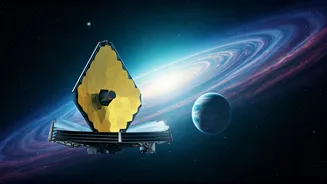
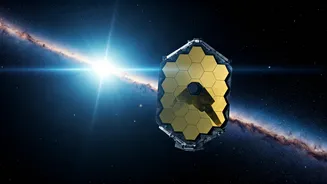
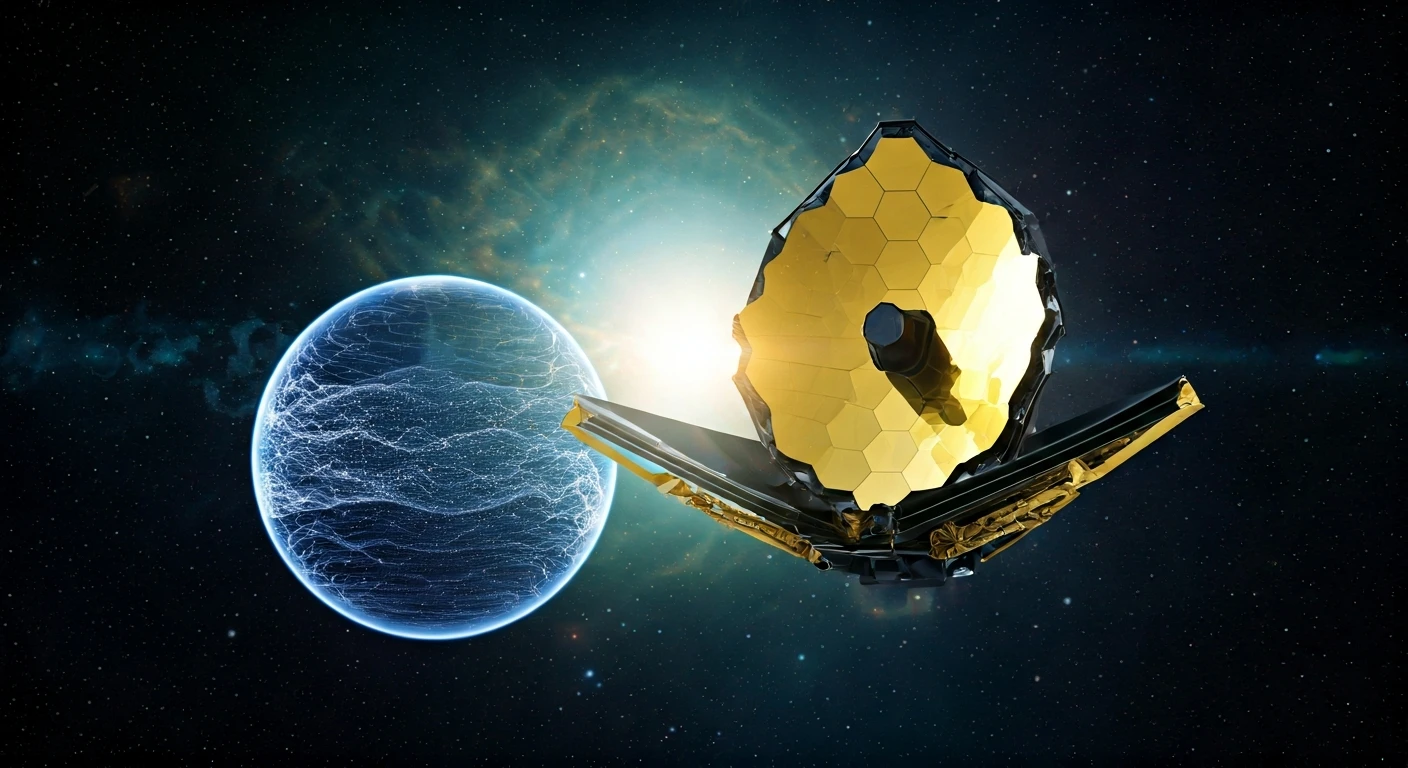
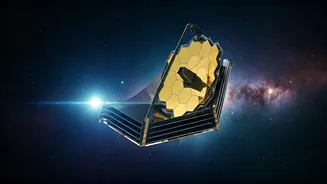
Since its first images were released in 2022, the James Webb Space Telescope has fundamentally changed our view of the cosmos. With its massive, gold-plated mirror, it peers into the universe in infrared light, a wavelength invisible to the human eye.
This allows it to see through cosmic dust clouds and capture light from the very first galaxies that formed after the Big Bang. Webb has given us breathtaking looks at star-forming regions, the atmospheres of distant exoplanets, and galaxies older than any we had seen before. Its ability to gather faint light is unparalleled, delivering images with stunning depth and clarity that have dominated science news and captured the public imagination.
The Old Master's Enduring Power
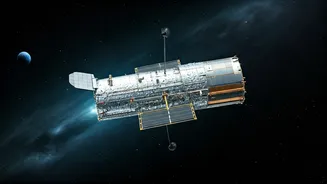
Launched in 1990, the Hubble Space Telescope was a revolution in its own right. Named after astronomer Edwin Hubble, who proved the universe was expanding, the telescope provided the first clear view of the cosmos from above Earth's distorting atmosphere. For over three decades, it has been a workhorse of modern astronomy, contributing to more than 23,000 scientific papers. From discovering the accelerating expansion of the universe to imaging Pluto's surface and providing definitive evidence for supermassive black holes at the center of galaxies, Hubble's legacy is monumental. It was designed to be serviced by astronauts, and five missions have repaired and upgraded its instruments, keeping it on the cutting edge for far longer than its original 15-year life expectancy.
Still Delivering Breakthroughs
Even with Webb in the spotlight, Hubble continues to produce crucial science. It's not just holding its own; it's making discoveries that were thought to be impossible. In a recent stunning achievement, Hubble detected ultraviolet light from a galaxy named MXDFz4.4, which existed when the universe was just 1.4 billion years old. This was a surprise because the dense fog of neutral hydrogen in the early universe was expected to block such light completely. The discovery suggests that small, bright galaxies like this one were instrumental in clearing that cosmic fog, making the universe transparent. This is a task that Webb, which is optimized for infrared, could not have accomplished alone, showcasing Hubble's unique and still-vital capabilities.
Different Tools for Different Jobs
The idea that Webb replaced Hubble is a common misconception. The two telescopes are complementary, designed to see the universe in different ways. Hubble is a master of ultraviolet and visible light, the same spectrum our eyes see. This makes it perfect for observing things like the energetic processes around young, hot stars and the detailed structures within nearby galaxies. Webb, on the other hand, is an infrared specialist. Its larger mirror and colder operating temperature allow it to capture the faint, redshifted light from the distant past and peer inside dusty stellar nurseries where new planets are forming. Think of it like a symphony orchestra: you wouldn't say the violin replaces the cello; you need both to create a complete and rich piece of music.
A Powerful Cosmic Partnership
The true power of this new era in astronomy lies in combining the vision of both telescopes. By merging Hubble's crisp visible and UV data with Webb's deep infrared views, scientists can create a more complete picture of celestial objects than ever before. For example, when observing a pair of interacting galaxies, Hubble can reveal the location of hot, young stars and show where dust is obscuring the view, while Webb can peer through that same dust to see the older stars and glowing gas hidden within. This multi-wavelength approach is already yielding new insights, helping astronomers trace the flow of gas, understand star formation, and even find previously hidden background galaxies. The scientific community is excited about having both observatories operating together, ushering in what many call a new golden age of astronomy.