






The Land of Clouds and Caves
Meghalaya, the ‘Abode of the Clouds’, is not just famous for receiving some of the heaviest rainfall on Earth. Beneath its lush, green surface lies another world: one of the most complex and extensive networks of caves in Asia. This is a karst landscape,
a terrain formed from the dissolution of soluble rocks like limestone. For millennia, the relentless monsoon rains have seeped into the ground, carving out a labyrinth of passages, sinkholes, and colossal caverns that stretch for hundreds of kilometres. Expeditions by Indian and international speleologists are constantly discovering new passages, making it a final frontier of exploration right here in India.
A World in Waiting
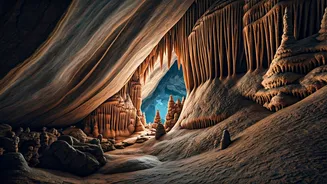
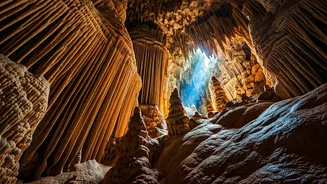
For much of the year, during the dry season, many of these caves are hushed and still. Explorers navigate through dusty passages, vast chambers adorned with dormant stalactites and stalagmites, and boulder-strewn floors. The air is cool and silent, broken only by the drip of residual water or the flutter of a bat’s wings. These caves feel ancient and static, like geological museums preserving millennia of history in their rock formations. They are spectacular, but their true dynamic nature is on hold, waiting for the trigger that will dramatically transform them from a dormant state into a living, breathing system.
When the Deluge Descends
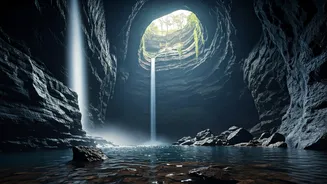
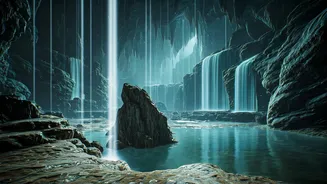
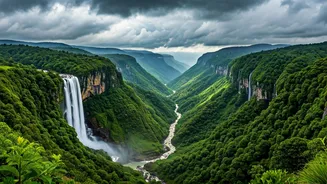
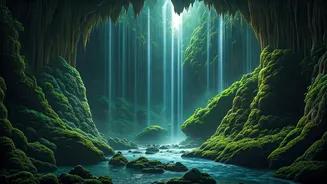
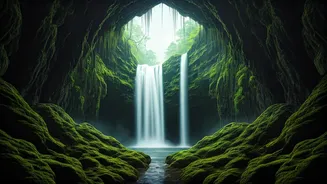
The arrival of the monsoon changes everything. As torrents of rain soak the porous limestone landscape, the underground world awakens. Trickles become streams, and streams become raging rivers that surge through passages that were bone-dry just weeks before. Waterfalls, some hundreds of feet high, suddenly appear in the deepest, darkest chambers, their roar echoing through the network. Cavers who navigate these systems during the monsoon describe a world that is almost unrecognisable. Routes become impassable, chambers flood, and the entire cave system becomes a powerful, high-volume drainage system for the landscape above. It’s a dangerous but breathtaking spectacle—a hidden ecosystem brought to explosive life.
The Science of Transformation
This dramatic change is a direct result of the region's karst geology. Limestone is primarily made of calcium carbonate, which is slowly dissolved by rainwater, which is naturally slightly acidic. Over eons, this process carves out the intricate network of caves. When the monsoon hits, the ground becomes saturated. Water finds its way through countless cracks and fissures, funnelling into the main cave system. This isn't just a slow seep; it's a rapid recharge. The sheer volume of water transforms the caves from a passive environment into an active, dynamic hydrological system. This process is not just about water flow; it also transports sediment and nutrients, further shaping the caves and supporting the life within.
A Burst of Hidden Life
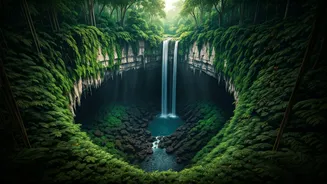
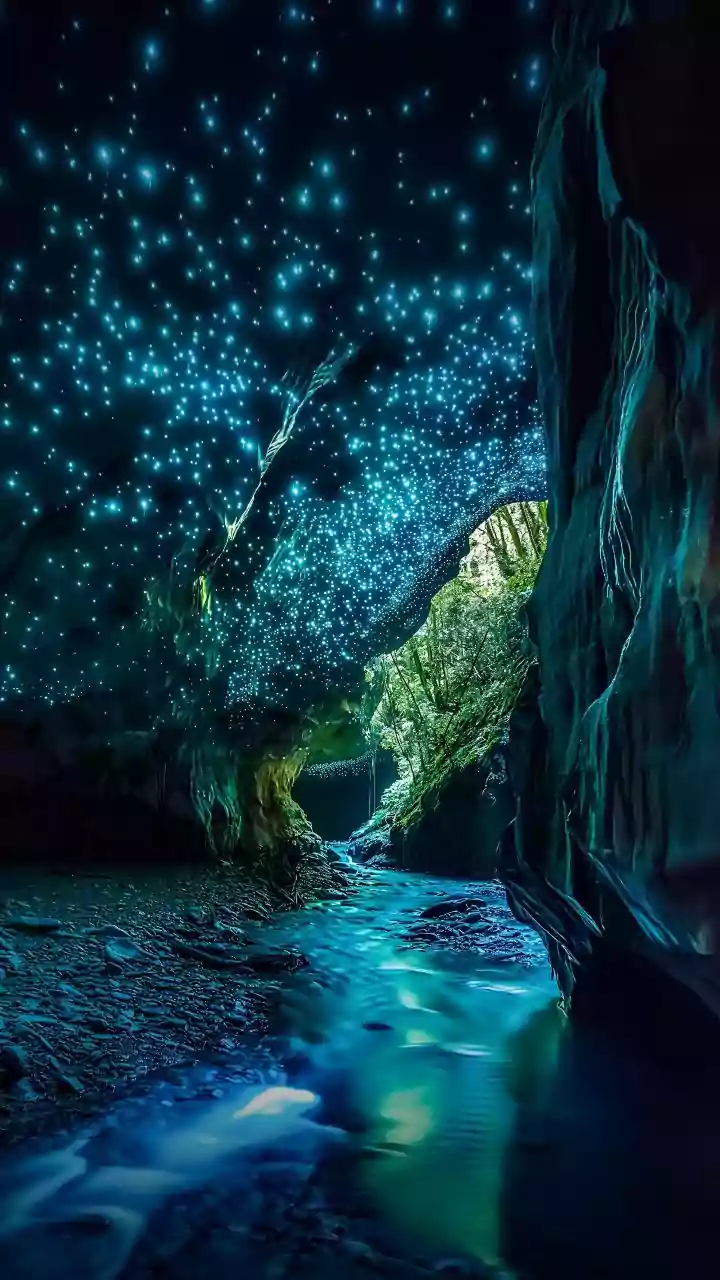
The water doesn't just bring noise and movement; it brings life. The sudden influx of water and nutrients awakens a unique biosphere adapted to this cycle of flood and drought. Tiny, specialised crustaceans and insects emerge from the sediment. Blind cavefish, which survive in isolated pools during the dry season, can now navigate new territories through the flowing underground rivers. The cave entrances, moistened by the constant rain and humidity, see a bloom of rare ferns, mosses, and other flora. This seasonal rebirth highlights the cave as not just a geological feature, but a living ecosystem, intricately linked to the rhythm of the monsoon above.