



Start With the Seller
Before you scrutinize the perfume itself, investigate the seller. The safest options are always authorized retailers, the brand's official website, or well-known department stores. If you're exploring third-party marketplaces, be cautious. Look for sellers
with a long history of positive reviews and a clear, fair return policy. Listings that use blurry, generic stock photos instead of clear pictures of the actual product are a red flag. An extremely low price might seem like a bargain, but if it's drastically below the typical retail value, it's a major warning sign.
Scrutinize the Cellophane and Box
Authentic perfumes are a luxury product, and their packaging reflects that. The cellophane wrapping should be thick, clear, and tightly sealed around the box with clean, precise folds. If the plastic is loose, crinkly, or has messy, uneven seams with excess glue, be suspicious. Next, examine the box itself. It should be made from high-quality, sturdy paperboard designed to protect the bottle. Flimsy cardboard that feels lightweight is a common trait of fakes. Check all text for spelling mistakes, blurry logos, or inconsistent fonts. Luxury brands rarely make such errors.
Verify the Batch Code
Every genuine perfume has a batch code—a unique set of numbers and/or letters used to identify its production run. This code should be printed or engraved on the bottom of the outer box and also on the bottom of the perfume bottle itself. The most critical step is to ensure these two codes match perfectly. If the codes are different, if one is missing, or if it appears to be on a sticker that can be easily peeled off, the product is likely a counterfeit. You can also use online tools like CheckFresh or Batchcode.org to enter the code and verify its production date, which adds another layer of validation.
Examine the Bottle, Cap, and Sprayer
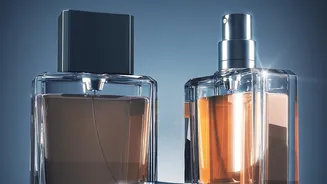
The bottle is where counterfeiters often cut corners. A real perfume bottle is typically crafted from high-quality, smooth glass and has a substantial, weighty feel. Run your fingers over the surface; it should be seamless, without any rough edges or visible joins from a mold. The cap should also feel significant and fit snugly onto the bottle, often with a satisfying click. A flimsy, lightweight, or ill-fitting cap is a telltale sign of a fake. Finally, test the sprayer (atomizer). It should produce a fine, even mist. Counterfeits often have poor-quality sprayers that dispense the liquid in a jerky, uneven stream or leak.
Assess the Perfume's Colour and Scent
The final test is the liquid inside. Authentic perfumes have a consistent colour and clarity. If the 'juice' looks unusually dark, has sediment, or appears cloudy, be wary. Of course, the most important factor is the scent. Genuine fragrances are complex, with top, middle, and base notes that evolve on your skin over several hours. A counterfeit may smell similar upon the initial spray but will often have a harsh, chemical undertone and fade very quickly, sometimes within an hour. Authentic Eau de Parfums should last for several hours. If the scent vanishes almost immediately or smells flat and one-dimensional, it fails the most crucial test of authenticity.