




A New Policy Unlocks the Stars
The single most critical catalyst for this shift has been a radical change in government policy. For decades, space was the exclusive domain of the Indian Space Research Organisation (ISRO). However, the introduction of the Indian Space Policy in 2023
dramatically redrew the landscape. This policy officially invited private companies to participate in end-to-end space activities, from building rockets and satellites to providing space-based services. To oversee this, the government established the Indian National Space Promotion and Authorisation Centre (IN-SPACe) as a single-window agency to promote, authorise, and supervise private space endeavours. This moved the sector from a restrictive, state-controlled model to an enabling one, giving startups the regulatory certainty and support they needed to move forward.
From Blueprints to Launchpads
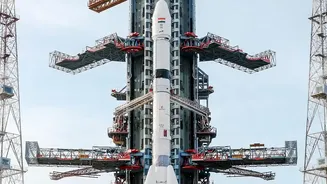
With policy barriers removed, Indian space startups have demonstrated remarkable technological progress. Hyderabad-based Skyroot Aerospace made history in November 2022 with the launch of Vikram-S, India's first privately built sub-orbital rocket. This 'Prarambh' (Beginning) mission was a crucial proof-of-concept, which was followed by the successful orbital launch of Vikram-1 in July 2026. Similarly, Chennai's Agnikul Cosmos launched its Agnibaan SOrTeD (Suborbital Technological Demonstrator) in May 2024, a mission notable for its use of the world's first single-piece 3D-printed rocket engine. These missions, while sub-orbital or initial orbital tests, were not just experiments; they were vital steps in validating homegrown technologies and gathering the flight data necessary for commercial operations.
The Money Follows the Ambition
Building rockets is an expensive business, and the transition from prototype to mission would be impossible without significant financial backing. The policy reforms and early technical successes have unlocked a torrent of private investment. India's space startups attracted a cumulative investment of over $600 million by early 2026, a dramatic increase from previous years. For instance, satellite imagery company Pixxel recently raised $100 million in a single round, the largest for an Indian space-tech firm, to expand its hyperspectral satellite constellation. This influx of capital from both domestic and global investors signals strong confidence in the sector's commercial viability and is crucial for funding the complex journey from development and testing to full-scale manufacturing and mission deployment.
An Entire Ecosystem Takes Flight
The focus isn't just on launch vehicles. A diverse ecosystem of companies is maturing across the entire space value chain. Pixxel has already deployed a constellation of commercial hyperspectral satellites, providing data for agriculture, climate monitoring, and more. Meanwhile, Dhruva Space has successfully space-qualified its own satellite orbital deployers, which are critical components for launching smaller satellites, and has flown them on ISRO's PSLV missions. This demonstrates a growing specialization within the sector. While rocket companies like Skyroot and Agnikul grab headlines, the maturation of component manufacturers and downstream data application firms is equally vital for building a self-sustaining commercial space industry.
A New Role for a National Champion
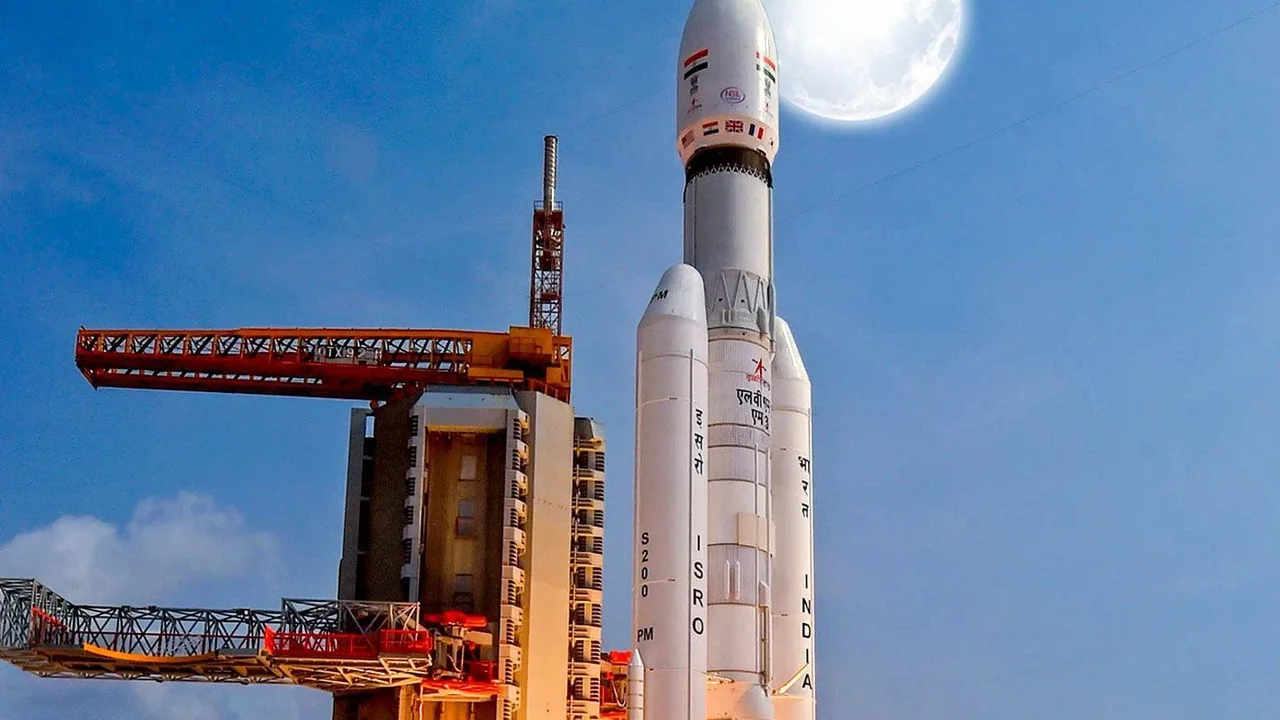
The rise of private players doesn't mean the end of ISRO's relevance. Instead, its role is evolving. Under the new policy, ISRO is tasked with focusing on advanced research and development, scientific missions, and human spaceflight. It is transitioning away from the routine manufacturing of operational launch vehicles, a process that will be handed over to the private sector. ISRO now acts as a mentor and enabler, providing access to its world-class facilities, testing infrastructure, and deep technical expertise, which has been crucial for startups. This collaborative model allows the private sector to leverage decades of public investment and experience, dramatically shortening their own development timelines.