







Myth: It’s Just Like Eating Fruit
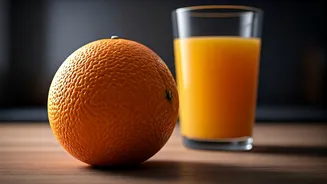
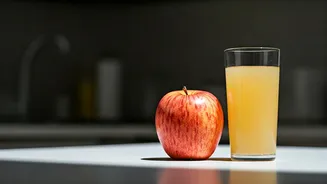
The biggest misconception is that drinking a glass of orange juice is nutritionally equivalent to eating an orange. When a fruit is juiced, its most valuable component is often discarded: the fibre. This fibrous pulp is crucial for slowing down digestion
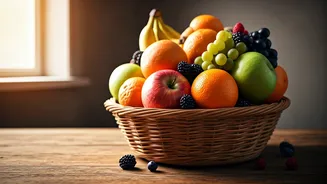
and the absorption of sugar into your bloodstream. Without it, you’re essentially drinking sugar water, albeit with some vitamins. Think about it: you can easily drink the juice of three or four oranges in one glass, consuming all their sugar in minutes. But could you eat four whole oranges in one sitting? The fibre in the whole fruit makes you feel full and satisfied long before you could consume that much sugar.
Myth: ‘No Added Sugar’ Means It’s Healthy
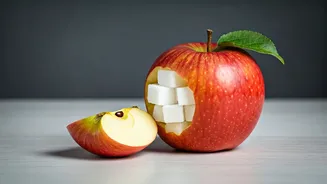
This is one of the most misleading labels on a carton. While a "no added sugar" juice might not have extra white sugar stirred in, the natural sugars (fructose) from the fruit are still highly concentrated. The World Health Organization classifies these as "free sugars," the same kind found in honey, syrups, and other sweeteners, which should be limited. When you eat a whole apple, the sugar is 'intrinsic' – it's locked within the fruit's cellular structure, surrounded by fibre. Your body has to work to break it down. In juice, that structure is gone, and the 'free' sugar rushes into your system, spiking your blood sugar and insulin levels in a way that whole fruit does not.
Myth: It's a Vitamin Powerhouse
Fruits are indeed packed with vitamins, especially Vitamin C. However, many of these nutrients are delicate. The process of juicing, pasteurizing (heating to kill bacteria for a longer shelf life), and storing juice can significantly degrade these vitamins. Light, heat, and oxygen are enemies of vitamins like C and some B vitamins. While many packaged juices are fortified with synthetic vitamins to make up for the loss, it’s not the same as getting them from their natural source. A whole fruit provides them in a complex with other beneficial phytonutrients that work together for maximum benefit.
Myth: It’s a Great Hydrator
Yes, juice contains water. But calling it a great hydrator is a stretch. Because of its high sugar concentration, your body has to work to process the sugar, which is a metabolically demanding task. For pure, simple, and effective hydration, nothing beats plain water. Sugary drinks, including fruit juice, can sometimes lead to a cycle of thirst and more sugar consumption. For true rehydration this season, consider alternatives like coconut water (in moderation), nimbu pani (with minimal sugar), or water infused with slices of cucumber, mint, or lemon. They refresh without the sugar overload.
Reality: Treat Juice as a Treat
So, does this mean you can never drink fruit juice again? Not at all. The key is to change your perspective. Stop thinking of fruit juice as a health drink or a replacement for a serving of fruit. Instead, view it as a treat, something to be enjoyed occasionally and in small quantities, much like a dessert or a sweetened beverage. If you do have it, try to opt for freshly squeezed juice where some pulp is retained, and limit the portion size to a small glass (around 150ml per day). The goal is not elimination, but moderation and making an informed choice.