


A New Eye on the Cosmos
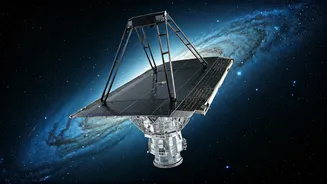
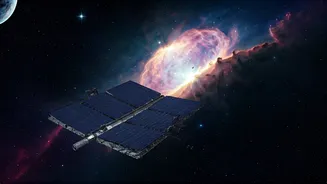
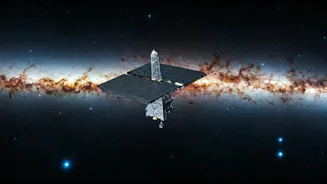
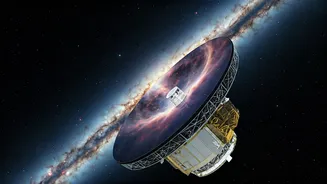
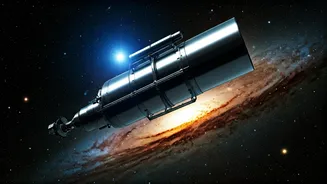
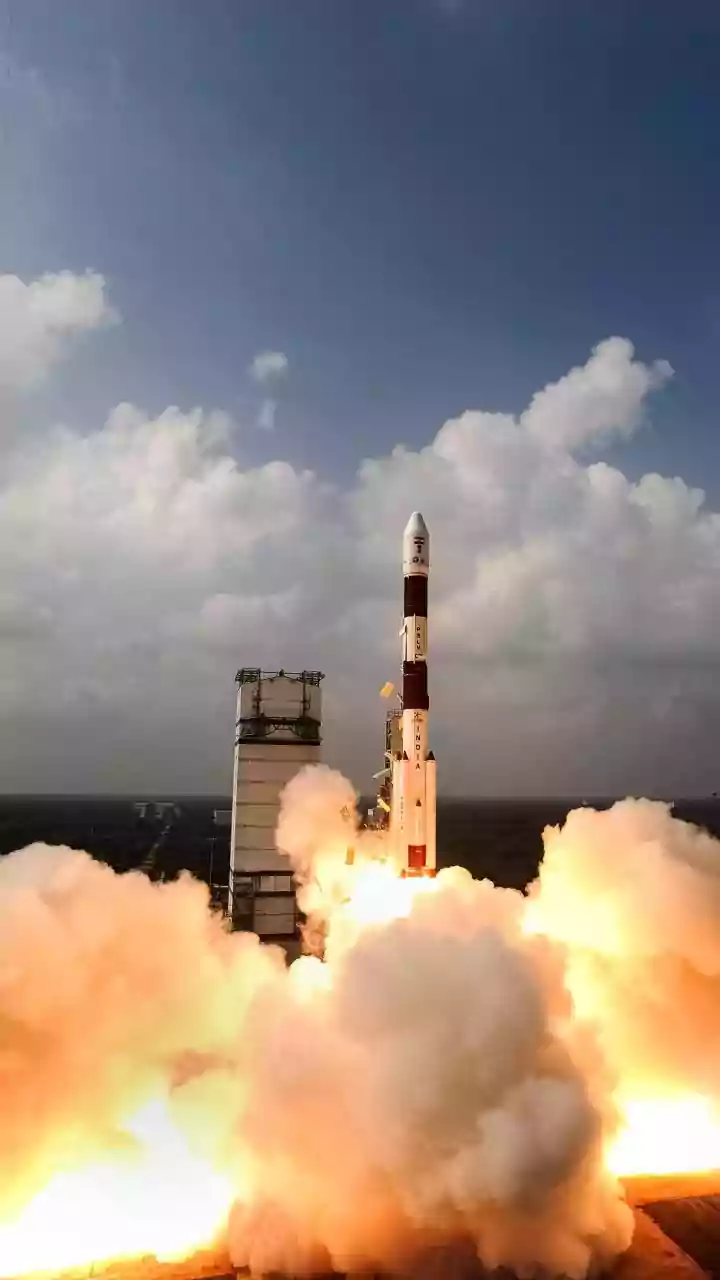
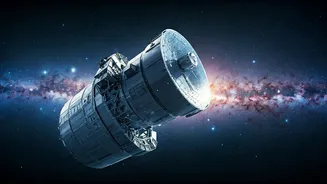
Scheduled to launch by May 2027, the Nancy Grace Roman Space Telescope is NASA's next great observatory, set to tackle cosmic mysteries from dark energy to the census of exoplanets. [1, 18] Named after NASA's first chief of astronomy, who was instrumental
in the development of the Hubble Space Telescope, Roman is designed to be a survey powerhouse. [3, 7] While its mirror is the same size as Hubble's at 2.4 meters, its capabilities are vastly different, promising to revolutionize astronomy not by looking deeper at one spot, but by looking wider than ever before. [3, 10]
The Power of a Wide-Angle View
Roman's greatest advantage is its incredible field of view. Its Wide Field Instrument can capture an area of the sky at least 100 times larger than Hubble can in a single image, all while maintaining the same sharp resolution. [3, 9, 10] Imagine trying to photograph a sprawling landscape. While Hubble would capture a stunning, detailed image of a single flower, Roman will capture the entire meadow in the same amount of time and with similar clarity. [10] This panoramic capability will allow astronomers to conduct massive sky surveys with unprecedented efficiency, creating enormous cosmic maps that will be studied for decades. [2, 14, 16]
Seeing the Unseen with Microlensing
To find thousands of new worlds, Roman will primarily rely on a technique called gravitational microlensing. [15] This method takes advantage of a phenomenon predicted by Einstein, where the gravity of a star or planet bends and magnifies the light of a more distant, unrelated star that passes behind it from our perspective. [1] This temporary spike in brightness signals the presence of the closer object, even if it's too faint to see directly. [1, 15] This technique is particularly powerful for finding planets that other methods miss, such as those that orbit far from their host star—similar to Saturn or Neptune—and even "rogue planets" that drift through the galaxy untethered to any star. [8, 15]
A Galactic Census of Planets
While past missions like Kepler have been incredibly successful, they have primarily found large planets orbiting very close to their stars. [19] Roman's microlensing survey is expected to find more than 1,000 exoplanets, including worlds as small as Mars, providing a more complete picture of planetary systems. [4, 13] In addition, Roman will also use the proven transit method—watching for the slight dimming of a star as a planet passes in front of it—and is expected to detect around 100,000 transiting planets. [1, 11] This dual approach will provide a massive statistical dataset, helping scientists understand how common different types of planets are across the varied environments of our Milky Way galaxy. [4, 13]
More Than Just New Worlds
The hunt for exoplanets is just one part of Roman's ambitious five-year primary mission. [1] The same wide-field survey that will spot new planets will also be used to investigate the nature of dark energy and dark matter, two of the biggest mysteries in modern astrophysics. [2, 3] The telescope will map the structure of the universe by observing billions of galaxies and track stellar explosions to measure the universe's expansion. [2, 3] It will also feature a Coronagraph Instrument, a technology demonstration designed to block the light from a star to directly image the faint planets orbiting it—a key capability for future planet-finding missions. [7, 19]