







Why Binoculars Are Your Secret Weapon
While telescopes are powerful, they often have a narrow field of view, making it tricky for beginners to find objects. Binoculars, on the other hand, offer a wide perspective that makes navigating the starscape intuitive and enjoyable. They are portable,
affordable, and perfect for observing large star clusters and galaxies that don't fit into a typical telescope's eyepiece. A good pair of 7x50 or 10x50 binoculars will gather significantly more light than your naked eye, revealing faint, fuzzy objects and transforming bright star fields into glittering diamond dust. Their three-dimensional, right-side-up view feels more natural and immersive, providing some of the best views of sprawling celestial wonders.
Autumn's Celestial Showcase: What to Look For
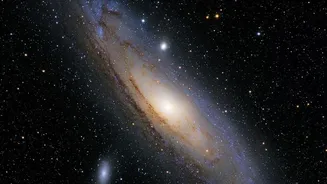
The autumn sky in the Northern Hemisphere is home to some of the most famous deep-sky objects, perfectly suited for binocular viewing. The star of the show is the Andromeda Galaxy (M31). Visible from a dark site as a faint, elongated smudge to the naked eye, it resolves into a distinct oval glow in binoculars. This is the light from an entire galaxy over 2.5 million light-years away. Another must-see is the Pleiades star cluster (M45), also known as the Seven Sisters. While the naked eye might pick out six or seven stars, binoculars reveal dozens sparkling in a tight, brilliant blue group. Located in the constellation Taurus, it's one of the most beautiful open clusters in the sky. Also look for the Double Cluster in Perseus and the sprawling star clouds of the Milky Way, which remain prominent in the early autumn evenings.
The Dark-Sky Park Advantage
The single biggest obstacle to good stargazing is light pollution from cities. A dark-sky park is an area recognized for its exceptional starry nights, where artificial light is strictly controlled to preserve the natural darkness. These parks are not just for professional astronomers; they are sanctuaries for wildlife and public spaces for anyone to experience a truly pristine night sky. In India, astro-tourism is growing, with several locations offering incredible views. The Hanle Dark Sky Reserve in Ladakh is India's first official dark-sky reserve, offering world-class conditions. Other excellent spots with minimal light pollution include Spiti Valley in Himachal Pradesh, the Rann of Kutch in Gujarat, and areas in Coorg, Karnataka. Visiting one of these locations dramatically increases what you can see, turning faint smudges into clear objects and a sparse sky into a canopy filled with thousands of stars.
Your Stargazing Field Kit
Preparation is key for a successful and comfortable night of stargazing. First, dress in layers. Even if the day was warm, autumn nights can get surprisingly cold, especially when you're sitting still. Bring a comfortable folding chair or a blanket to lie on. A red-light torch is essential; red light preserves your night vision, unlike the harsh glare of a white-light phone screen or flashlight. For navigation, a star chart or a stargazing app on your phone (used in its red-light mode) will help you identify constellations and locate your targets. And of course, pack your binoculars. A tripod can be very helpful to stabilize your view, especially for longer observation, but it's not a necessity to get started.
Tips for Better Binocular Viewing
To get the most out of your binoculars, start by adjusting them properly. Set the eyepiece spacing to match your eyes so you see a single, circular field of view. Then, focus them sharply on a bright star. To find a faint object, first locate it with your naked eye, keep your gaze fixed on it, and then bring the binoculars up to your eyes. Another technique is to use brighter stars as guideposts, hopping from one to the next until you land on your target. For very faint objects, use 'averted vision'—instead of looking directly at your target, look slightly to the side. This uses the more light-sensitive parts of your retina, often making the object pop into view.