







Beyond the Numbers: A Net Positive Shift
The core of Gartner's forecast, released in November 2026, is that AI's impact on the global workforce will ultimately be positive, resulting in a net increase of 1.7 million jobs by 2030. This counters the widespread fear of mass unemployment driven
by automation. According to Gartner's analysis, the real story is not about job destruction but about profound transformation. The organisations most advanced in their AI adoption are not simply cutting staff; they are using the technology to reinvent how their businesses operate. However, the report also acknowledges a significant, less visible impact: deferred hiring. In 2026 alone, executives postponed the creation of 1.3 million positions in anticipation of AI filling future gaps. This trend is expected to affect 5 million people by 2030, particularly impacting those at the entry-level of their careers.
Which Sectors Will See the Biggest Changes?
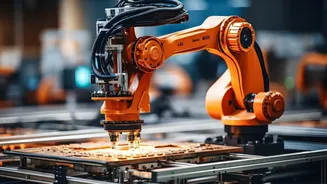
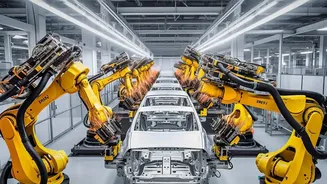
The effects of AI will not be uniform across all industries. Gartner's report breaks down the impact into three main categories. Asset-intensive industries—like manufacturing and those reliant on physical infrastructure—will see the largest numbers in flux, with a projected 6.4 million jobs created and 6 million lost by 2030. The technology sector, despite having high exposure to AI, is expected to be a major engine of job creation, with a net gain of 1.5 million positions (1.9 million created versus 400,000 eliminated). Conversely, the public sector is the only category where job losses are forecast to outweigh gains, with a net loss of 500,000 roles. Gartner notes that AI investment in this sector is unlikely to be sufficient to offset skills shortages driven by other factors.
The Real Story: Job Transformation, Not Elimination
While the 8.9 million figure is alarming, Gartner projects that direct job loss attributable to AI will only affect between 0.4% and 1.8% of workers globally by 2030. A far greater number—over 20% of the global workforce, or about 435.5 million people—will experience a transformation of their existing roles. This means their day-to-day responsibilities, workflows, and required skills will change significantly. A finance professional might need to work with AI-powered analysis, or a marketer might need to become familiar with AI content generation tools. The emphasis is shifting from simply knowing how to perform a task to being able to interpret AI outputs, identify errors, and apply critical judgment.
The Skills for an AI-Powered Future in India
For India's vast workforce, this global trend points towards a future defined by adaptation and learning. According to the World Economic Forum, employers in India are already anticipating this shift, with AI and big data skills ranked as the fastest-growing in importance. This is followed closely by technological literacy, creative thinking, and a capacity for lifelong learning. Recognizing this, many companies are no longer waiting for the education system to catch up. A NITI Aayog roadmap highlights the potential for India's tech workforce to either shrink or grow significantly, depending on the nation's strategic response to AI skilling. Many firms in India are already focusing on upskilling their current employees and even removing degree requirements for certain roles in favour of demonstrated skills.