



What Is a Reverse Waterfall?
First, let's clear up a common misconception. A reverse waterfall isn't literally a river flowing uphill against gravity from its source. Instead, it’s a spectacular illusion created when intensely powerful winds hit a waterfall at just the right angle.
When gusts of wind are strong enough, they can overpower the force of gravity acting on the falling water, especially the lighter spray and droplets at the edge of a cliff. The wind catches this water and blows it back up and over the precipice, creating the stunning visual of water defying its natural course. It’s less a 'reverse' flow and more of a powerful, temporary 'blowback' event.
The Science Behind the Spectacle
For this natural marvel to occur, a very specific set of conditions must align perfectly. Think of it as nature’s perfect recipe for wonder. First, you need a significant drop, like a tall coastal cliff or a steep mountain edge. Second, you need a source of water flowing over that edge, like a stream, river, or even significant runoff after heavy rain. The final, and most crucial, ingredient is the wind. Not just any breeze will do; you need gale-force or storm-force winds—often exceeding 75 kilometres per hour—blasting directly into the cliff face. This creates an updraft, a powerful current of air forced upwards by the vertical obstacle. It's this updraft that lifts the water, atomises it into a fine mist, and carries it back over the top.
India's Own Monsoon Marvel
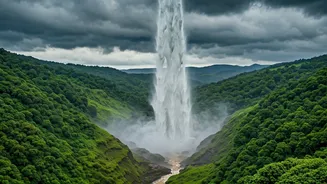
While this phenomenon can be seen in a few places globally, India has its very own famous example that comes alive during the monsoon season. At Naneghat, a mountain pass in the Western Ghats near Pune, Maharashtra, fierce monsoon winds barrel through the valley and up the cliffs. During periods of intense rain and wind, numerous small streams that cascade down the mountainside are caught by these gusts and blown dramatically upwards. This has made Naneghat a popular destination for trekkers and thrill-seekers who come to witness the 'reverse waterfall' in person. The combination of the lush green landscape, the pouring rain, and the physics-defying water creates an unforgettable experience unique to the Indian monsoon.
A Global Phenomenon
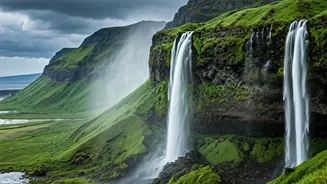
This spectacle isn't limited to India. One of the most well-known examples is at Kinder Downfall in the Peak District of England. When strong westerly winds blow in from the Irish Sea, the 30-metre waterfall is often seen spraying spectacularly back up onto the moorland above. Similar events have been recorded on the windy cliffs of Ireland, the dramatic coastlines of Iceland, and even in Royal National Park near Sydney, Australia. Each location offers a unique version of the same basic principle, proving that under the right circumstances, nature can put on a show that seems to break its own rules.
Why We're So Fascinated
In an age of CGI and digital effects, the raw, unfiltered power of a reverse waterfall is captivating. It’s a visual paradox that our brains struggle to process, making it perfect fodder for viral videos and social media posts. The footage often looks doctored or played in reverse, which only adds to the intrigue when people realise it’s a completely natural event. It serves as a powerful reminder that even in a world we feel we understand, nature still has the capacity to surprise, delight, and completely blow our minds with its sheer force and beauty.