

The Search for Lunar Water
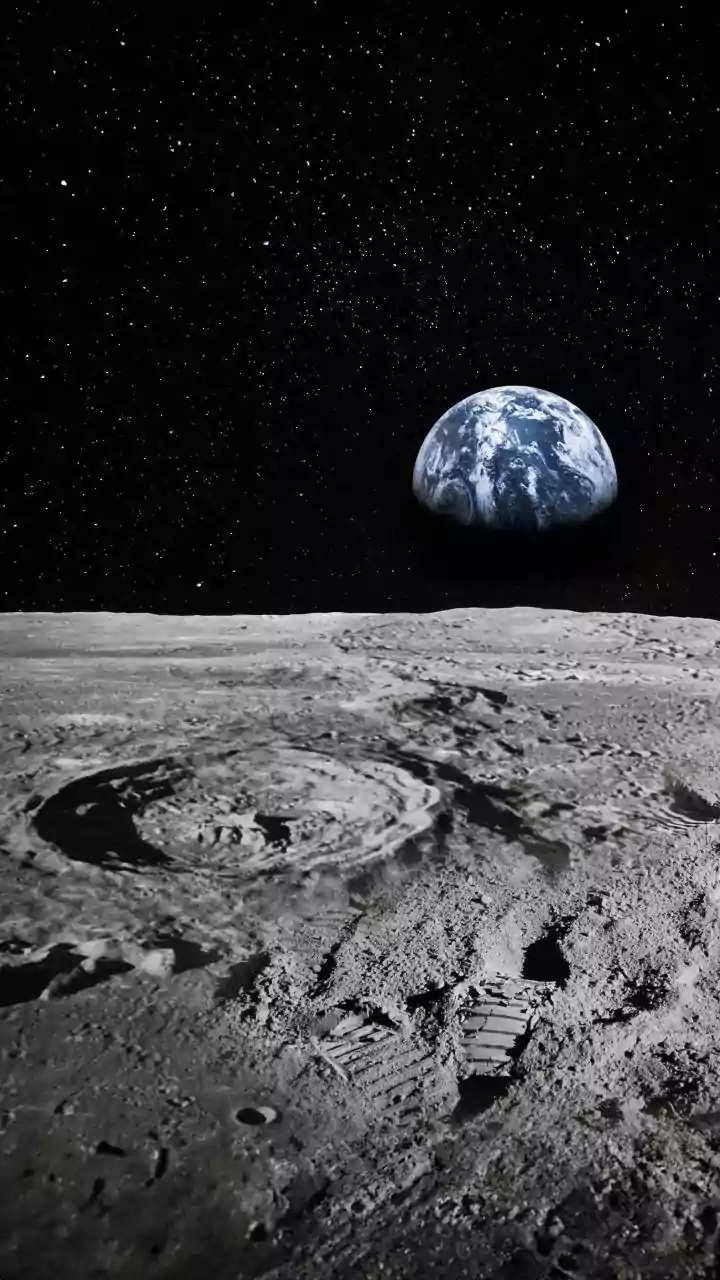
For decades, scientists have theorized that water ice could be trapped in the Moon's permanently shadowed regions near its poles. These craters, which haven't seen sunlight in billions of years, are cold enough to preserve water ice delivered by comets
and asteroids. Early missions like NASA's Clementine and Lunar Prospector in the 1990s detected hints of hydrogen, a key component of water. More recently, data from India's Chandrayaan-1 mission and NASA's Stratospheric Observatory for Infrared Astronomy (SOFIA) confirmed water not only as ice in the shadows but also in smaller amounts across the sunlit surface. These discoveries turned theory into fact, sparking a new race to understand the exact location, quantity, and accessibility of this vital resource. Knowing where the water is concentrated is the first step toward harvesting it.
High-Resolution Maps Light the Way
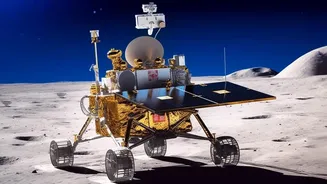
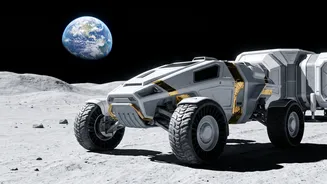
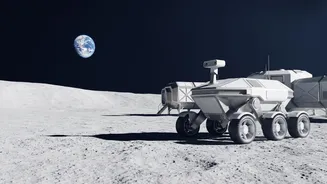
The latest breakthrough comes not from a single probe but from the sophisticated analysis of data from multiple missions, creating the most detailed lunar water maps to date. Organizations like the U.S. Geological Survey are applying Earth-based mineral mapping techniques to our celestial neighbour, helping to pinpoint the most promising locations for ice deposits. These prospectivity maps are crucial for planning future robotic and human missions, including NASA's Volatiles Investigating Polar Exploration Rover (VIPER). The VIPER mission is designed to get a ground-truth look at these deposits, analyzing their composition and depth. This detailed mapping is essential; it's the difference between knowing there's oil in a country and knowing exactly where to drill the well. China's upcoming Chang'e-7 mission also aims to explore the south pole for water resources, highlighting the global interest in this strategic asset.
More Than Just a Drink of Water
While water is essential for astronaut life support, its true value on the Moon lies in its potential as rocket fuel. This concept is part of a broader strategy called in-situ resource utilization (ISRU), which essentially means living off the land. Through a process called electrolysis, an electric current is used to split water molecules (H2O) into their component parts: hydrogen and oxygen. When cryogenically cooled into liquid form, these two elements become a powerful, high-efficiency rocket propellant—liquid hydrogen as the fuel and liquid oxygen as the oxidizer. This means future lunar bases could manufacture their own fuel on-site, a game-changing capability that dramatically reduces dependence on costly Earth-based supply chains.
The Economics of a Lunar Pit Stop
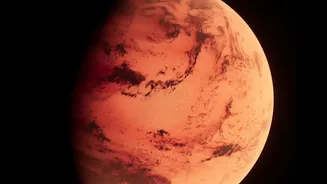
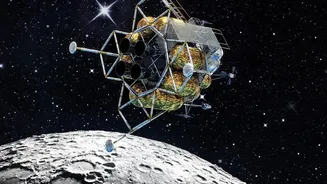
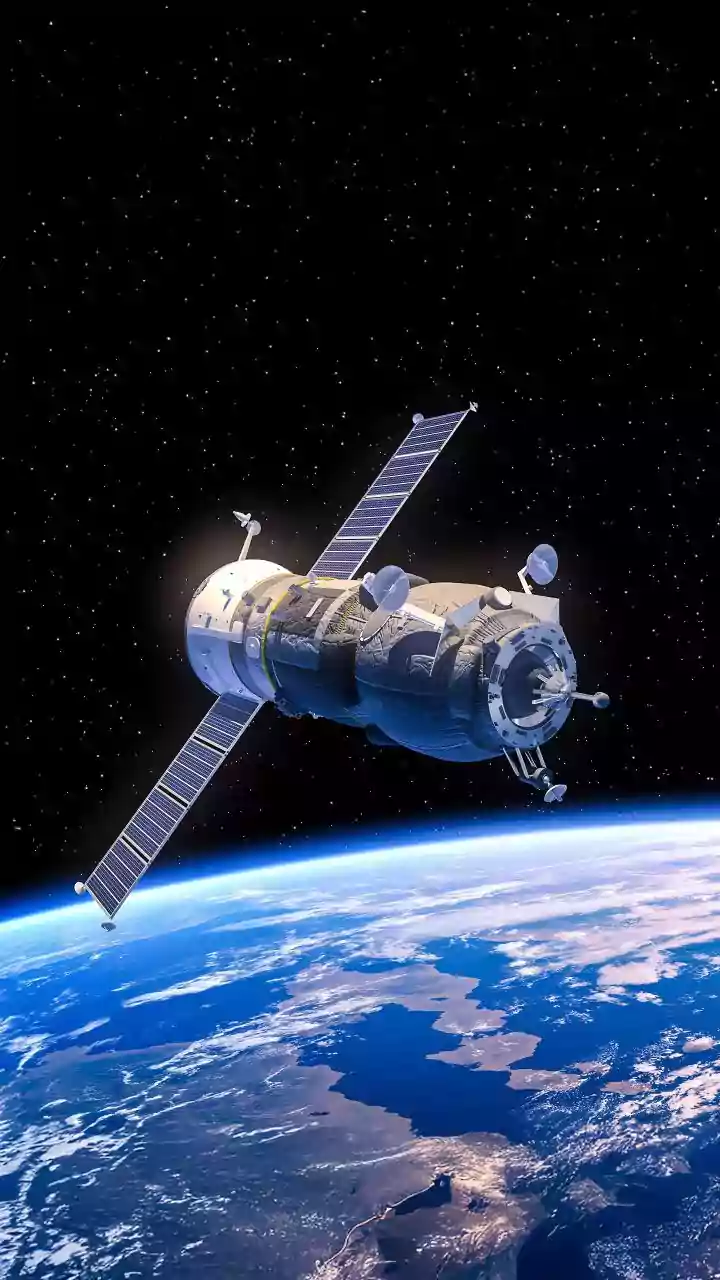
Launching anything from Earth is incredibly difficult and expensive due to our planet's strong gravity. The vast majority of a rocket's mass is the fuel needed just to escape Earth's pull. This is often called the "tyranny of the rocket equation." Launching fuel from Earth to refuel a spaceship in orbit or on the Moon is therefore wildly inefficient. Producing propellant on the Moon, which has only one-sixth of Earth's gravity, would slash the cost and complexity of deep space missions. A spacecraft heading to Mars could launch from Earth with just enough fuel to get to the Moon, top up its tanks at a lunar outpost, and then continue its journey. This would allow for heavier spacecraft, more ambitious missions, and a truly sustainable model for exploring the solar system. The Moon would no longer be just a destination; it would be a critical logistics hub.
Building the Outposts of Tomorrow
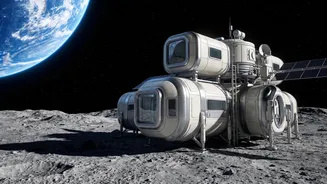
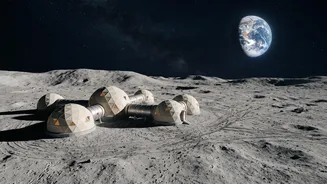
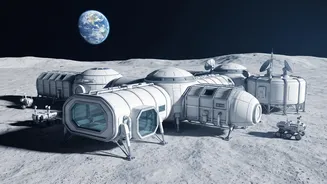
The vision of lunar refuelling outposts is a cornerstone of NASA's Artemis program, which aims to establish a sustained human presence on the Moon. This effort is not just a government project; NASA is actively partnering with commercial companies to develop the technologies needed for resource extraction and utilization. Companies like Blue Origin are already designing systems to extract oxygen from lunar soil, or regolith, for both breathable air and propellant. These future outposts will likely be a combination of robotic mining rigs, processing plants to extract and purify water, and liquefaction facilities to turn the resulting hydrogen and oxygen into propellant. The first steps are already underway, with contracts awarded to commercial firms to demonstrate the collection of lunar resources, proving that the business of space is ready for its next giant leap.