



The Green, Starchy Beginning
An unripe, green banana is firm, waxy, and has a slightly bitter, starchy taste. At this stage, its carbohydrate content is mostly resistant starch. Think of this starch as complex chains of sugar molecules locked tightly together. This resistant starch behaves
more like a dietary fibre; it’s not easily broken down into sugar and can be beneficial for gut health by feeding good bacteria. However, due to this high starch content, a green banana can also cause bloating for some people.
The Ripening Trigger: Ethylene Gas
The entire ripening process is kicked off by a natural plant hormone called ethylene. Bananas are known as 'climacteric' fruits, which means they continue to ripen even after being picked. As they mature, they start to produce ethylene gas. This hormone acts as a signal, activating specific enzymes within the fruit that are responsible for the dramatic changes in colour, texture, and taste. This is why placing a banana in a paper bag can speed up ripening—it traps the ethylene gas, accelerating the process.
From Starch to Sugar: The Sweet Transformation
The most noticeable change during ripening is the increase in sweetness. This happens because enzymes, primarily one called amylase, get to work breaking down the complex resistant starches. These long starch chains are converted into much simpler sugars like fructose, glucose, and sucrose. A fully green banana might have less than 2 grams of sugar per 100 grams, whereas a fully ripe, yellow banana can have 12 grams or more. This conversion is also why ripe bananas are generally easier to digest.
Why They Get Soft: The Pectin Breakdown
The change from a firm fruit to a soft, almost creamy one is all about texture. The structural integrity of a green banana comes from pectin, a type of polysaccharide that acts like a 'glue' holding the fruit's cells together. As ethylene signals the ripening process, another set of enzymes, including pectinase and pectate lyase, begin to break down this pectin. As the pectin degrades, the cell walls weaken and the cells start to separate, resulting in the soft, sometimes mushy, texture of a ripe banana.
A Changing Nutritional Profile
The nutritional content of a banana isn't static; it evolves as it ripens. While green bananas are high in gut-friendly resistant starch, ripe bananas have their own advantages. As they ripen, certain nutrients can become more bioavailable, meaning our bodies can absorb them more easily. The level of antioxidants, which help protect our cells from damage, also increases as a banana matures and develops brown spots. On the other hand, the increase in simple sugars means the glycemic index rises, which is a consideration for those monitoring their blood sugar levels.
Peak Sweetness and Beyond
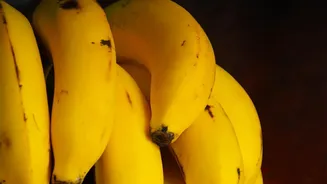
A yellow banana with brown spots is often considered to be at its peak ripeness. At this stage, most of the starch has converted to sugar, making it the sweetest and most flavourful for eating raw or using in smoothies. These brown spots, a result of a process called enzymatic browning, are a sign that the fruit has reached maximum sweetness. If left even longer, the banana will become overly soft and start to ferment, developing a very pungent aroma. However, these overripe bananas are perfect for baking, as their high sugar content and soft texture blend perfectly into batters for banana bread and muffins.