
The Science Behind the Stretch
Yoga's ability to increase flexibility isn't magic; it's science. The practice primarily uses static stretching, where you hold a pose for a period of time. This gradually encourages plastic changes in your muscles, meaning they learn to maintain a new,
longer length over time. This process targets not just the major muscle groups but also the web of connective tissue, called fascia, that surrounds them. By holding poses, you gently release tension in this fascia, allowing for a greater range of motion throughout your body. Regular practice effectively retrains your muscles and tissues to be more supple and resilient.
More Than Just Muscles
Flexibility isn't purely a physical state; it's also regulated by your nervous system. When you feel tense, your brain sends signals that cause muscles to contract. Yoga's emphasis on deep, controlled breathing (pranayama) activates the parasympathetic nervous system, which is responsible for rest and relaxation. This calming effect helps your muscles release involuntary tension, allowing you to sink deeper into a stretch safely. By connecting your mind and breath to your movement, you teach your body that it's safe to let go, leading to more significant and sustainable gains in flexibility.
Cat-Cow (Marjaryasana-Bitilasana)
This gentle, flowing sequence is a perfect warm-up for the spine. Start on your hands and knees with wrists under your shoulders and knees under your hips. As you inhale, drop your belly, lift your chest and tailbone, and look forward into Cow Pose. As you exhale, round your spine toward the ceiling, tuck your chin, and press the mat away into Cat Pose. This movement improves spinal flexibility, relieves tension in the back and neck, and gently awakens the core. It's an ideal starting point for any beginner.
Downward-Facing Dog (Adho Mukha Svanasana)
Perhaps the most iconic yoga pose, Downward-Facing Dog is a full-body stretch. From a hands-and-knees position, tuck your toes and lift your hips up and back, forming an inverted 'V' shape. For beginners, it's crucial to keep the knees generously bent. This takes pressure off tight hamstrings and allows you to focus on creating a long, straight line from your wrists to your hips. Press firmly through your hands to stretch your shoulders and upper back, while the pose works to lengthen your hamstrings and calves over time.
Child's Pose (Balasana)
This is a restorative resting posture that offers a gentle stretch for the entire back body. From a kneeling position, sit back on your heels, then fold forward, resting your torso on your thighs. Your arms can stretch out in front of you or rest alongside your body. Child's Pose gently lengthens the spine, opens the hips, and eases tension in the lower back, shoulders, and neck. It’s a go-to pose for relaxation and a great way to reconnect with your breath during practice.
Standing Forward Fold (Uttanasana)
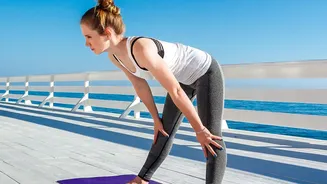
This pose is a fantastic stretch for the hamstrings, calves, and back. Stand with your feet hip-width apart. As you exhale, hinge at your hips—not your waist—and fold forward. The key for beginners is to bend your knees as much as needed to allow your spine to release and your head to hang heavy. Don't worry about touching your toes; instead, focus on letting gravity gently lengthen your back and the backs of your legs. You can rest your hands on your shins or on blocks for support.
Bridge Pose (Setu Bandhasana)
An accessible backbend, Bridge Pose helps improve spinal flexibility and opens up the chest and shoulders—areas often tight from slouching. Lie on your back with your knees bent and feet flat on the floor, hip-width apart. Press into your feet and lift your hips off the floor. This action strengthens your glutes and hamstrings while stretching your hip flexors and chest. It’s a great counter-pose to all the forward-folding in our daily lives.