





The Instinct for Light
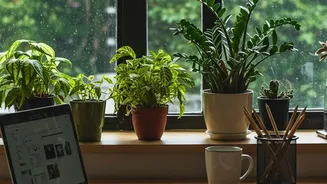
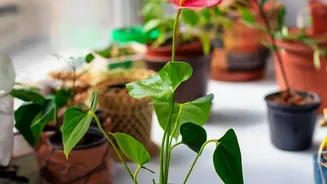
That persistent lean is a natural phenomenon called phototropism—literally, 'light turning'. For a plant, light is food. Through photosynthesis, plants convert sunlight into the energy they need to survive and grow. Because an indoor plant’s primary light source
is often a single window, it will instinctively direct its growth to maximize exposure. Stems and leaves actively seek out the strongest rays, ensuring the plant’s 'solar panels' are positioned for peak energy production. This behaviour is hardwired into most plants, a relic of their evolutionary need to compete for sunlight in a crowded forest or field.
Auxin: The Hormone in Charge
The mechanism behind this movement is controlled by a powerful plant hormone called auxin. Primarily produced at the tips of stems, auxin regulates cell elongation. When light hits one side of a plant, the auxin migrates to the shaded side. This concentration of auxin on the darker side stimulates the cells there to grow longer and faster than the cells on the sunlit side. This difference in growth rate causes the entire stem to physically bend towards the light source. It's a simple but ingenious system that allows a plant to dynamically adjust its position for optimal survival.
Why Window-Facing Leaves Thrive
This hormonal response also explains why the leaves facing the window often look different from those on the back of the plant. The window-facing foliage receives the most direct light, making it the most productive part of the plant for photosynthesis. As a result, these leaves are often larger, healthier, and a more vibrant shade of green. In contrast, leaves on the shaded side may become smaller, paler, or even turn yellow and drop off. The plant is essentially making a business decision: it diverts resources away from the underperforming, shaded leaves to support the high-performing ones doing the crucial work of energy production.
The Simple Solution: A Quarter Turn
While phototropism is great for a plant's survival, it can lead to a lopsided, unbalanced appearance indoors. A plant that consistently leans in one direction can develop weak stems and sparse foliage on its shaded side. The solution is wonderfully simple: rotation. By regularly turning your plant, you ensure that all its sides get a turn in the sun. This encourages the stem to grow straight and strong, and it promotes a fuller, more symmetrical shape as leaves develop evenly all around the pot. This small action supports the plant’s overall structural integrity and aesthetic appeal.
A Practical Rotation Schedule
There’s no single, rigid rule for how often to rotate, but a common and easy-to remember method is to give the pot a 90ndegree, or quarterturn, each time you water it. This ensures consistency. For plants in lower light, a turn every few weeks is beneficial, while those in very bright light might only need it every couple of months. The key is to observe your plant. If you notice a lean starting, it's time for a turn. A gradual quarterturn is generally better than a sudden $180$-degree spin, which can stress some plants.
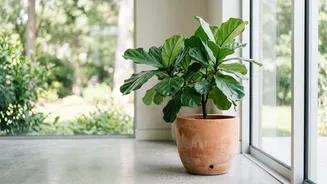
While most plants benefit from rotation, there are a few exceptions. Some plants, like flowering orchids or Christmas cacti, can be sensitive to changes once they've set their buds. Rotating them at this stage might cause the plant to drop its flowers. Similarly, some climbing plants that have a distinct 'front' and 'back' may not need it. And notoriously fussy plants like the fiddle leaf fig can sometimes react poorly to any change in their environment, including rotation. In most cases, however, a gentle , consistent rotation is one of the easiest ways to keep your indoor greenery looking its best.