
From Clipart to Custom Art
For decades, creating a presentation involved a predictable, often frustrating, workflow. You’d open PowerPoint or Google Slides, pick a slightly tired template, and then begin the hunt for visuals. This meant trawling through stock image websites for photos
that were generic at best and awkwardly staged at worst. For students explaining complex scientific concepts or creators pitching a unique brand vision, finding the perfect image was nearly impossible. The result was often a compromise: a slide deck that looked professional enough but lacked a unique creative spark or true visual storytelling. This process consumed valuable time that could have been spent refining the actual content and delivery.
The AI-Powered Visual Revolution
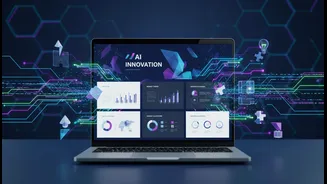
Today, that entire process is being upended by artificial intelligence. A new class of tools has emerged, falling into two main categories. First are the dedicated AI image generators like Midjourney and DALL-E, which can create a completely original, high-quality image from a simple text description. Need a visual of a 'cyberpunk city powered by sustainable energy' or an 'abstract representation of data anxiety'? You can now generate it in seconds. Second are integrated AI presentation makers like Gamma and Tome, or features within platforms like Canva and Adobe Express, which use AI to generate entire slide layouts, text, and custom images based on a single prompt. This allows a user to go from a blank page to a nearly finished deck with unprecedented speed.
Unlocking Speed and Bespoke Creativity
The most immediate benefit for students and creators is a massive boost in efficiency. Instead of searching, they are creating. This frees them up to focus on the core message of their presentation rather than getting bogged down in design details. Beyond speed, AI offers unparalleled customization. It can produce visuals for niche subjects where no stock photography exists, enabling far more precise and impactful storytelling. For a student presenting on historical events, AI can create scenes in a specific artistic style; for a startup founder, it can generate product mockups that perfectly match their brand aesthetic. This accessibility democratizes design, allowing individuals without formal training to produce polished, professional-quality work.
New Tools, New Challenges
However, this transformation is not without its hurdles. The biggest mistake is treating the AI's first draft as the final product. AI-generated presentations can often be text-heavy, visually repetitive, or even contain factual errors, known as 'hallucinations'. Human oversight is essential to verify every claim and refine the narrative. Furthermore, getting the AI to produce exactly what you want requires a new skill: prompt engineering. A vague prompt leads to a vague image; a detailed, descriptive prompt yields a much better result. Users also face challenges with consistency—ensuring all images in a deck share a coherent style—and navigate ethical questions around copyright and the use of AI to mimic the styles of human artists.
The Future Is a Creative Partnership
AI is not replacing the need for human creativity; it's becoming a partner in it. The focus is shifting from the manual labour of design to the strategic act of creative direction. The most valuable skill is no longer finding a photo but clearly articulating a vision that the AI can execute. As these tools become more sophisticated and integrated into the platforms we use daily, from Google Slides to PowerPoint, proficiency in using them will become a standard expectation. For students, it means a more effective way to demonstrate their understanding. For young creators, it represents a powerful tool for bringing unique ideas to life faster than ever before.