



The Great Cracker Debate
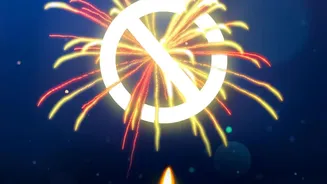
For several years, India has been navigating a complex path between festive traditions and environmental health. Due to alarming spikes in air pollution during Diwali, the Supreme Court has intervened multiple times, leading to a nationwide mandate on firecrackers.
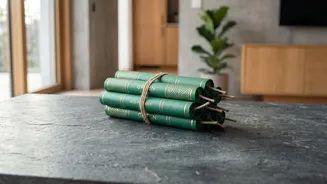
The court has aimed for a balance, ruling out a complete, blanket ban on crackers but also refusing to allow their unrestricted use. This has led to the rise of 'green crackers' as the only legally permitted option in most parts of the country. While some states or cities may impose stricter rules, including complete bans, the national framework revolves around these reduced-emission alternatives.
What Makes a Cracker 'Green'?
A 'green cracker' is not a marketing term for any eco-friendly-looking product; it's a specific formulation developed by the Council of Scientific and Industrial Research-National Environmental Engineering Research Institute (CSIR-NEERI). These are designed to have a smaller environmental footprint, reducing particulate matter emissions by at least 30% compared to traditional crackers. Critically, they do not contain harmful chemicals banned by the Supreme Court, such as barium nitrate, lithium, arsenic, and mercury. Instead of barium nitrate, which creates the bright green sparks but is highly polluting, green crackers use substitutes like potassium nitrate. They are not pollution-free, but are significantly less harmful.
Permitted for Sale: The Approved Trio
Only CSIR-NEERI designed and approved formulations are legal. Currently, there are three main types of green crackers you will find in the market: SWAS (Safe Water Releaser), STAR (Safe Thermite Cracker), and SAFAL (Safe Minimal Aluminium). SWAS crackers release water vapour as they burst, which helps suppress dust. They are known to reduce particulate matter by about 30%. STAR crackers have reduced aluminium content and emit less sound. SAFAL crackers also use minimal aluminium and are quieter than their traditional counterparts. Recently, the Supreme Court also permitted the use of next-generation 'joined crackers' or 'laris', provided they meet the strict green cracker formulation and certification standards.
How to Identify Genuine Green Crackers
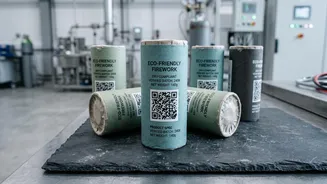
With many fake products in the market, verification is key. Every box of genuine green crackers must feature two important identifiers. First, look for the official CSIR-NEERI green logo. Second, and more importantly, is the QR code printed on the box. You should be able to scan this QR code with your smartphone. It should lead to a page that verifies the cracker's details, including the manufacturer and its certification. If a QR code is missing, doesn't scan, or leads to a generic webpage, the product is likely fake. Always buy from licensed sellers and avoid loose crackers sold without original packaging.
Know the Other Rules and Penalties
The rules are not just about the type of cracker. Most states and cities also enforce strict time windows for bursting them, typically for a few hours in the evening, such as between 8 PM and 10 PM. These timings can vary by location, so it's essential to check the latest orders from your local authorities. There are significant penalties for violations. The manufacture, storage, or sale of banned firecrackers can lead to fines up to ₹5,000 and imprisonment for up to three years under the Explosives Act. Bursting illegal crackers can also result in fines and, in some cases, jail time.