



First, Let's Define 'Day' and 'Year'
Before we dive into Venus's weirdness, let's reset our clocks to how we measure time on Earth. A 'year' is straightforward: it's the time it takes for a planet to complete one full orbit around its star. For Earth, that’s about 365 days. A 'day' is a bit trickier
because there are two ways to measure it. A 'sidereal day' is the time it takes for a planet to complete one full 360-degree rotation on its axis. For Earth, this is about 23 hours and 56 minutes. A 'solar day' is the time it takes for the Sun to return to the same position in the sky, which is what we typically call a 24-hour day. The slight difference is because Earth is also moving along its orbit while it spins. These definitions are crucial to understanding the mess that is the Venusian calendar.
Venus's Bizarre Timekeeping
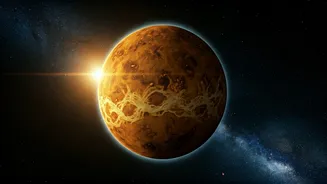
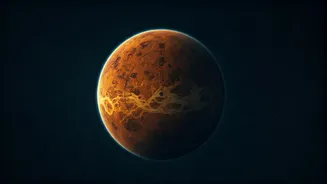
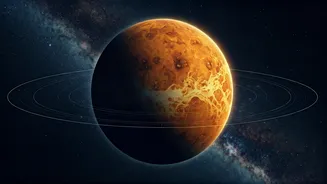
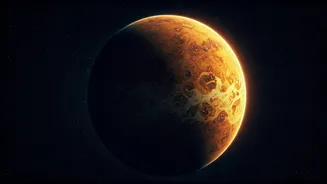
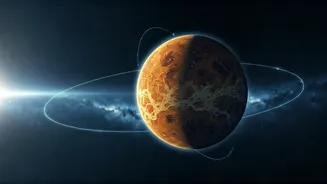
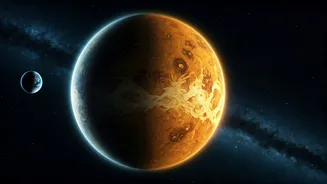
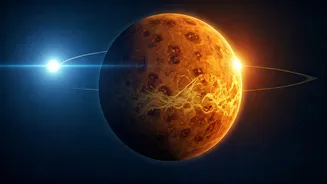
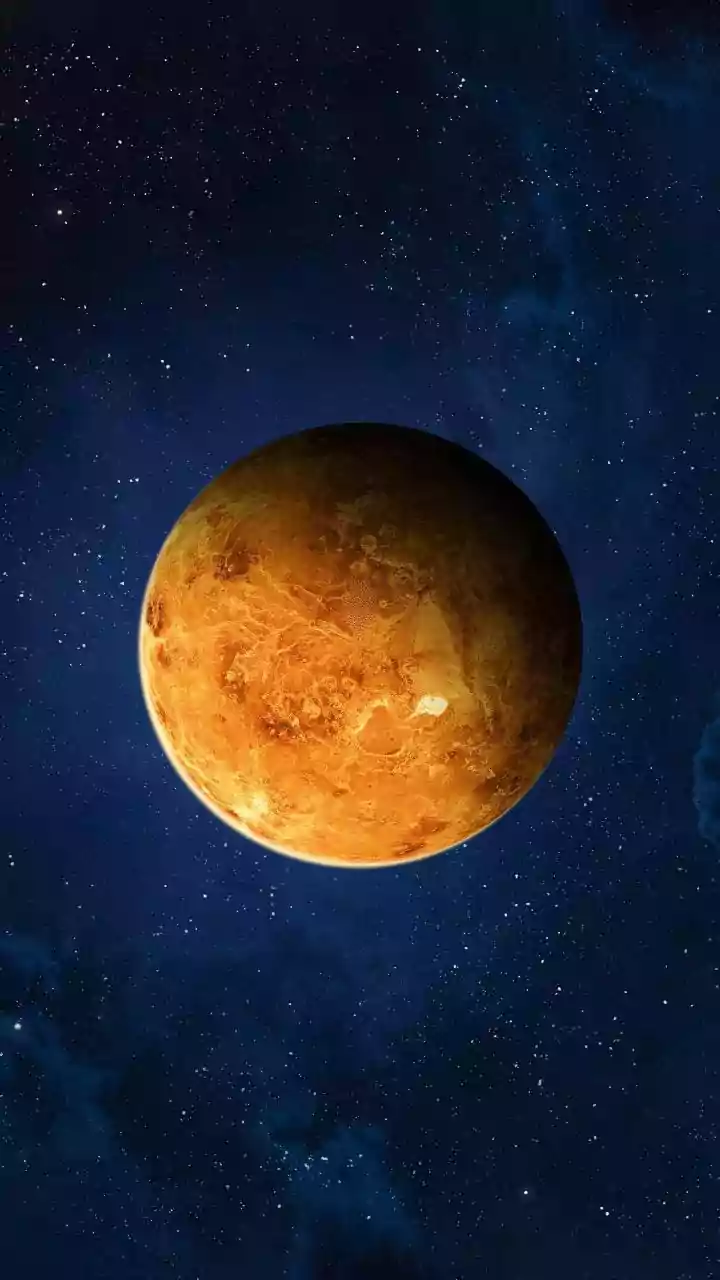
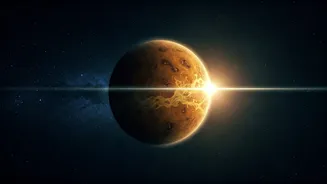
Now, let’s look at Venus. A year on Venus—one trip around the Sun—takes about 225 Earth days. Here’s where it gets strange. A sidereal day on Venus—one full rotation on its axis—takes approximately 243 Earth days. Read that again: it takes longer for Venus to spin once than it does for it to orbit the Sun. This is the core of the paradox. If you were standing on Venus, a single spin of the planet would last longer than your entire year. This is unlike any other planet in our solar system. Mercury has a strange day-year ratio, but Venus is in a league of its own.
The Slow, Backward Spin
The primary culprit behind this temporal chaos is Venus's rotation. It is incredibly, painfully slow. But it's not just slow; it's also backward. Nearly every planet in our solar system, including Earth, spins on its axis in a counter-clockwise direction (prograde). Venus spins clockwise, a phenomenon known as retrograde rotation. If you could see the sun from Venus’s surface (through its thick, toxic clouds), it would rise in the west and set in the east. This retrograde motion combined with its snail-like pace is what creates the planet's mind-bending calendar.
But a 'Day' is Shorter Than a Year?
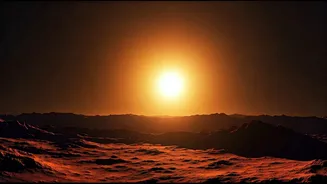
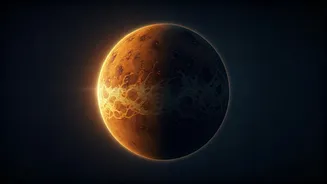
Here's one final twist. While its rotation period (sidereal day) is 243 Earth days, its solar day—the time from one sunrise to the next—is 'only' about 117 Earth days long. How can that be? It's because the planet's retrograde (backward) spin works against its orbit around the Sun. As Venus slowly spins clockwise, it’s also moving counter-clockwise around the Sun. This opposition means the Sun appears to 'catch up' faster in the Venusian sky, shortening the time between sunrises. So while its *rotation* is longer than its year, the perceived day-night cycle is shorter. It’s a classic case of cosmic mathematics creating a very strange result.
Why Is Venus So Weird?
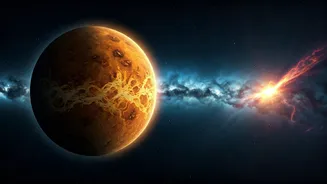
Scientists don't have a single definitive answer, but there are two leading theories. The first involves a cataclysmic past. Some astronomers believe that early in its history, Venus was hit by a massive asteroid or planetoid. Such a colossal impact could have been powerful enough to not just slow its original rotation to a crawl but actually reverse it. The second theory focuses on Venus’s atmosphere. Venus has an incredibly thick and heavy atmosphere—about 90 times denser than Earth's. This dense, fast-moving atmosphere creates powerful tidal forces that drag on the planet's surface. Over billions of years, this atmospheric friction could have acted as a powerful brake, slowing down its spin and perhaps even contributing to its reversal. It's possible that both factors, an ancient impact and a heavy atmosphere, played a role in creating the strange, slow world we see today.