





A New Frontier in Space Collaboration
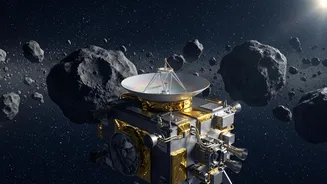
In early October 2026, the UAE unveiled a key component of its ambitious Emirates Mission to the Asteroid Belt (EMA): a homegrown probe destined for a five-billion-kilometre journey. At the heart of this technological marvel is a significant contribution
from HEX20, a Thiruvananthapuram-based space-tech startup. This makes HEX20 the first private Indian company to be selected for a deep-space mission by the Gulf nation, signaling a new era of international partnership in space exploration and a major vote of confidence in India's burgeoning private space ecosystem.
Meet HEX20: The Indian Innovator
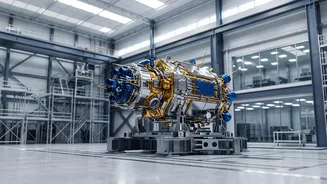
Founded by a group of young Malayali entrepreneurs, HEX20 has quickly made a name for itself in the competitive space technology sector. With an engineering facility in Thiruvananthapuram's Technopark and operations in the UAE's Masdar City, the company was selected by the UAE Space Agency and the Technology Innovation Institute (TII) in November 2024 to contribute to the high-stakes mission. HEX20's primary role was to develop the probe's spacecraft bus—the core structure that houses and operates the payload—as well as its mission-critical software, onboard computer, and robust power systems designed to withstand the harsh environment of deep space. The company delivered these complex systems in just 15 months, a testament to its engineering prowess.
The Mission's Ambitious Goals
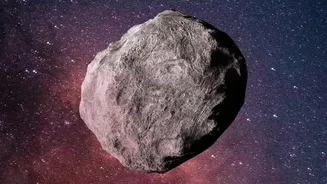
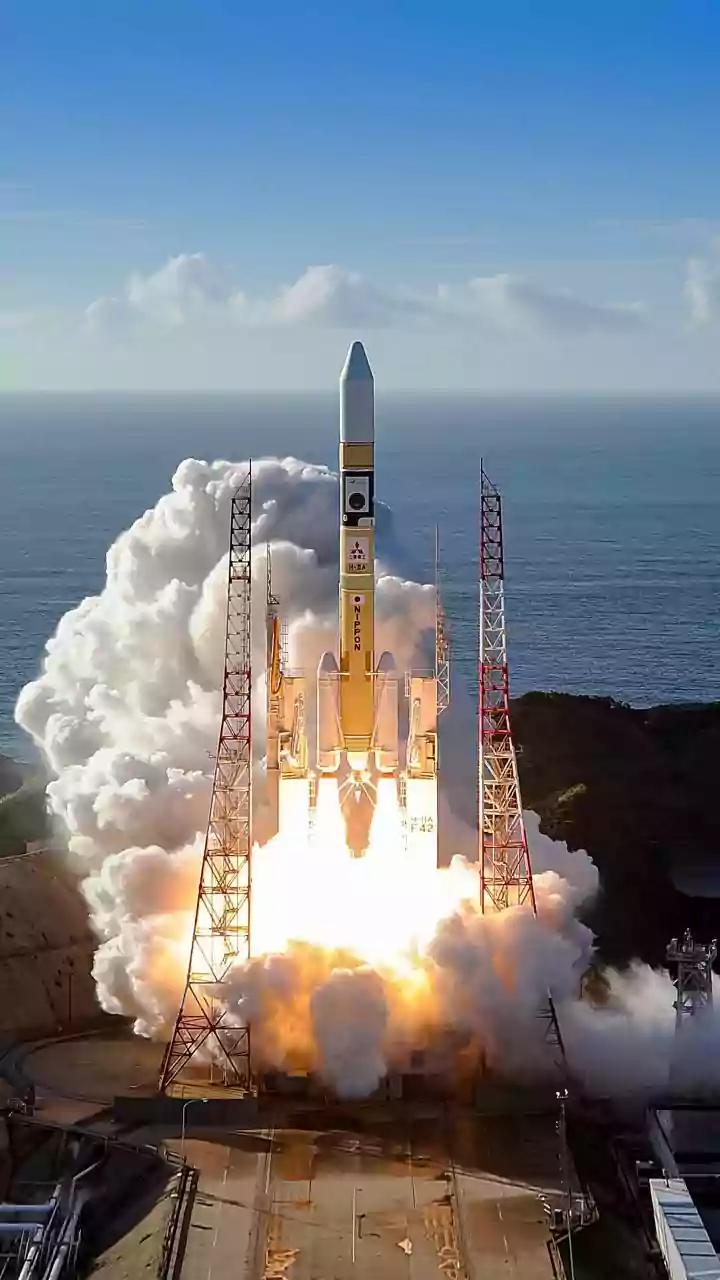
The EMA mission is one of the most complex interplanetary journeys ever planned. Scheduled for launch in March 2028 from Japan, the main spacecraft, named the MBR Explorer, will travel for eight years. It will perform gravity-assist manoeuvres around Venus, Earth, and Mars to propel it toward the main asteroid belt. The spacecraft will fly by and study six different asteroids before reaching its final destination in early 2036: an intriguing, reddish asteroid named 269 Justitia. No mission has ever visited Justitia, and scientists believe studying it could offer new insights into the formation of our solar system and the origins of water and organic materials on Earth.
An Autonomous Landing on an Asteroid
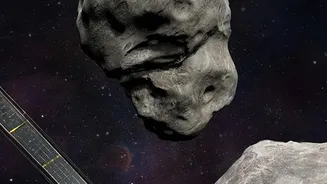
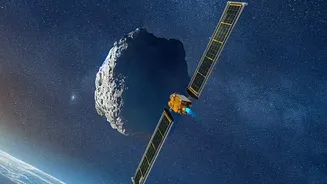
Once the MBR Explorer reaches Justitia, the probe carrying HEX20's technology will take centre stage. It will separate from the main spacecraft and begin an autonomous descent to the asteroid's surface. Operating without direct commands from Earth, its advanced software, developed by HEX20, will decide when and what images to capture during its descent. The probe is designed for a hard landing, and while it isn't expected to survive the impact, it aims to transmit close-range images and data on the asteroid's surface composition in its final moments. If successful, Justitia will become only the seventh asteroid in history to be reached by a man-made probe.
A Strategic Leap for India and the UAE
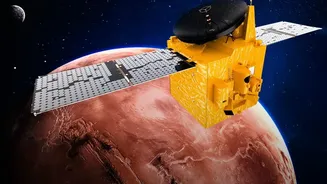
This collaboration is more than just a single mission; it represents a deepening strategic partnership between India and the UAE. Both nations have demonstrated significant space capabilities, with India's successful Chandrayaan and Mars missions and the UAE's Hope Probe. This project moves beyond simple cooperation to genuine integration, leveraging India's strength in cost-effective engineering and software with the UAE's ambitious vision and investment in cutting-edge space infrastructure. For India, it provides a global stage for its private startups to prove their capabilities in the most demanding environments, opening doors for future commercial opportunities in the multi-billion-dollar global space economy. For the UAE, it accelerates its goal of becoming a major player in deep-space exploration by leveraging global talent.