



What is the 'Hydrogen for Heritage' Initiative?
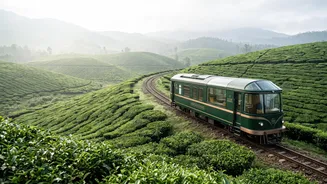
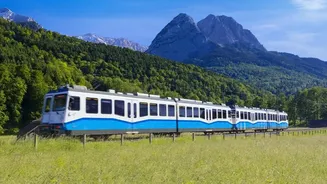
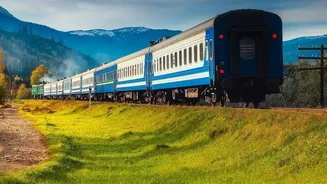
Indian Railways has embarked on an ambitious mission called 'Hydrogen for Heritage' to modernize its fleet on iconic, narrow-gauge railway lines. The project's goal is to replace traditional diesel locomotives with new hydrogen-powered trains on routes
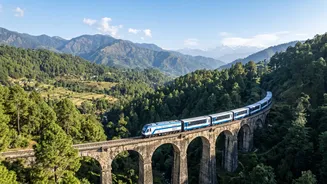
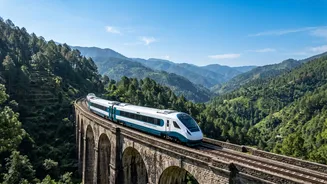
that pass through ecologically sensitive areas and scenic mountain ranges. The plan involves deploying 35 of these advanced trains across several heritage circuits, including the famous Kalka-Shimla route, the Darjeeling Himalayan Railway, and the Nilgiri Mountain Railway. This initiative is not just about upgrading trains; it's a strategic move to preserve the natural beauty of these heritage sites by eliminating air and noise pollution, aligning with India's broader goal of achieving net-zero carbon emissions.
How Do These Hydrogen Trains Work?
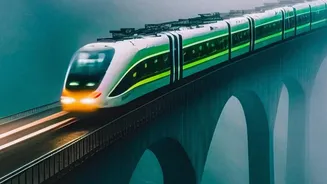
A hydrogen train is essentially an electric train that carries its own power plant. Instead of drawing electricity from overhead wires or burning diesel, it uses a Proton Exchange Membrane (PEM) fuel cell to generate power on board. In this system, compressed hydrogen stored in tanks on the train combines with oxygen taken from the air. This electrochemical reaction produces electricity to power the motors, with the only byproducts being water vapour and a small amount of heat. There is no combustion, which means no smoke, no soot, and no carbon emissions. To handle surges in power demand, such as during acceleration, the trains are also equipped with batteries that store surplus electricity generated by the fuel cell.
The Pilot Project and Future Routes
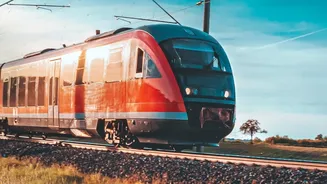
The headline's claim of trains already "running" is becoming a reality. The first prototype began operations in July 2026 on the 89-km Jind-Sonipat section in Haryana, serving as a real-world test for the technology. This pilot project, developed entirely in India, has provided invaluable operational experience and demonstrated the feasibility of clean rail transport. Indian Railways established a major hydrogen storage and refuelling facility in Jind to support these operations. The experience gained from the Jind-Sonipat run is now being used to adapt the technology for the unique challenges of mountainous heritage routes. The Kalka-Shimla line, a UNESCO World Heritage Site, is slated to be one of the first heritage routes to receive these trains, though the project there is still in the planning stages.
Benefits Beyond Zero Emissions
The most obvious advantage of hydrogen trains is the elimination of tailpipe emissions, which directly improves air quality in pristine environments. This is especially critical in delicate mountain ecosystems where diesel soot can have damaging effects. The trains also run almost silently, drastically reducing noise pollution compared to old diesel engines. For passengers, this means a more peaceful and immersive journey through scenic landscapes. On a national level, the project reduces India's dependence on imported diesel, enhancing energy security. It also positions India among a select group of countries, including Germany and Japan, that are pioneering hydrogen rail technology, boosting its status as a leader in green innovation.
Challenges on the Path to a Green Future
Despite the immense promise, the path forward has its hurdles. One of the main challenges is the high cost associated with producing 'green' hydrogen (made using renewable energy) and developing the necessary infrastructure. The trains themselves are expensive, with each estimated to cost around ₹80 crore. Safely storing highly flammable hydrogen gas on a moving train requires advanced technology and stringent safety protocols, including sophisticated leak detection and fire suppression systems. Furthermore, building refuelling stations in remote, hilly terrain like the Himalayas presents significant logistical and engineering difficulties. Overcoming these financial and technical obstacles will be key to expanding the project from a successful pilot to a nationwide network of clean heritage railways.