
A Clockwork Cosmos?
Since the days of Isaac Newton, the question of our solar system's long-term stability has fascinated astronomers and physicists. For the most part, the planets have moved in predictable harmony, their orbits so regular that we could set our calendars
by them. Early mathematicians like Laplace and Lagrange even suggested that the gravitational tugs and pulls between the planets would average out, preserving the system's order. Modern calculations have largely supported this, showing our home system is secure on human timescales and likely for billions of years to come. However, this picture of perfect stability might be an illusion. Scientists have long known that the solar system is technically chaotic, meaning tiny changes today can lead to massive, unpredictable differences millions of years down the line.
The Sun's Unsteady Farewell
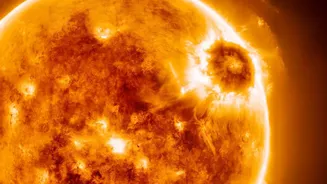
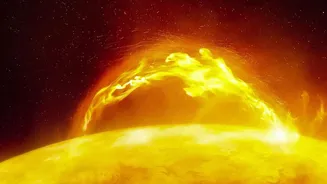
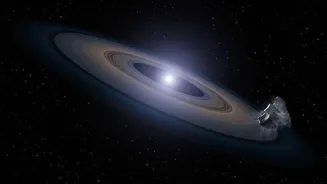
The latest simulations introduce a new variable that drastically shortens the solar system's lifespan: the Sun's death. In about five billion years, our star will run out of hydrogen fuel, swell into a red giant that will likely consume the inner planets, and then shrink into a dim white dwarf. Previous models assumed the Sun would lose nearly half its mass in a smooth, even process. In that scenario, the outer planets would drift farther out but remain in stable orbits for up to 100 billion years. But new research suggests this mass loss won't be smooth. Instead, it will happen in random, uneven bursts, creating small gravitational 'kicks' that nudge the dying star. While tiny, these kicks are enough to slowly disrupt the delicate gravitational balance of the outer planets.
The Giants' Chaotic Dance
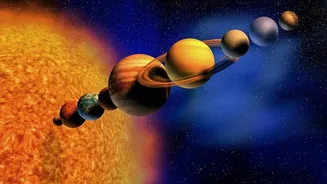
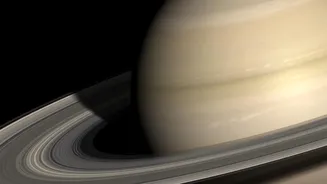
The new models focus on the giant planets—Jupiter, Saturn, Uranus, and Neptune—which hold the key to the entire system's structure. Jupiter and Saturn's immense gravitational influence dictates much of the solar system's evolution. When the Sun's unsteady gravitational kicks are factored in, this delicate balance begins to fray. The simulations show that over time, the orbits of the giant planets can become dangerously elongated and may even cross paths. A close encounter between two gas giants wouldn't necessarily result in a collision but would be a chaotic gravitational event. One planet could steal orbital energy from another, flinging it into a new, unstable orbit or even ejecting it from the solar system entirely.
A New Cosmic Timeline
The implications of this research are profound, slashing the solar system's estimated life expectancy. Instead of a stable configuration lasting for tens or hundreds of billions of years, the new simulations show that instability can set in much sooner. In some models, the entire outer solar system breaks down within just three billion years after the Sun becomes a white dwarf. Roughly 90% of the simulations resulted in this kind of breakdown. In some extreme cases, the chaos begins even before the Sun has finished dying, while it's still in its red giant phase. One simulation showed Saturn being ejected from the solar system only a few million years after the Sun became a white dwarf. Others showed Uranus and Neptune being thrown into new orbits or expelled into interstellar space.