



First, What Is Actually Changing?
Starting October 15, 2026, a new charge called the Merchant Discount Rate (MDR) will be applied to some UPI transactions. Specifically, a 0.4% fee will be levied on person-to-merchant (P2M) payments that are over ₹2,000. This isn't a blanket fee on all UPI use;
in fact, the vast majority of your daily transactions will remain completely unchanged. The government and the National Payments Corporation of India (NPCI) have designed the framework to primarily affect larger commercial transactions while shielding everyday users and small businesses.
The Key Question: Will You Pay More?
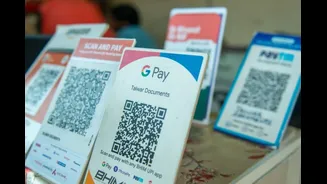
No, you will not. This is the most crucial point for consumers. The MDR is a fee paid by the merchant to their bank and payment service provider for processing the digital transaction. Official guidelines from the Finance Ministry and NPCI explicitly state that this cost cannot be passed on to the customer. You should only pay the listed price of the goods or services. UPI apps are also prohibited from adding any platform or convenience fees related to this MDR. So, when you scan a QR code to pay a merchant, no extra amount should be deducted from your bank account.
Which Transactions Are Actually Affected?
The new 0.4% MDR only applies under specific conditions. It is for person-to-merchant payments over ₹2,000. For very large payments of ₹75,000 or more, the fee is capped at a maximum of ₹300. However, there is a long list of exemptions, which covers most UPI usage in India. Person-to-person (P2P) payments, like sending money to friends or family, remain 100% free, regardless of the amount. All merchant payments up to ₹2,000 are also completely free. According to government estimates, these exemptions mean that around 96% of all merchant UPI transactions will not be affected by the new charge at all.
Are Small Shops Exempt?
Yes. The framework was specifically designed to protect small businesses. Small merchants, such as street vendors and local kirana stores, who receive up to ₹1 lakh per month via UPI QR codes will continue to have zero MDR on all their transactions. This ensures that the small businesses that have become the backbone of UPI's growth are not burdened with new costs. The MDR is targeted at mid-to-large-sized merchants who process higher-value transactions.
Why Is This Charge Being Introduced?
While UPI has been free for users, running the massive infrastructure behind it is not. The system requires constant investment in servers, cybersecurity, fraud prevention, and innovation to handle billions of transactions securely. The zero-fee model, while excellent for driving adoption, was not sustainable in the long run for the banks and payment companies that maintain the ecosystem. The introduction of a nominal MDR on a small fraction of high-value commercial transactions is intended to create a stable revenue stream to fund the network's upkeep and future growth, ensuring UPI remains a robust and reliable platform for everyone.
Your UPI Checklist: The Bottom Line
For consumers, the key takeaways are simple. Continue using UPI as you always have. Sending money to friends and family remains free. Making payments to merchants for amounts under ₹2,000 remains free. For payments over ₹2,000, you are not supposed to be charged extra; the fee is on the merchant. While some businesses might try to unofficially pass on the cost, the rules are clear that they should not. The change simply ensures the long-term health of the digital payment network that has become an integral part of our financial lives.