


The Iconic Natural Afro
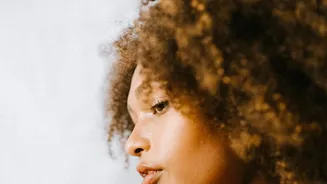
A timeless celebration of natural texture, the afro is more than just a hairstyle; it's a statement of confidence and beauty. This look embraces the hair's natural volume and shape, allowing your coils to be the star of the show. Whether you have a teeny-weeny
afro (TWA) or a longer, more voluminous mane, the key is moisture and gentle shaping. To achieve the look, it's best to start with clean, conditioned, and well-moisturized hair. Use a pick to gently lift the roots for volume, creating a rounded or freeform shape that best suits your face. For added definition, a twist-out or braid-out can be done on damp hair and then fluffed out once dry. The afro is incredibly versatile, fitting for both a casual day out and a formal event. Remember to protect your hair at night with a satin bonnet or pillowcase to keep it healthy and hydrated.
The Ethereal Twisted Halo Braid
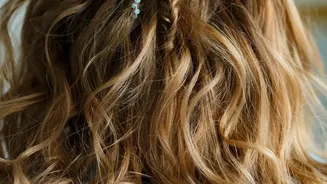
For an elegant style that keeps hair neatly tucked away, the twisted halo braid is a perfect choice. This look involves creating one or two large twists that wrap around the crown of the head, creating a 'halo' effect that is both romantic and practical. To begin, part your hair as desired; you can have a center or side part, or no part at all for a seamless look. Working on moisturized and detangled hair, begin a flat twist on one side of your head, gathering hair as you move along the hairline. Continue the twist all the way around your head. Once you've twisted to the end of the section, secure the twisted rope with bobby pins, tucking the end discreetly. This style can be done on wet or dry hair and is perfect for special occasions or any day you want to feel effortlessly chic.
The Effortless Pineapple Updo
The 'pineapple' is a go-to style in the curly community for its simplicity and effectiveness in protecting curls. It involves gathering your hair into a very high, loose ponytail on top of your head, allowing the curls to spill forward and to the sides, resembling the crown of a pineapple. This technique is primarily used to preserve curl definition overnight, preventing the frizz and flattening that can happen while sleeping. To create it, simply flip your hair forward, gather it loosely at the highest point of your head, and secure it with a gentle tie like a satin scrunchie. The key is to keep it loose to avoid tension on your hairline and to prevent creating a dent in your hair. While fantastic for sleep, the pineapple is also a stylish, casual updo for daytime wear, keeping your curls out of your face.
The Definitive Wash-and-Go
The wash-and-go is the quintessential curly style, designed to define and showcase your hair's natural curl pattern. Despite the name, it involves a bit more than just washing and heading out the door. The process is about cleansing, hydrating, and applying styling products to soaking wet hair to encourage curl clumps and minimize frizz. After washing and conditioning, and while your hair is still saturated with water, apply a leave-in conditioner followed by a gel or curl cream. Many people find success by working in sections to ensure every strand is coated. You can then either air-dry or use a diffuser on low heat to set the curls without disturbing their pattern. A successful wash-and-go results in bouncy, defined curls that can last for several days with proper nighttime care.
The Versatile Bantu Knots
Bantu knots are a powerful, two-in-one hairstyle with deep cultural roots in Southern Africa. The style consists of sectioning the hair and wrapping each section around itself to form a small, coiled knot close to the scalp. These knots can be worn as a stunning geometric style on their own or, once taken down, they reveal beautiful, heatless curls in a 'knot-out'. To create them, start with clean, moisturized, and detangled hair. Part your hair into sections—squares, triangles, or diamonds—and apply a styling cream or gel to each one. Twist each section tightly from root to tip, then wrap the twist around its own base to form a knot, securing the end by tucking it in or using a bobby pin. The size of the sections determines the size of the resulting curls.