





Shadow boxing is one of the most accessible and effective full-body workouts you can do anywhere, anytime. But the secret to transforming it from simply punching the air into a powerful fitness tool lies right at your feet.
What Exactly Is Shadow Boxing?
At its core, shadow boxing is
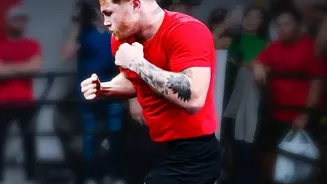
a solo training method where you practice the movements of boxing—punches, defensive slips, and footwork—against an imaginary opponent. It’s a foundational drill for professional fighters, but its benefits extend far beyond the ring, making it a stellar workout for anyone seeking to improve their fitness. Unlike other forms of cardio, it functions as a type of high-intensity interval training that engages your entire body and mind. A session involves continuous movement, alternating between sharp punching combinations and active recovery, all while staying light on your feet.
A True Full-Body Workout
Many beginners mistake shadow boxing as just an arm workout, but its effects are far more comprehensive. Every punch is part of a kinetic chain that starts from the ground up. Your legs and core are constantly engaged to generate power, maintain balance, and move you around your space. This integration turns a simple session into a calorie-burning powerhouse that can burn upwards of 400 calories an hour. It simultaneously builds cardiovascular endurance, improves coordination, sharpens mental focus, and increases muscle endurance in your shoulders, arms, and core. It does all this with minimal impact on your joints, making it a sustainable and safe option for most fitness levels.
The Unsung Hero: Why Footwork Is Crucial
If punches are the language of boxing, footwork is the grammar that gives them meaning. Good footwork is what separates aimless arm-waving from a coordinated, effective workout. It is the foundation for everything: balance, power, and defence. When you focus on footwork, you force your body to work as a single, connected unit. Proper movement ensures you are always stable and able to generate power from your legs and hips, rather than just your shoulders. This constant motion—stepping, pivoting, and circling—is what keeps your heart rate elevated and your larger leg muscles engaged, dramatically increasing the cardiovascular and conditioning benefits of the workout. Without it, you rob yourself of the workout's true potential.
Getting Started: Foundational Footwork Drills
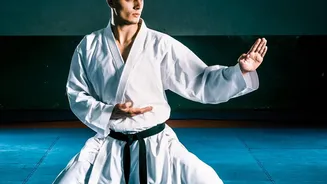
You don't need fancy moves to begin. Mastering the basics will unlock everything else. Start by getting into a proper boxing stance: feet shoulder-width apart with your non_dominant foot forward, knees slightly bent, and weight on the balls of your feet. From there, practice these simple drills:
1. The Step_Drag: This is the core of all boxing movement. To move forward, step with your lead foot, then slide your back foot to reset your stance. To move backward, the back foot moves first. The key is to never cross your feet or bring them too close together, as this will throw you off balance.
2. The Boxer's Bounce: Gently shift your weight from your front foot to your back foot in a light, rhythmic bounce. This keeps your muscles warm and ready to move explosively in any direction.
3. Pivoting: Plant your lead foot and rotate on the ball of it, swinging your back leg around in an arc to change the direction you’re facing. This is essential for creating angles and moving fluidly. Practice 90_degree pivots to your left and right.
Putting Punches and Feet Together
Once you feel comfortable with basic movement, start integrating simple punches. The goal is to coordinate your hands and feet so they work together. Begin with a 'step_in jab', where you step forward with your lead foot as you throw your jab. Then, try a 'step_back cross', where you step backward with your rear foot as you throw your cross (your dominant hand). As you practice, focus on moving smoothly and returning to your balanced stance after every action. The idea isn't to be fast at first, but to be deliberate. This focus on technique is what builds muscle memory and turns shadow boxing into an intuitive, effective fitness routine.