




The Goalscoring Phenomenons
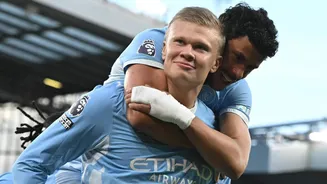
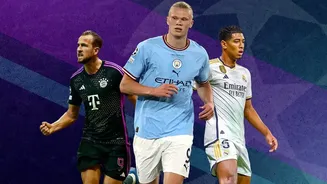
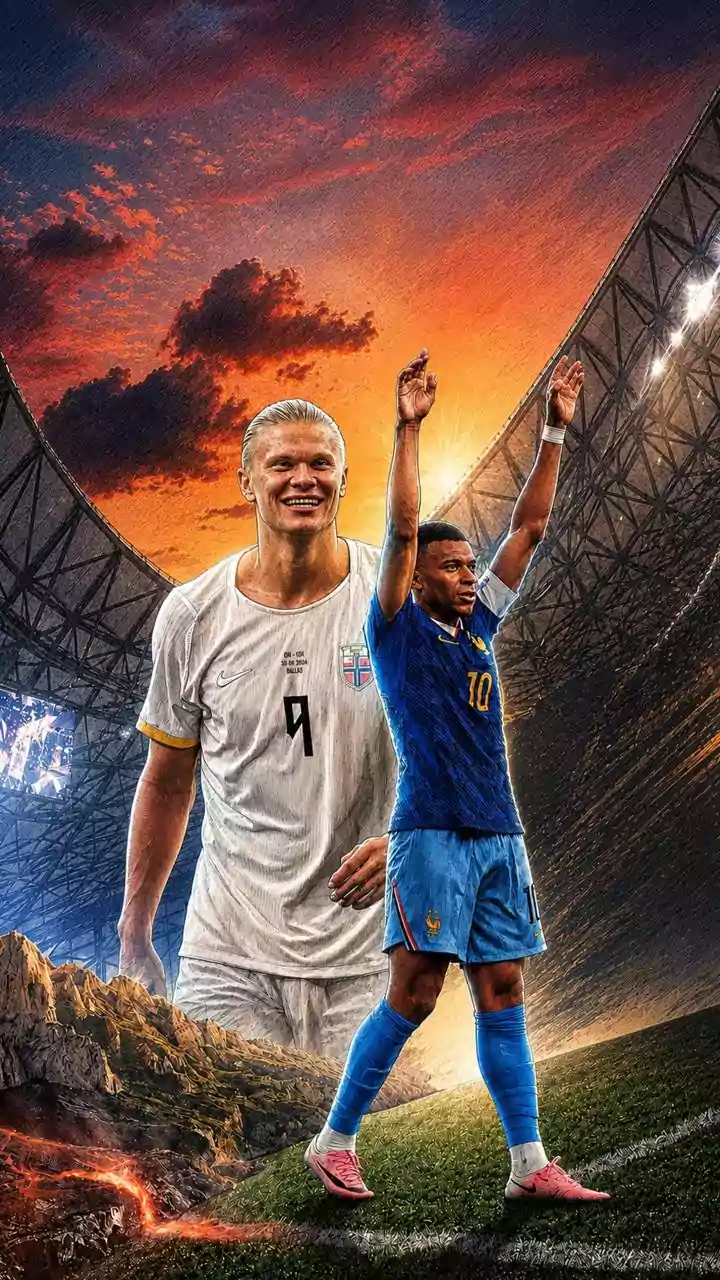
At the heart of any striker's game is the ability to find the back of the net, and both players are in a league of their own. Erling Haaland is a pure, unapologetic finisher. His game is built on devastating efficiency inside the penalty area, a whirlwind
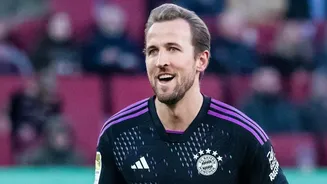
of explosive movement, power, and instinct. He averages very few touches per game, but each one is lethal, designed to end with a shot on goal. His off-ball movement is intelligent beyond his years, using his large frame and deceptive speed to create space where none seems to exist. Analysts note his knack for attacking the blind side of defenders, making him nearly impossible to mark. In the 2025/26 season, Haaland continued his prolific scoring, cementing his reputation as a generational goal machine. Harry Kane, while also an elite scorer, offers a different flavour. There is no single 'type' of Kane goal; he is equally adept at finishing with either foot, heading powerfully, or striking from distance. This variety makes him unpredictable. While Haaland is the specialist poacher, Kane is the master of all finishing trades, a player whose technique is close to perfect. Recent statistics show Kane outperforming his expected goals (xG), a testament to his clinical finishing under pressure.
The Playmaker vs. The Finisher
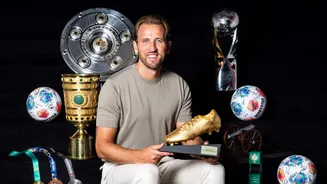
This is where the debate truly diverges. Harry Kane has evolved into far more than just a goalscorer; he is a world-class creator. Often wearing the number 10 shirt in his career, he drops deep into midfield to link play, switch the point of attack with long passes, and orchestrate moves for his team. His partnership with wingers has become legendary, built on his vision and sublime passing range. Kane’s ability to function as a false nine or even a number 10 makes him a complete attacking system in one player. His assist and chance creation numbers are consistently high for a striker. Haaland's game, by contrast, is more focused on the final action. While his link-up play has improved, he is not the creative hub that Kane is. His primary role is to occupy defenders, make runs in behind, and be on the end of chances, not necessarily to create them for others. Some analyses show him creating a surprising number of chances per 90 minutes, but his involvement in the build-up phase is significantly less than Kane's. This isn't a weakness but a reflection of his specialised, devastating role.
Physicality and Athletic Profile
Both men are formidable physical specimens, but they use their bodies in different ways. Haaland is a true athletic phenomenon. Standing at six-foot-four, he possesses a rare combination of brute strength and shocking speed. He has clocked some of the fastest sprint speeds in elite football, and his powerful running style makes him almost unstoppable in full flight. He is dominant in the air and uses his strength to shrug off defenders with ease. Kane, while not possessing Haaland's raw pace, is incredibly strong and intelligent in his physical application. He is one of the best in the world at holding the ball up, using his body to shield it from defenders and bring teammates into the game. His strength is more functional and less explosive, focused on winning duels, maintaining possession under pressure, and providing a reliable focal point for the attack. He also contributes significantly more in defensive phases, tracking back and making crucial clearances.
The Verdict: A Matter of Style
So, who is more complete? The answer depends entirely on the definition. If a complete striker is one who can perform every attacking function to a high level—scoring, creating, linking play, and defending from the front—then Harry Kane holds a strong claim. His versatility and football intelligence are arguably broader. He is a striker with the mind of a midfielder. However, if a striker's primary job is to score goals with unmatched efficiency, then Erling Haaland is the blueprint for the perfect modern finisher. He has refined the most critical skill of a number nine to a point of near-perfection. Kane himself acknowledged their different styles, describing Haaland as a 'machine' and a 'beast' while noting he likes to be more involved in the overall play. The debate is less about who is 'better' and more about which style of forward a team needs: the all-encompassing creator or the unstoppable executioner.