


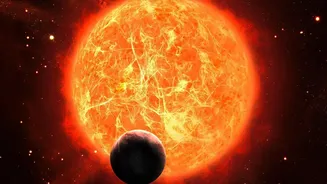
A New Era in Planetary Science
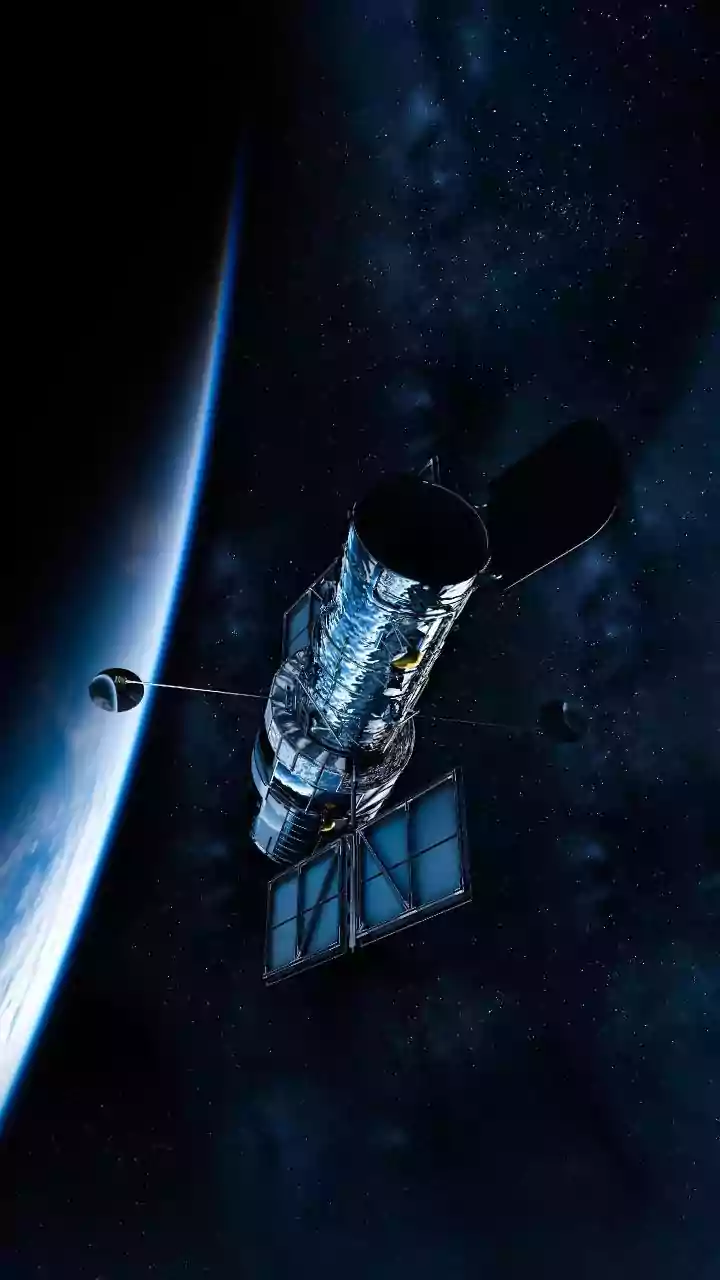
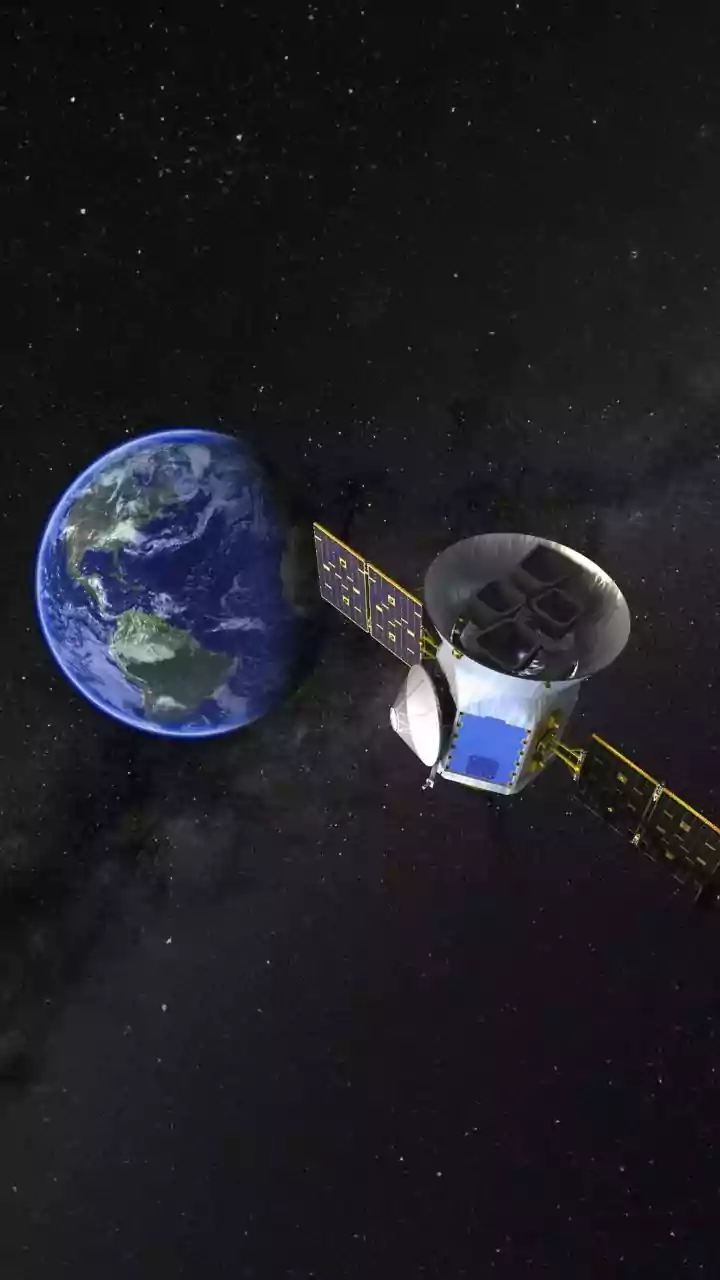
The James Webb Space Telescope represents a monumental leap in our ability to study the cosmos. As a joint venture between NASA, the European Space Agency, and the Canadian Space Agency, it is the largest and most powerful space telescope ever built.
Its technological prowess allows it to do something truly remarkable: analyse the chemical makeup of atmospheres on planets hundreds of light-years away. By capturing the faint light of a star after it has passed through a planet's atmosphere, the JWST can identify the telltale chemical fingerprints of molecules like methane, carbon dioxide, and, most excitingly, water. This has ushered in what many scientists are calling a new era of exoplanet research, moving beyond simply detecting planets to characterising them in detail.
How Webb 'Sniffs' for Water
The primary method Webb uses is called transmission spectroscopy. Imagine a tiny moth flying in front of a bright streetlight. As the moth passes, some of the light is blocked, but some also filters through its delicate wings, and the colour of that filtered light changes slightly. Webb does something similar. When an exoplanet 'transits,' or passes in front of its host star from our perspective, the telescope measures the starlight that filters through the planet's atmospheric rim. Different molecules in the atmosphere absorb light at very specific infrared wavelengths. Water vapour, for instance, leaves a unique signature in the light spectrum. By analysing which wavelengths are missing from the starlight, astronomers can confidently determine the presence of water in a world we can never visit.
Case Study: The Steamy World of GJ 1214 b
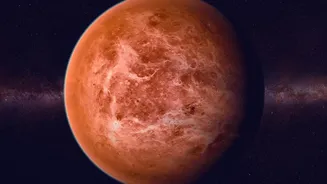
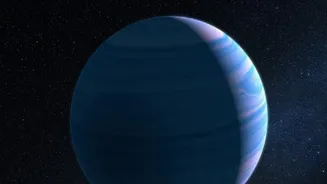
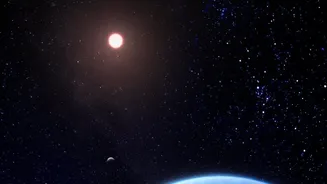
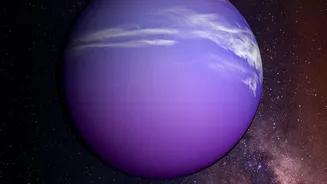
One of the most intriguing targets for Webb has been a 'mini-Neptune' called GJ 1214 b, located about 48 light-years away. For years, this planet was shrouded in a thick haze that previous telescopes couldn't penetrate. However, using its mid-infrared instrument (MIRI), Webb was able to create a 'heat map' of the planet as it orbited its star. The data revealed what is likely a steamy, water-rich atmosphere. While GJ 1214 b is too hot for liquid oceans, the confirmation of significant water vapour in its atmosphere is a landmark discovery. It suggests the planet could have formed as a 'water world' farther from its star before migrating inwards. This finding demonstrates Webb's power to unveil the secrets of previously inscrutable worlds.
More Than Just Water Vapour
Detecting water vapour is a crucial first step, but it doesn't automatically mean a planet is habitable. Context is everything. For instance, on the blistering hot lava planet 55 Cancri e, Webb detected signs of a hydrogen-rich atmosphere, but its surface is thought to be a molten ocean. On another world, WASP-94A b, Webb found water vapour on the planet's hotter 'evening' side, while the 'morning' side was covered in clouds likely made of rock-forming minerals. These findings show that the presence of water is just one piece of a complex puzzle. Scientists must also consider a planet's temperature, atmospheric pressure, and the presence of other key molecules to assess its potential for supporting life.
Paving the Way to Find Earth 2.0
Many of Webb's initial atmospheric studies have focused on large, gaseous planets like 'hot Jupiters' and 'mini-Neptunes'. These worlds are easier to observe, and the data helps scientists refine their techniques. Recent discoveries have also included detecting water vapour in the planet-forming disk of the PDS 70 system, right in the region where rocky planets like Earth could be assembling. This suggests that the essential ingredients for life are available from the very beginning. Each detection of water, whether on a gas giant or a lava world, provides invaluable insights that will be applied to the ultimate goal: analysing the atmospheres of small, rocky planets in the 'habitable zone'—the orbital range where liquid water could exist on a planet's surface. These are the worlds that could be our first true glimpse of an Earth 2.0.