







Our Oceans Get a Digital Upgrade
For decades, monitoring the health of our oceans was a painstaking task, limited by what we could physically observe. Today, that picture has been transformed by a suite of high-tech tools giving us a god's-eye view and an intimate understanding of marine
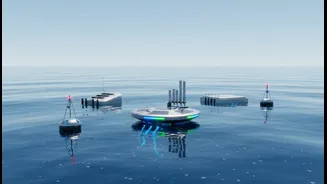
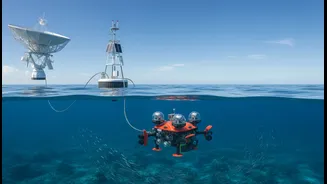
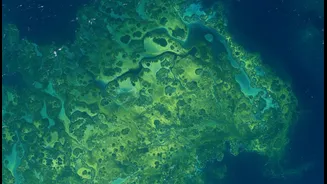
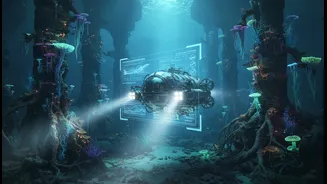
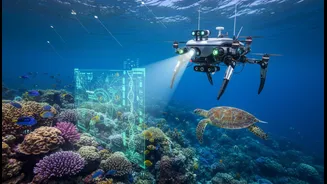
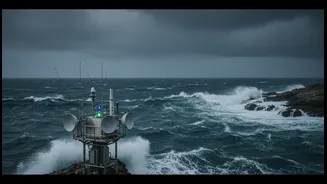
life. Satellite systems, a cornerstone of this revolution, continuously map everything from sea surface temperatures and salinity to the microscopic plankton that form the base of the entire marine food web. The Indian National Centre for Ocean Information Services (INCOIS), for example, uses satellite data to issue early warnings about potential coral bleaching, allowing for timely interventions. This remote sensing capability is augmented by autonomous underwater vehicles (AUVs) and robotic platforms that can dive deeper and stay longer than any human, collecting high-resolution imagery and environmental data from the most inaccessible parts of the sea.
AI: The Brains Behind the Operation
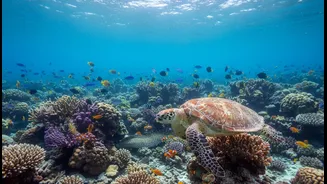
Collecting massive amounts of data is one thing; making sense of it is another. This is where Artificial Intelligence (AI) has become an indispensable ally. AI algorithms can sift through thousands of hours of video or vast satellite datasets in minutes, a task that would take humans years. For instance, researchers at the National Institute of Ocean Technology (NIOT) in Chennai have developed an AI algorithm that uses underwater vehicle imagery to identify and track 'curious corals'—species that show resilience to climate change. This allows scientists to focus on what makes these corals special and how those traits can inform conservation. AI is also being used to analyze underwater sounds, helping to distinguish a healthy, vibrant reef from a degraded one, and to predict biodiversity hotspots, guiding where conservation efforts will be most effective.
Listening to the Voices of the Deep
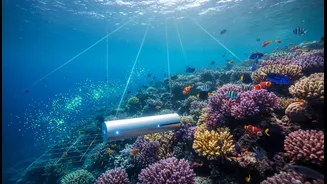
The ocean is far from silent. It's filled with the clicks, whistles, and songs of marine life, as well as the 'sound' of a healthy ecosystem. Scientists are now using sophisticated underwater microphones, called hydrophones, for 'passive acoustic monitoring'. By listening in, they can track the movement of endangered whales, monitor the health of coral reefs, and even detect illegal fishing activity. In the Indian Ocean, the Reef Pulse project has deployed hydrophones to record the 'symphony' of the reefs. AI helps analyze these complex soundscapes to provide a real-time health check. Some studies are even exploring whether playing the sounds of a healthy reef via underwater speakers can attract fish and coral larvae to degraded areas, kickstarting the restoration process.
Uncovering Secrets with Environmental DNA
One of the most groundbreaking techniques is the use of environmental DNA, or eDNA. Every marine creature, from a blue whale to the smallest shrimp, sheds genetic material into the water through skin, scales, and waste. By simply collecting a water sample, scientists can sequence the DNA within it to create a comprehensive list of the species present in that area. This non-invasive method is revolutionizing biodiversity surveys. In India, eDNA studies have been used to assess the rich biodiversity of the coral reefs in the Lakshadweep archipelago and to document life in the estuaries of Goa. It provides a rapid, cost-effective, and incredibly detailed snapshot of life beneath the waves, helping to identify rare or threatened species without ever needing to see or catch them.
From Data to Decisive Action
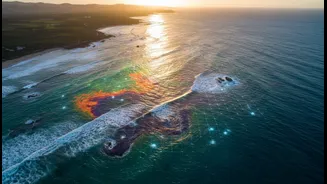
Ultimately, the goal of all this technology is to drive better, faster conservation action. Better monitoring leads to better management. Satellite tracking and AI analysis help in the design and enforcement of Marine Protected Areas (MPAs), ensuring they are placed in the most critical locations and are genuinely protecting marine life from threats like illegal fishing. In India, these technologies support the management of a growing network of MPAs, including vital coral reef and mangrove ecosystems. Indigenous robotics from startups like Kochi-based EyeROV are already supporting coral reef surveys in the Andaman and Lakshadweep islands, providing a less invasive way to monitor these fragile habitats. By integrating advanced tech with policy, India is working to protect its marine resources, which are crucial for the livelihoods of millions and the health of the planet.