




Why Your Kiwi Vines Crave Compost
Kiwifruit vines are heavy feeders, requiring a steady supply of nutrients to produce a bountiful crop. Compost, the dark, crumbly material created from decomposed organic waste, is the perfect slow-release meal for them. It enriches the soil with essential
elements like nitrogen for leafy growth and potassium for fruit development. More than just a fertiliser, compost dramatically improves soil structure. It helps sandy soils retain moisture and nutrients, and it improves drainage in heavy clay soils, preventing root rot, which kiwis are susceptible to. This organic matter also fosters a thriving ecosystem of beneficial microbes and earthworms, which are vital for long-term soil health and vine resilience.
What to Compost from Your Kitchen
An average Indian household can generate a significant amount of compostable waste daily. The key to good compost is balancing 'greens' (nitrogen-rich materials) and 'browns' (carbon-rich materials). Your kitchen is an excellent source of greens, including vegetable peels, fruit scraps, tea leaves, and coffee grounds. Eggshells are great too, as they add calcium. For browns, you can use torn-up newspaper (non-glossy), cardboard, and dry leaves from your garden or neighbourhood. A good rule of thumb is to aim for a mix of about two to three parts brown material for every one part of green kitchen waste. Avoid adding meat, fish, dairy products, or oily and heavily spiced foods, as these can create foul odours and attract pests.
Setting Up Your Budget Compost System
You don’t need fancy or expensive equipment to start composting. One of the easiest methods for a home with a balcony or a small outdoor space is using a simple container. An old bucket, a large earthen pot (matka), or a plastic bin can work perfectly. Just drill several holes in the sides and bottom to ensure good air circulation, which is crucial for the decomposition process and prevents the waste from becoming a smelly, slimy mess. You can also make a simple compost heap directly on the ground if you have more space. The goal is to create a system that is easy for you to manage and fits the space you have available, making the process a simple part of your daily routine.
A Simple Guide to Making Compost
Once your bin is ready, start by adding a bottom layer of coarse brown materials like small twigs or shredded cardboard to help with drainage and airflow. Then, begin layering your kitchen scraps (greens) with your dry materials (browns). Each time you add a layer of wet kitchen waste, cover it with a layer of browns like dry leaves or torn newspaper. This layering technique is the most important step to prevent odours and flies. Keep the pile as moist as a wrung-out sponge; if it gets too dry, sprinkle a little water on it. Once a week, use a stick or a small rake to turn the mixture, which introduces oxygen and speeds up the process. In about two to three months, you will be rewarded with dark, crumbly, earthy-smelling compost.
How and When to Feed Your Kiwi Vines
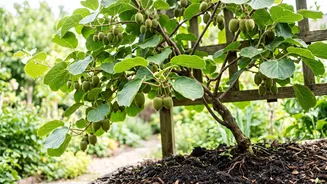
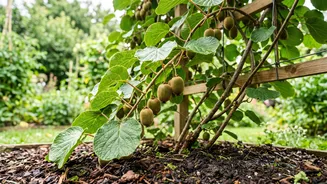
The best time to apply compost to your kiwifruit vines is in early spring, just before the new growth begins. You can also add it as a mulch in the winter. Simply spread a generous layer, about two to three inches thick, around the base of the plant, making sure to keep it a few inches away from the main stem to prevent rot. This layer of compost will act as a mulch, helping to suppress weeds and retain soil moisture during hotter months. As you water the plant, the rich nutrients from the compost will slowly seep into the soil, providing a steady food source for the roots throughout the growing season. An annual application is usually sufficient to keep your vines healthy and productive.