






The Power of Weight-Bearing Movement
Walking is a classic weight-bearing exercise, which simply means your feet and legs support your body’s weight against gravity. This isn't just about building strong bones; it’s crucial for joint health. Each step you take sends signals through your bones and joints,
encouraging them to stay strong and dense. The hip joints, which are among the largest weight-bearing joints, rely on this stimulus to maintain stability. Walking engages the feet, ankles, knees, and hips through a complete range of motion, from the heel strike to the push-off. This movement helps lubricate the joints and maintain their natural function, which is fundamental for overall flexibility. Without regular weight-bearing activity, joints can become stiff and the muscles supporting them can weaken.
How Walking Enhances Flexibility
Flexibility isn't just about being able to touch your toes; it's about your joints moving comfortably through their full, intended range. Walking naturally promotes this. The motion of walking takes your hip and knee joints through flexion and extension. It also encourages subtle rotation in the hips and spine, which helps keep them mobile. This gentle, repetitive movement improves circulation, which brings vital nutrients to your joint cartilage and helps flush out waste products, reducing stiffness. While walking won't produce the same flexibility gains as a dedicated yoga or stretching routine, it is a powerful tool for maintaining functional, day-to-day mobility and preventing the stiffness that comes from being sedentary.
Cycling: The Low-Impact Alternative
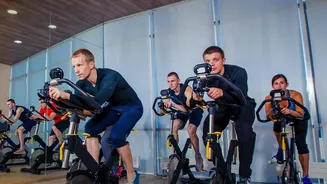
Cycling, whether on a stationary bike or outdoors, is celebrated for being a low-impact exercise. Because the bicycle saddle supports most of your body weight, your knees, hips, and ankles are shielded from the pounding stress associated with high-impact activities. This makes it an excellent choice for individuals with existing joint pain or conditions like osteoarthritis. The primary benefit of cycling for joints comes from strengthening the surrounding muscles, particularly the quadriceps and hamstrings. Stronger muscles act as shock absorbers and stabilisers for the joints, reducing the load they have to bear during daily movements.
Cycling's Effect on Joint Flexibility
The movement in cycling is consistent and controlled, with your joints moving through a predictable, circular path. This continuous motion helps lubricate the joints and can reduce feelings of stiffness. However, this motion occurs in a more limited plane compared to walking. While excellent for strengthening key leg muscles, cycling doesn't engage the same variety of stabilising muscles or encourage the same full_body rotational movement as walking does. For pure flexibility, cycling’s contribution is more about preventing stiffness through movement rather than actively increasing the range of motion. It is also crucial that the bike is fitted properly, as an incorrect setup can lead to strain and actually hinder flexibility.
The Verdict: Which is Better for Flexibility?
When the specific goal is joint flexibility, walking generally has a slight edge due to its weight bearing nature and more varied, functional range of motion. It engages more of the small stabilising muscles and encourages natural movement across multiple joints, including the spine. Cycling is the superior choice for building cardiovascular endurance and strengthening leg muscles with minimal joint stress, making it an ideal activity for those with joint pain or who are recovering from injury. Ultimately, the two activities serve different but complementary purposes. Walking is better for maintaining baseline flexibility and bone density, while cycling is better for building supportive muscle strength without impact. For a balanced routine, combining both can deliver the best of both worlds.