
Vary Your Book Orientation
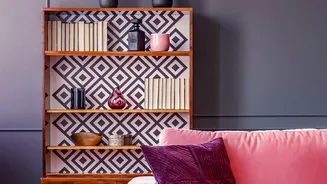
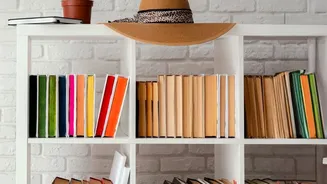
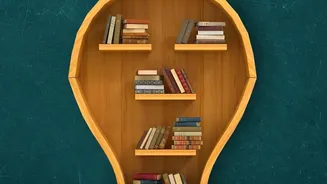
The simplest way to create visual interest is to break the uniform vertical lines of your books. Stacking every book upright can feel monotonous. Instead, create a rhythm by alternating between vertical rows and horizontal stacks. Place a few larger books on their
side to create small platforms. These stacks not only break up the visual pattern but also serve as perfect pedestals for smaller decorative items, instantly making the object feel more intentional. Think of it as creating hills and valleys rather than a flat landscape. Try grouping books in odd numbers, like threes or fives, which tends to look more deliberate and dynamic than even-numbered groups.
Create a Colour Story
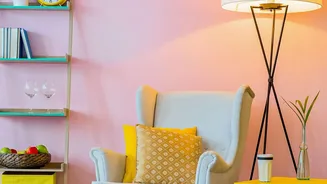
Look at the spines of your books not just as titles, but as blocks of colour. Grouping books by colour can have a massive impact, turning a chaotic collection into an organised, aesthetically pleasing arrangement. You can create a full rainbow effect or stick to a more restrained palette of two or three complementary colours. If you have books with damaged or clashing spines, a clever trick is to simply turn them around so the neutral-coloured pages face outward. This can instantly calm a busy-looking shelf and create a cohesive, textured backdrop.
Shop Your Own Home for Treasures
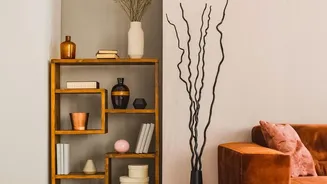
Your best decorative accessories are likely already scattered around your house. Bookshelves are not just for books. Think of them as a cabinet of curiosities that tells your personal story. Pull a beautiful ceramic bowl from the kitchen, a small framed photo from a drawer, a piece of pottery, or a travel souvenir. These personal items break up the monotony of books and inject your personality into the display. Even everyday items like a beautiful rolling pin or decorative boxes can be used. These boxes also offer a stylish way to hide clutter.
Embrace the Power of Negative Space
One of the biggest mistakes in bookshelf styling is the urge to fill every single inch. A packed shelf often reads as cluttered, no matter how beautiful the individual items are. Don't be afraid to leave some empty space. This 'negative space' gives your eyes a place to rest and makes the objects you choose to display stand out even more. Think of it as creating deliberate pauses in a conversation. This approach allows each grouping of books and objects to be appreciated on its own.
Layer for Depth and Dimension
Create a sense of depth by layering items from back to front. Place a small, leaning piece of art or a framed photo towards the back of the shelf. Then, position a taller object like a vase to one side and a shorter, more sculptural item in front of it. Overlapping objects slightly makes the arrangement feel connected and complete. This technique draws the eye inward, making the shelves seem deeper and more thoughtfully curated. You can use a tall vase or candlestick to serve as an anchor and a stylish bookend simultaneously.
Introduce Natural Elements
A touch of greenery can bring any space to life, and your bookshelf is no exception. Tuck a small potted plant, like a succulent or a draping string of pearls, among your books. The organic shapes and fresh colour provide a beautiful contrast to the hard lines of books and shelves. If live plants aren't an option, other natural elements work just as well. Consider a piece of driftwood, a beautiful shell, a collection of pinecones in a bowl, or even faux flowers to add texture and a relaxed, natural feel.