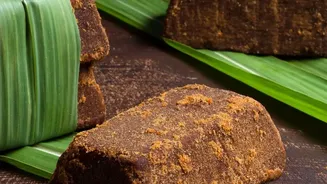



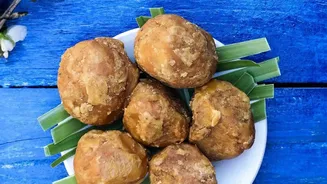
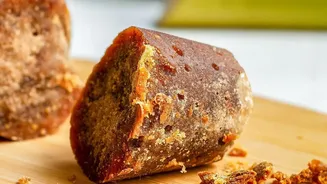
What is Palm Jaggery?
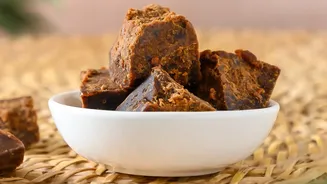
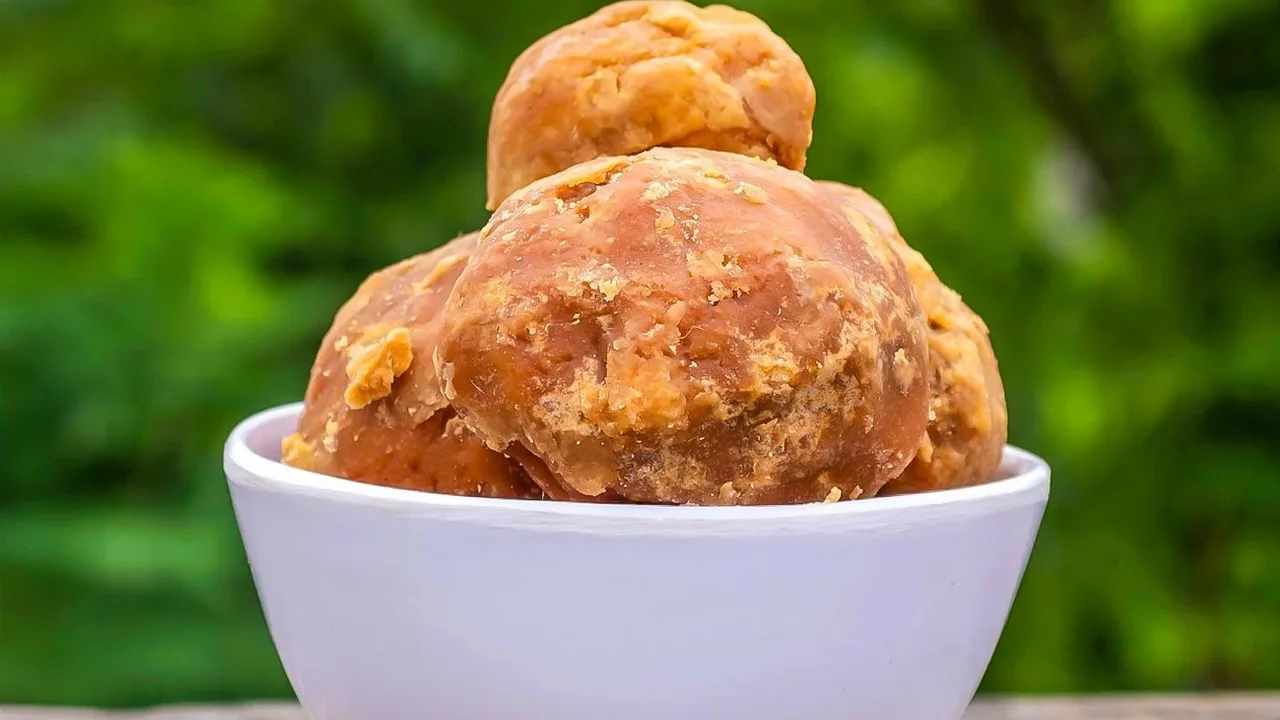
Palm jaggery is an unrefined natural sweetener made from the sap of palm trees, such as the palmyra, date, or coconut palm. The process is traditional and involves minimal intervention: sap is collected, boiled in large vats to reduce it, and then poured
into moulds to solidify. Unlike heavily processed white sugar, which is stripped of all nutrients to become pure sucrose, palm jaggery is not subjected to chemical bleaching or refining. This minimal processing means it retains many of the minerals and vitamins found naturally in the palm sap.
The Nutritional Edge Over Sugar
The primary appeal of palm jaggery lies in its nutritional profile. While refined sugar offers only empty calories, palm jaggery contains trace amounts of essential minerals. It is particularly noted for being a source of iron, potassium, and magnesium. Some studies show that 100 grams of palm jaggery can provide a significant amount of the daily recommended iron intake. Furthermore, palm jaggery has a lower glycemic index (GI) compared to white sugar, typically around 41, whereas white sugar's GI is about 65. This means it releases sugar into the bloodstream more slowly, avoiding the sharp spikes and subsequent crashes associated with refined sugar consumption.
Baking with a Golden-Brown Twist
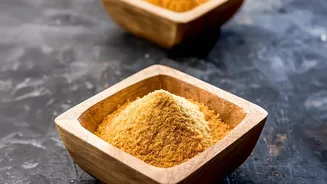
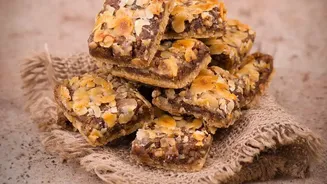
Substituting palm jaggery for sugar in baking is not just a health-conscious choice; it's a culinary one. It imparts a rich, caramel-like or molasses flavour and a beautiful golden-brown colour to cakes and cookies. Since it is a natural humectant, it helps retain moisture, resulting in baked goods that are often softer and denser. However, a direct one-to-one substitution isn't always ideal. As jaggery can be less intensely sweet than refined sugar, a common rule of thumb is to use about 1.25 cups of jaggery for every cup of sugar your recipe calls for. For best results in cakes and muffins, powdered or finely grated palm jaggery is recommended, as it dissolves more easily and prevents a grainy texture. Remember to always strain melted jaggery to remove any potential impurities.
Considerations and Practical Tips
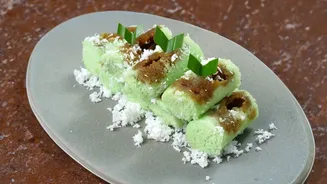
While palm jaggery is a more nutritious alternative, it's important to remember that it is still a form of sugar and contains a similar number of calories. Therefore, moderation remains key. When purchasing, look for organic varieties to ensure they are free from chemicals and additives. One common issue when using jaggery in milk-based desserts like kheer or payasam is the risk of curdling. To prevent this, always add the jaggery after you have turned off the heat, allowing the milk to cool slightly before stirring in the sweetener. For cakes and cookies, you may need to slightly reduce the amount of other liquids in the recipe, as jaggery itself adds moisture.