




A Name Rooted in History
The name 'Hunter's Moon' is steeped in tradition, originating from Native American tribes and later adopted by colonial Americans. The earliest known use of the term dates back to 1710. It follows the Harvest Moon, which is the full moon closest to the autumnal
equinox. Historically, October was a critical time for hunting in preparation for the long winter ahead. After farmers had cleared their fields, the bare landscape made it easier for hunters to spot deer and other game that had fattened up over the summer. The bright moonlight of this particular full moon provided extended hours of light after sunset, aiding in the hunt. Other traditional names for October's moon include the Travel Moon and Dying Grass Moon.
The Science Behind the Sight
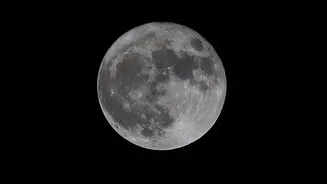
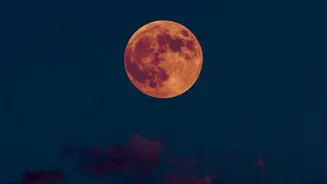
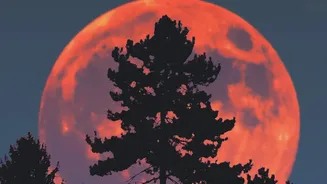
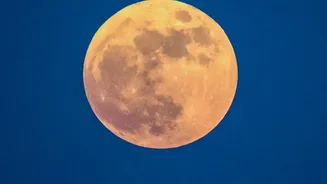
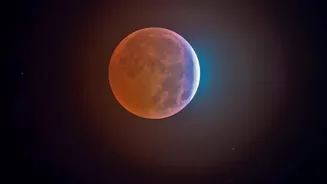
One of the most striking features of the Hunter's Moon is its often dramatic, pumpkin-orange hue as it crests the horizon. This isn't unique to the Hunter's Moon but is more noticeable because of its timing. The color is a physical effect caused by Earth's atmosphere. When the moon is low on the horizon, its light has to travel through a thicker layer of our atmosphere. This dense air scatters shorter-wavelength blue light but allows longer-wavelength red light to pass through to our eyes, giving the moon its warm glow. Many also perceive the moon as being enormous when it's near the horizon. This is a famous trick of the mind known as the 'Moon Illusion'. Your brain compares the moon to objects on the horizon—like trees or buildings—and perceives it as being much larger than it does when it's high in the sky with nothing to compare it to.
An Early Rise and Lingering Glow
The true astronomical magic of the Hunter's Moon (and the Harvest Moon) lies in its rising time. On average, the moon rises about 50 minutes later each night. However, around the time of the autumn equinox, this gap shortens significantly. For several consecutive evenings, the moon rises only about 30 minutes later. This happens because the Moon's orbital path makes a narrower angle with the evening horizon during the autumn in the Northern Hemisphere. The result is a series of nights where a bright, full-looking moon appears shortly after sunset, effectively minimizing the period of darkness between dusk and moonrise. This reliable stretch of evening twilight is the very phenomenon that gave the moon its practical purpose for hunters of the past.
A Photographer's Dream
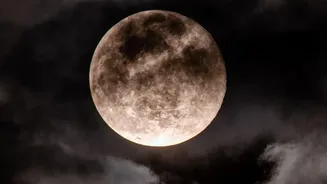
The combination of these factors makes the Hunter's Moon a favorite subject for photographers. The vibrant orange color and the Moon Illusion provide a stunning visual that is perfect for landscape shots. To capture a great photo, you don't need highly specialized equipment; even a smartphone camera can produce impressive results. For best results, use a tripod or stabilize your phone to avoid blur. Instead of just pointing at the moon in a dark sky, compose your shot to include foreground elements like a cityscape, a treeline, or a mountain range. This provides scale and context, enhancing the illusion of size. It's also crucial to manually focus on the moon and lower the exposure or brightness. This prevents the lunar disk from looking like a featureless white blob and brings out its color and surface details.
Your 2026 Viewing Guide
In 2026, the Hunter's Moon will reach its peak illumination just after midnight on Monday, October 26. However, the best time for viewing and photography will be on the evening of Sunday, October 25, when you can watch the full moon rise in the east around the time the sun sets in the west. Find a location with a clear, unobstructed view of the eastern horizon. The moon will appear full and bright for a few nights around its peak, giving you multiple opportunities to witness the spectacle. No telescope is required to enjoy the show—just clear skies and a moment to look up.