



The Annual Agricultural Cycle
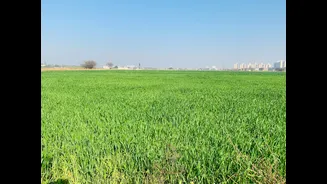
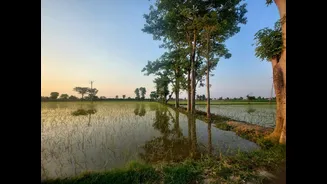
Each year, typically in October and November, farmers across Punjab, Haryana, and western Uttar Pradesh face a tight deadline. After harvesting paddy (rice), they have a very short window to clear their fields to sow the next winter crop, primarily wheat.
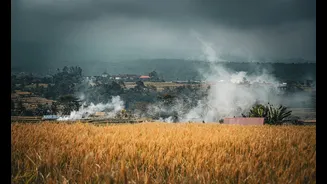
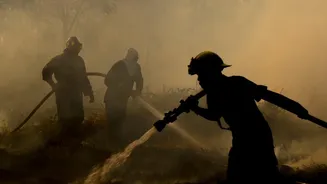
Burning the leftover crop stubble is the fastest and cheapest method to prepare the land. This practice, known as stubble or crop residue burning, involves setting fire to millions of tonnes of agricultural waste, releasing vast plumes of smoke into the atmosphere. The switch to mechanised harvesting has also been linked to an increase in fires, as combines leave more residue behind.
A Perfect Storm of Weather
The timing of this burning season coincides perfectly with a major shift in weather patterns following the monsoon's withdrawal. During the monsoon, rain washes pollutants from the air, and strong winds help disperse any that remain. However, the post-monsoon and early winter period brings cooler temperatures and much calmer wind conditions. This stagnant atmosphere is the first key ingredient in creating a pollution crisis. Without strong winds to blow it away, the smoke from farm fires begins to accumulate over the Indo-Gangetic Plain.
The Science of a Pollution Lid
The most critical meteorological factor is a phenomenon called temperature inversion. Normally, the air closer to the ground is warmer, and it rises, allowing pollutants to disperse into the upper atmosphere. In winter, the opposite often happens. The ground cools rapidly at night, cooling the air just above it. This creates a layer of cool, dense air trapped beneath a layer of warmer air. This inversion acts like a lid, preventing the vertical mixing of air and trapping all the pollutants—from farm fires, vehicle emissions, and industry—close to the ground where people breathe. This effect is magnified as the pollution itself, particularly aerosols like soot and black carbon, can contribute to the warming of the lower atmosphere, strengthening the inversion in a vicious cycle.
The Pollutant Highway to Delhi
Geography and wind direction complete the recipe for disaster. During this season, the prevailing winds tend to blow from the northwest, directly from the primary farm fire regions of Punjab and Haryana towards Delhi and the wider National Capital Region (NCR). This creates a 'pollutant highway', transporting the dense smoke over hundreds of kilometres. The smoke doesn't just travel; it accumulates more pollutants along the way, arriving in Delhi as a thick, concentrated smog, often overnight. The entire Indo-Gangetic Plain is geographically landlocked to the north by the Himalayas, which can prevent polluted air from escaping, creating a 'valley effect' that further traps the smog.
The Toxic Chemical Cocktail
The smoke from stubble burning is far from harmless. It is a toxic mix of particulate matter (PM2.5 and PM10), carbon monoxide (CO), nitrogen oxides (NOx), and carcinogenic compounds like polycyclic aromatic hydrocarbons and benzene. Once trapped by the temperature inversion, sunlight triggers chemical reactions between these pollutants, forming secondary pollutants like ground-level ozone. This complex mixture of primary and secondary pollutants creates the dense, brownish smog that reduces visibility to just a few hundred metres and poses severe health risks. Studies have shown that crop burning can be responsible for a significant share of Delhi's particulate pollution during peak episodes, contributing to respiratory illnesses, heart conditions, and premature deaths.