
The Timeless Chevron
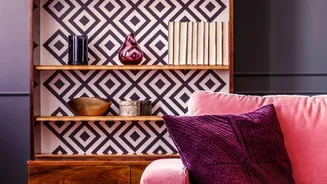
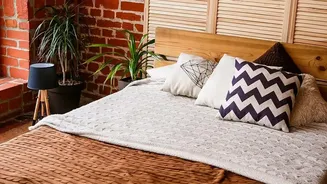
The chevron pattern, with its continuous V-shape, brings a sense of energy and movement to a room. A true classic, this zigzag design can be bold and vibrant or subtle and sophisticated, depending on your colour choices. To create it, you'll need to do
a bit of measuring. Start by finding the centre of your wall and use a level to mark your desired peak and valley points for the 'V' shapes. High-quality painter's tape is your best friend here; apply it carefully along your pencil guides to create the stripes. A key tip to prevent paint from bleeding is to press the tape edges down firmly. For extra-crisp lines, you can paint over the tape's edge with your base wall colour before applying the chevron colour. This seals the tape and stops the new colour from seeping underneath.
The Elegant Herringbone
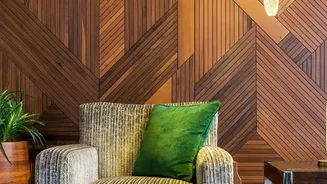
Often confused with chevron, the herringbone pattern offers a more complex and textural look. Instead of a continuous zigzag, it consists of staggered rectangular blocks meeting at a right angle. This creates a stylish, broken-zigzag effect that feels both traditional and modern. The key to a successful herringbone wall is careful planning and measuring. Start by establishing a central vertical line to keep your pattern symmetrical. From there, you'll map out your angled lines. Many DIYers create a small cardboard or paper template to ensure each rectangle is consistent. This pattern requires patience, especially during the taping phase, but the result is a sophisticated and dynamic wall that adds architectural interest to any space.
The Playful Honeycomb
For a touch of modern whimsy, the honeycomb or hexagon pattern is an unbeatable choice. These six-sided shapes fit together perfectly, creating a fun, organic, and visually interesting wall. This design is highly customisable: you can create a full wall of hexagons, a scattered cluster, or an ombre effect with varying shades. The easiest way to tackle this is to create a hexagon stencil out of cardboard. Find the centre of your wall and trace your first stencil, using a level to keep it straight. From there, you can continue tracing and taping off your pattern. Don't be afraid to mix and match colours within the shapes to create a truly one-of-a-kind piece of wall art.
The Versatile Triangle
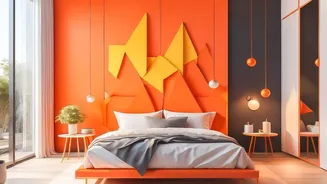
Triangles are one of the most versatile shapes for a geometric accent wall. They can be arranged symmetrically for a calm, ordered look or scattered randomly for a more playful and energetic vibe. You can create patterns of uniform, repeating triangles or mix different sizes and orientations for an abstract mountain-scape effect. The process starts with painter's tape. You can begin by running long strips of tape across the wall at various angles, then adding smaller pieces to intersect them and form triangles. Once your design is taped out, you can plan your colour placement. Some people use sticky notes to decide which colour goes in which triangle before committing paint to the wall.
The Minimalist Colour Block
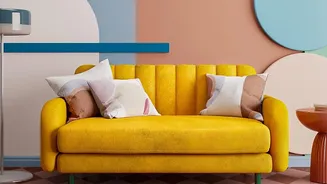
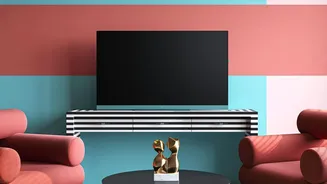
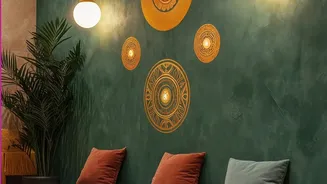
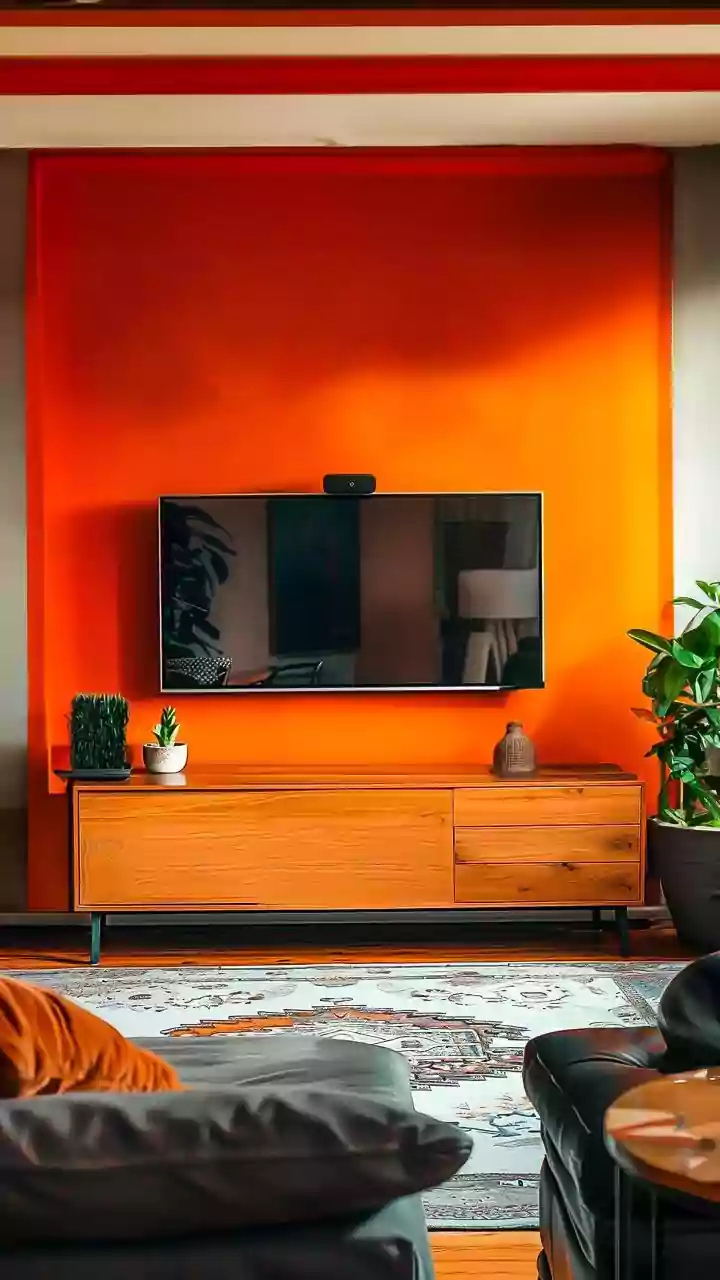
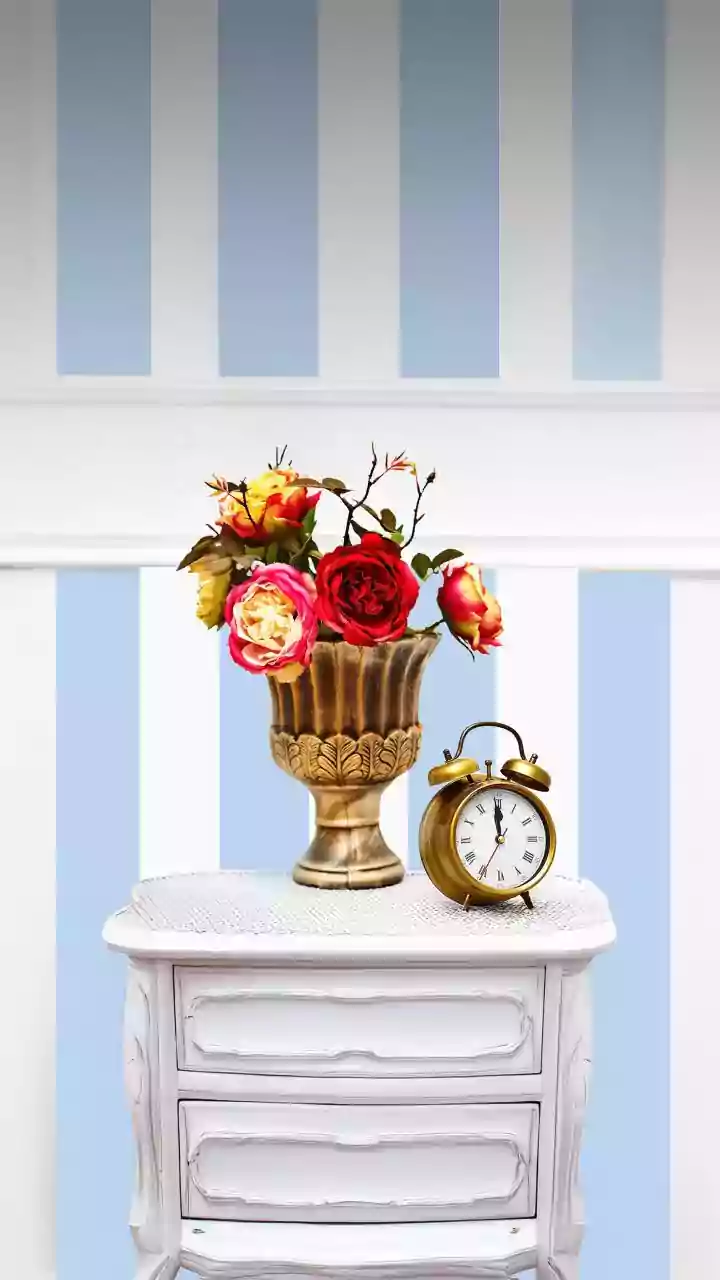
If intricate patterns feel too busy, minimalist colour blocking is an effortlessly chic alternative. This technique involves painting large, simple geometric shapes—like rectangles, arches, or even just dividing the wall into two or three horizontal or vertical stripes. Colour blocking is perfect for zoning a space, such as creating a visual 'headboard' behind a bed or defining a dining nook in an open-plan room. You can use bold, contrasting colours for a dramatic effect or stick to a monochromatic scheme with different tones of the same colour for subtle elegance. The key is sharp, clean lines, which are easily achieved with a level and good quality painter's tape.