



The Core Engine: Scientist and Engineer Roles
The primary pathway into ISRO for technical aspirants is the Scientist/Engineer 'SC' position. This is the bedrock of the organisation's technical prowess, responsible for designing, developing, and testing the complex systems that power India's space
programme. Recruitments are regularly conducted by the ISRO Centralised Recruitment Board (ICRB). The most sought-after disciplines are typically Mechanical, Electronics & Communication, and Computer Science engineering. However, ISRO also hires for specialised roles in Civil, Electrical, and Architecture to build and maintain its world-class ground infrastructure. Regardless of the specific role, the job profile involves deep research, hands-on development, and rigorous testing to ensure every component is space-ready.
Essential Academic Qualifications
A strong academic record is non-negotiable. For most Scientist/Engineer 'SC' positions, the minimum requirement is a B.E./B.Tech degree in a relevant discipline with a first-class distinction, which usually translates to an aggregate of at least 65% marks or a CGPA of 6.84 on a 10-point scale. These qualifications must be from a recognised university. For more advanced research-oriented roles, such as Scientist/Engineer-SD, a PhD is often mandatory. Similarly, positions may require a Master's degree (M.E./M.Tech) with a high score. ISRO's recruitment notifications are highly specific, so applicants must ensure they meet the exact criteria listed for their chosen discipline.
Navigating the Selection Process
Getting into ISRO is a multi-stage process designed to identify the best talent. For many engineering roles, the first step is shortlisting based on a valid GATE (Graduate Aptitude Test in Engineering) score from the current or previous year. Following this, shortlisted candidates are called for a rigorous technical interview. Alternatively, ISRO conducts its own written test through the ICRB. This test consists of objective-type questions focused on the candidate's specific technical discipline. Those who clear the written test are then invited for an interview, which is purely technical and conducted by a panel of senior scientists. This final stage assesses deep subject knowledge, problem-solving skills, and overall suitability for a research and development environment.
Beyond the Degree: The ISRO Mindset
While qualifications get your foot in the door, it's the mindset that determines success at ISRO. The organisation thrives on a culture of innovation, problem-solving, and resilience. Employees are expected to be self-driven learners who can think critically and work collaboratively. The work environment is often described as open and respectful, where even junior engineers are encouraged to share their ideas. With tight deadlines, especially around launches, the work can be demanding, requiring long hours and unwavering dedication. It's a place for those who are not just looking for a job, but are passionate about contributing to a larger national mission and are driven by the challenge of innovation.
Skills for Future Missions
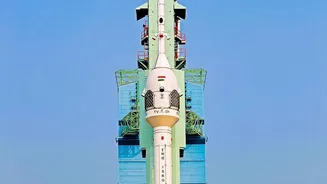
ISRO's hiring is directly influenced by its future projects. With an ambitious roadmap that includes the Gaganyaan human spaceflight programme, the Chandrayaan-4 lunar sample return mission, and a Venus orbiter, the demand for cutting-edge skills is high. Aspiring candidates should look at expertise in areas like robotics, artificial intelligence and machine learning, cryogenics, control systems, and advanced materials. The expansion of India's space sector, including private participation, also means a growing need for professionals who can manage complex projects and collaborate across different domains. Showing a keen interest and having project work aligned with these future goals can give an applicant a significant edge.
Opportunities Beyond Engineering
While science and engineering roles are the most prominent, ISRO is a large organisation with a diverse range of needs. There are also opportunities for those with non-technical backgrounds. The administrative category includes roles like Accounts Officer, Administrative Officer, and Assistants. Furthermore, there are positions for technicians who hold a Diploma or an ITI/NTC/NAC qualification, forming the crucial support backbone for all technical activities. These roles have their own distinct recruitment processes, often managed by individual ISRO centres or units, and provide another vital entry point for those wishing to be part of India's space journey.