








Beyond Chronological Age
We all know our chronological age, the number of years we've been alive. But scientists are increasingly focused on 'biological age', a measure that reflects our health at a cellular and tissue level. It’s why some people seem youthful and energetic in their
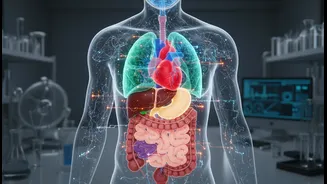
60s, while others feel older than their years at 40. Now, researchers are taking this concept a step further, discovering that our individual organs don't age in unison. Your kidneys, liver, brain, and heart each follow their own unique aging timeline, influenced by a mix of genetics, lifestyle, and environment. One recent study found that nearly one in five healthy adults over 50 has at least one organ aging at a significantly accelerated rate.
How a Blood Test Reveals Your Organs' Age
The breakthrough lies in a simple blood test. Scientists have developed a way to determine the biological age of 11 different organ systems—including the brain, heart, lungs, and kidneys—by analyzing proteins in the blood. Led by researchers at institutions like Stanford University, the method uses machine learning to analyze the levels of thousands of proteins. The algorithm identifies protein patterns that are specific to certain organs. When an organ is aging faster than normal, its unique protein signature in the blood changes, allowing scientists to calculate an 'age gap'—the difference between your organ's biological age and your actual chronological age.
A Powerful Tool for Predicting Disease
Knowing an organ's biological age is more than a curiosity; it's a powerful predictor of future health risks. Studies have shown that when a specific organ is biologically 'older', the risk of developing diseases related to that organ increases dramatically. For instance, individuals with accelerated heart aging were found to have a 250% increased risk of heart failure, even if they showed no symptoms of disease at the time. An older brain was a strong predictor of developing Alzheimer's disease, while aged kidneys were linked to a higher risk of hypertension and diabetes. This research allows doctors to move from a reactive 'sick care' model to proactive healthcare, identifying at-risk individuals years before symptoms appear.
The Future of Personalised Screening
This technology could transform medical screening. Instead of one-size-fits-all recommendations based on chronological age, your doctor might one day order an 'organ age' panel. If the test reveals your lungs are aging prematurely, it could prompt earlier screening for respiratory conditions like COPD. If your heart shows accelerated aging, you and your doctor could implement targeted lifestyle changes or therapies to mitigate the risk of future cardiovascular events. The goal is to intervene before an organ becomes diseased. Researchers believe this could lead to human trials testing interventions, from lifestyle adjustments to new medications, aimed at reversing the biological age of specific organs.
What's Next on the Horizon?
While the science is incredibly promising, these tests are not yet available in your local clinic. Researchers need to validate these findings in larger, more diverse populations to ensure the 'clocks' are accurate for everyone. Scientists are also working to refine the tests, potentially focusing on a smaller panel of key proteins to make them more cost-effective and accessible. Some researchers estimate a version of this test could be ready for clinical use within the next few years. This innovative approach signals a fundamental shift in medicine, focusing on preserving organ health throughout life rather than simply treating disease after it strikes.