




More Than Just Poses
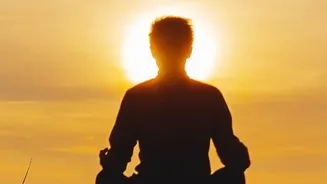
The earliest whispers of yoga don't mention a single physical posture. They are found in India's most ancient sacred texts, the Vedas, dating back to between 1500 and 500 BCE. Here, yoga was not about touching your toes, but about yoking or uniting the self
with the divine. It referred to a collection of rituals, hymns, and ascetic practices aimed at achieving spiritual enlightenment. Later texts like the Upanishads and the Bhagavad Gita expanded on this, outlining different paths to liberation: Jnana yoga (the path of knowledge), Bhakti yoga (the path of devotion), and Karma yoga (the path of selfless action). These early forms were primarily meditative and philosophical, a rigorous discipline for the mind and spirit passed down orally from teacher to student.
The Blueprint for the Mind
A pivotal moment in yoga's history came around 400 CE with the sage Patanjali's Yoga Sutras. This text codified the practice into a clear, systematic framework known as the eight-limbed path. These limbs are ethical principles (Yama and Niyama), physical postures (Asana), breath control (Pranayama), withdrawal of the senses (Pratyahara), concentration (Dharana), meditation (Dhyana), and finally, a state of enlightenment (Samadhi). It’s crucial to note that asana, the physical postures so central to modern yoga, is just one of these eight limbs. For Patanjali, the primary goal was not physical fitness but the stilling of the mind to achieve a state of pure awareness. The Sutras provided a philosophical blueprint that transformed yoga into a path accessible to a wider audience beyond just priests and hermits.
A Journey to the West
Yoga's journey from an Indian spiritual tradition to a global practice began in earnest in the late 19th century. In 1893, Swami Vivekananda made a powerful impression at the Parliament of Religions in Chicago, introducing the philosophical concepts of Vedanta and yoga to the West. He focused on the spiritual and meditative paths, largely omitting the physical asanas, which were not widely practiced by spiritual leaders at the time. Following in his footsteps, other gurus like Paramahansa Yogananda arrived, further popularizing the spiritual side of the practice. It was not until the mid-20th century that the physical practice began to take hold, thanks to teachers like B.K.S. Iyengar.
The Father of Modern Yoga
B.K.S. Iyengar, often called one of the fathers of modern yoga, was instrumental in popularizing the asana-focused practice we know today. A student of the legendary T. Krishnamacharya, Iyengar developed a unique style that emphasized precise physical alignment and the innovative use of props like blocks and straps to make postures accessible to everyone, regardless of age or ability. His 1966 book, 'Light on Yoga', became an international bestseller, serving as an encyclopedic guide to asanas that many have called the 'bible of modern yoga'. By focusing on the tangible physical practice and its health benefits, Iyengar and his contemporaries created a version of yoga that resonated deeply with Western audiences, setting the stage for its explosion in popularity.
Wellness, Commercialization, and Connection
Today, yoga is a multi-billion dollar global industry, with millions of practitioners. This massive popularity has led to a focus on yoga as a form of physical exercise and stress relief, often disconnected from its spiritual and philosophical roots. This shift has sparked important conversations about cultural appropriation, where the commercialization of yoga strips away its context and respect for its origins. While some worry that its true essence is lost in a sea of yoga pants and expensive studio memberships, others argue that even a purely physical practice offers genuine benefits. The popularization of yoga has, paradoxically, also increased awareness of Indian culture globally. The key lies in approaching the practice with respect and an eagerness to understand its deep heritage.