



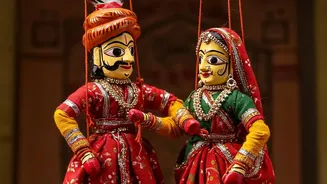
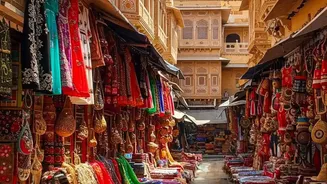
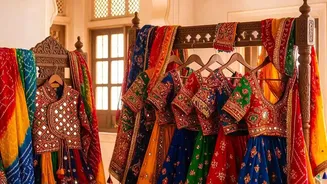
Day 1: Arrival in Jaipur, the Pink City
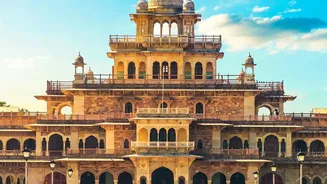
Your craft-focused adventure begins in Jaipur, Rajasthan’s bustling capital. After settling in, immerse yourself in the city's artistic soul. Start with a visit to a blue pottery workshop. This Turco-Persian art form, unique to Jaipur, uses ground quartz
stone instead of traditional clay, resulting in brilliant blue and white ceramics. Watch as artisans skillfully shape and hand-paint delicate floral and geometric motifs on everything from vases to decorative tiles. In the evening, wander through Maniharon ka Rasta (the street of bangle makers) in the old city. Here, you'll find generations of artisans crafting colourful lac bangles. Witness them heating the raw resin, rolling it, and embedding it with sparkling stones and mirrors, a craft that has been a part of Jaipur’s identity since its founding.
Day 2: The Block-Printing Hubs of Sanganer and Bagru
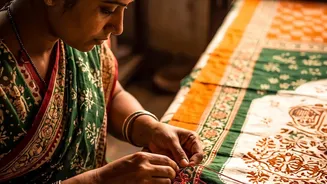
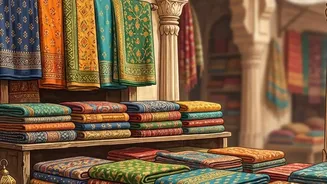
Dedicate your second day to the world-renowned block-printing traditions of two nearby villages. First, head to Sanganer, located just south of Jaipur. Sanganer is famous for its fine, intricate floral patterns printed on white or off-white backgrounds using chemical-free dyes. The process is direct and precise, creating crisp lines perfect for delicate textiles. Next, travel to Bagru, a village to the west of Jaipur, which offers a starkly different style. Bagru printing is an older, earthier tradition known for its mud-resist 'dabu' technique and natural dyes like indigo and madder. The motifs here are bolder and more geometric, printed on cream or indigo backgrounds. Visiting both villages provides a fascinating contrast between two distinct, GI-tagged textile arts that originate from the same region.
Day 3: Journey to Jodhpur, the Blue City
Today involves a scenic road trip from Jaipur to Jodhpur. The journey takes approximately six hours by car, offering glimpses of the changing Rajasthani landscape. After arriving in Jodhpur and checking into your hotel, spend the late afternoon and evening exploring the area around the Ghanta Ghar (Clock Tower) and the bustling Sardar Market. This is your first introduction to the crafts of the Marwar region. Jodhpur is a major centre for leatherwork, and you'll find numerous shops selling beautifully handcrafted 'mojari' or 'jutti' footwear. These traditional leather shoes are known for their comfort and intricate embroidery. The market is also a great place to find spices, textiles, and other local goods that set the stage for a deeper exploration of the city's crafts.
Day 4: Jodhpur’s Forts and Famed Crafts
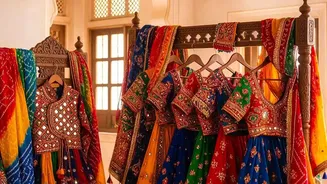
Begin your day at the magnificent Mehrangarh Fort, which towers over the blue-hued city. After soaking in the history and the views, delve into Jodhpur's specific craft scene. The city is famous for more than just leather mojaris. It's a hub for antique furniture and woodwork, with many workshops creating intricate carvings. Another key textile craft here is 'bandhani' or tie-and-dye, which you can find in the old city's markets. Watching artisans meticulously tie tiny knots in fabric before dyeing it to create stunning patterns is a mesmerising experience. Explore the narrow lanes of the old city where you can find small, family-run shops that have been perfecting these crafts for generations.
Day 5: Rural Weaving and Departure
On your final day, take a short excursion to the outskirts of Jodhpur to visit the villages of the Bishnoi community and the nearby weaving hub of Salawas. Salawas is renowned for its 'dhurrie' rugs, which are flat-woven cotton carpets known for their durability and geometric patterns. You can visit weavers in their homes and watch them work on traditional pit looms, a practice passed down through families for centuries. Many artisans in this area, including the environmentally conscious Bishnoi community, use natural fibres and dyes. The Prajapat weaving community in Salawas has mastered the 'panja' dhurrie, using a metal comb-like tool to pack the weft threads tightly. After this immersive rural craft experience, you can proceed to Jodhpur's airport or railway station for your departure, carrying with you a deep appreciation for Rajasthan's living artistic heritage.