

The Persistent Threat to Indian Farms
Across India, from the wheat fields of Punjab to the cotton plantations of Maharashtra, farmers contend with a relentless and often invisible enemy: plant diseases and pests. The United Nations estimates that up to 40% of global crop yields are lost each
year to these threats. In India alone, this translates to devastating economic losses, with some estimates suggesting 15-25% of the total crop production is destroyed annually. For an individual smallholder farmer, a sudden outbreak of rust, blight, or leaf curl virus can mean the difference between a profitable harvest and crippling debt. Traditionally, identifying these diseases required either years of experience or waiting for advice from a limited number of agricultural extension officers, a delay that often allowed the problem to become irreversible.
A Diagnosis in Your Pocket
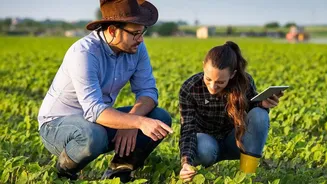
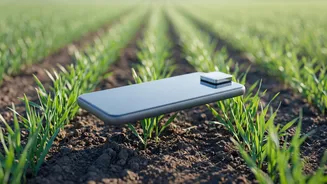
The game-changer is the fusion of artificial intelligence with the widespread availability of low-cost smartphones. A new generation of mobile applications is empowering farmers to become their own crop doctors. The process is remarkably simple: a farmer notices an unusual spot on a leaf, takes a photo using an app, and within seconds, an AI-driven diagnosis is delivered. Apps like Plantix, one of the most widely used in India, have been downloaded millions of times and serve a vast community of farmers in multiple local languages, including Marathi. This technology effectively bridges a critical information gap, providing instant, actionable advice that was previously hard to access.
How AI Sees What Farmers Can’t
At the heart of these apps is a technology called computer vision, a field of AI that trains computers to interpret and understand the visual world. Developers feed these systems hundreds of thousands, sometimes millions, of images of diseased and healthy plants. The AI learns to identify the subtle patterns, colours, and textures characteristic of specific diseases like soybean rust, cotton boll rot, or tomato early blight. When a farmer uploads a new image, the AI compares it against this vast database to find a match and suggest a diagnosis with a reported accuracy rate that can reach over 85% for common diseases. While accuracy can vary between lab conditions and the complexities of a real field, these tools provide a powerful first line of defense.
Real Impact in Punjab and Maharashtra
In major agricultural states like Punjab and Maharashtra, these tools are already making a tangible difference. The Punjab government has been actively exploring the use of AI to modernize its agricultural sector, aiming to improve farm productivity and sustainability with support from institutions like IIT Ropar. For farmers growing key crops like wheat and rice, early AI-powered detection of fungal diseases allows for targeted pesticide application, reducing input costs and preventing widespread damage. Similarly, in Maharashtra, where crops like cotton, soybean, and onion are vital, platforms like MahaAgri.AI are focusing on providing AI-based solutions to detect common ailments like leaf curl virus and purple blotch. By diagnosing problems early, farmers can save their harvests and reduce their reliance on broad-spectrum chemical treatments, which benefits both their finances and the environment.
More Than Just an App
The ecosystem growing around these diagnostic tools is just as important as the technology itself. Many apps now connect farmers to a larger network of support. This can include localized weather forecasts, advice on soil health and irrigation, and even access to a marketplace for agricultural inputs like seeds and fertilisers. Some platforms are building communities where farmers can share knowledge and advice with each other. By integrating diagnosis with treatment recommendations and access to supplies, these digital tools are becoming comprehensive farm management platforms. This democratizes access to information, helping to level the playing field for millions of smallholder farmers across India.