






The Annual Pothole Pandemic
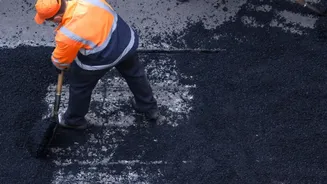
Every year, as the rains arrive, Indian cities brace for a secondary epidemic: the rapid deterioration of their road networks. Potholes blossom overnight, turning daily commutes into obstacle courses. These craters are more than just an inconvenience;
they cause vehicle damage, lead to traffic congestion, and tragically, result in serious accidents. The conventional method of repair is a costly and often temporary fix. Patchwork done during breaks in the rain is frequently washed away, leading to a frustrating cycle of repair and decay that costs municipalities crores of rupees and endless public frustration. This relentless problem has pushed engineers and scientists to look for a more durable, sustainable, and smarter solution.
A Living Concrete Solution
Enter 'bio-concrete' or 'self-healing cement', an innovative material that has moved from research labs to real-world trials on Indian streets. The concept sounds like science fiction: a concrete mix that can automatically repair its own cracks. The key ingredient is a selection of hardy bacteria, typically from the Bacillus genus, which are known for their ability to thrive in the highly alkaline environment of concrete. These bacteria are embedded within the concrete mix in a dormant state, waiting for the right trigger to spring into action and begin their construction work.
How Bacteria Become Builders
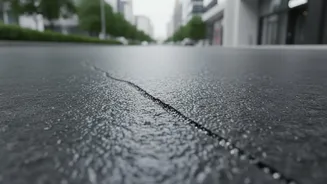
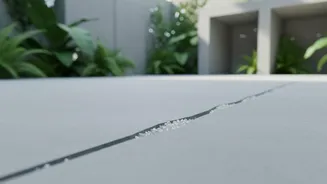
The process is a clever marriage of biology and civil engineering. The bacteria are added to the concrete mix as spores, often encapsulated in tiny, protective clay pellets along with a food source like calcium lactate. As long as the concrete remains solid and intact, the bacteria do nothing. However, when a crack forms due to stress or water ingress, the magic begins. Rainwater, the very cause of the problem in monsoons, seeps into the crack and awakens the dormant bacteria. The microbes begin to feed on the calcium lactate and, through their metabolic process, precipitate calcium carbonate—essentially, limestone. This limestone fills the fissure, sealing the crack from within and preventing water from causing further damage or corroding steel reinforcements. The process is entirely autonomous, working precisely where and when it's needed most.
From Lab to City Streets
This promising technology is no longer confined to academic papers. Following initial research at institutions like IIT Madras, pilot projects have begun. Building on earlier trials in cities like Kolkata, a new test phase is reportedly underway on a stretch of road in a major metropolitan area, testing the material's performance under the heavy traffic and intense rainfall of the Indian monsoon. Researchers are closely monitoring how effectively the bio-concrete heals the micro-cracks that eventually grow into menacing potholes. The aim is to validate its durability and assess its performance not in a controlled lab environment, but in the unpredictable and chaotic conditions of a live city road.
The Road Ahead: Cost and Scalability
Despite its immense potential, several hurdles remain before bacterial concrete becomes a standard material for road construction. The primary challenge is cost; initial production can be significantly more expensive than conventional concrete due to the price of bacterial cultures and nutrients. However, proponents argue that this higher upfront investment would be more than offset by the massive long-term savings in maintenance and repair costs. Researchers are actively working on finding cheaper nutrient sources to make the technology more economical. The success of current trials will be crucial in determining if this self-healing solution can be scaled up to pave a future with smoother, safer, and longer-lasting roads across the country.