





The Broken Promise of Detection Scores
The idea was simple and seductive: upload an image, and an AI tool would analyze the pixels for tell-tale signs of generation—unnatural textures, statistical anomalies, or hidden artifacts—and return a verdict. Websites and software offering a “95% AI-generated”
or “Likely Human” score became common. The problem is, this created a false sense of security. As generative AI models become exponentially more sophisticated, the artifacts detectors hunt for are disappearing. Recent studies have shown that even the best detectors can be wildly inaccurate, losing a significant amount of their accuracy when faced with images from the newest AI models or content that has been lightly edited or re-compressed, as often happens on social media.
Why the Scores Are So Misleading
AI detectors don't actually know if an image is “real.” They are classifiers, trained on vast datasets, that make a statistical guess based on whether the image's patterns resemble AI-generated content in their training data. This leads to two major problems. First, false negatives: a generated image, especially from a new model, can easily slip by. Second, and perhaps more damaging, are false positives. Authentic photos that are heavily processed, shot in a studio with smooth lighting, or have had noise removed with modern software are frequently mislabeled as AI-generated. This makes the score less of a definitive verdict and more of an educated, but often wrong, guess. For journalists, researchers, or businesses, acting on such a score alone is a risky proposition.
Enter Provenance: An Image's 'Birth Certificate'
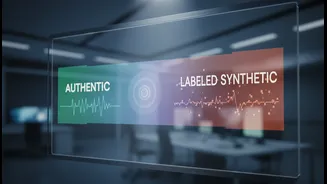
If pixel analysis is unreliable, what’s the alternative? The answer lies in provenance. Provenance is the documented history of a piece of content. It answers the questions: Who created this? When? With what tool? How has it been modified? Instead of guessing from pixels, provenance verification checks for embedded, verifiable evidence within the file itself. This is increasingly being done through a standard called C2PA (Coalition for Content Provenance and Authenticity), which major tech companies like Adobe, Microsoft, and Google are adopting. When a C2PA-compliant tool generates or edits an image, it can embed a secure, cryptographic record—called a Content Credential—that acts like a digital birth certificate and passport, detailing the image’s origin.
How to Prioritize Provenance Checks
Verifying an image now starts with looking for this provenance data, not just running it through a detector. You can upload an image to a verification site that checks for C2PA manifests. These credentials can confirm if an image was created by a specific AI model or captured by a real camera. However, this system isn't foolproof. This metadata can be deliberately stripped from a file. The absence of a Content Credential doesn't automatically mean an image is fake; it just means its history is undocumented. Therefore, the presence of verified provenance is a strong positive signal, while its absence means you have to dig deeper using other methods.
Source Checking: The Human Element
When provenance data is missing, the next critical step is source checking. This involves investigating the person or account that shared the image. Is the source credible? Do they have a history of sharing reliable information, or are they a new, anonymous account? A key technique is performing a reverse image search. This can show you where else the image has appeared online and may lead you back to the original creator or context. Often, an image presented as breaking news is actually from an unrelated event years ago. Combining these human-led critical thinking skills with the available technical tools provides a much more robust defense against misinformation than relying on any single detection score.