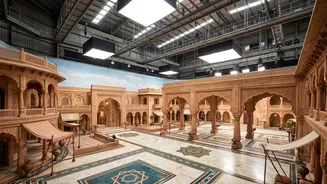







The Foundation: Film City and Studio Spaces
At the heart of Bollywood's physical infrastructure is the iconic Dadasaheb Phalke Chitranagari, more famously known as Film City. Established by the Maharashtra government in 1977 and spread across more than 500 acres in Goregaon, it is an integrated
studio complex designed to be a one-stop shop for filmmakers. It offers a staggering variety of permanent sets, including temples, prisons, courtrooms, and villages, alongside around 16 sound stages and 42 outdoor locations. This allows productions to seamlessly move between different environments without leaving the complex, saving crucial time and money. Beyond Film City, Mumbai is dotted with numerous other legendary and modern studios like Yash Raj Studios and SJ Studios, which provide world-class sound stages, advanced equipment, and versatile sets for everything from films to web series and advertisements. This concentration of high-quality production spaces makes Mumbai the undisputed centre of film production in India.
The Human Element: A Deep Talent Pool
Infrastructure isn't just about buildings and equipment; it's also about people. Mumbai's greatest asset is its unparalleled concentration of talent. For over a century, the city has been a magnet for aspiring actors, directors, writers, musicians, and technicians from across the country. This creates a dense and dynamic ecosystem where collaboration and opportunity thrive. Major production houses like Dharma Productions, Red Chillies Entertainment, and Balaji Telefilms are headquartered here, constantly developing new projects. This ecosystem is further supported by a network of acting schools, casting agencies, and specialised technicians for every craft, from cinematography to production design. The sheer availability of skilled professionals means that a filmmaker in Mumbai can assemble a top-tier crew with relative ease, a crucial advantage in a deadline-driven industry.
The Finishing Touch: Post-Production Prowess
What gives modern Bollywood films their slick, polished feel is the city’s robust post-production sector. Mumbai is home to hundreds of facilities specialising in editing, sound design, music recording, and visual effects (VFX). Companies like Red Chillies VFX have gained global recognition, bringing Hollywood-level computer-generated imagery to Indian cinema. This advanced technological infrastructure allows filmmakers to push creative boundaries, creating visually stunning spectacles that captivate audiences worldwide. The city boasts a vast number of recording studios and post-production houses, ensuring that every aspect of a film, from the sound mix to the final colour grading, is handled by experts. This seamless integration of production and post-production within the same urban area streamlines the entire filmmaking process.
The Support System: Unions and Government
Beneath the surface of the glitz and glamour lies a complex web of organisations that provide structure and stability. The Federation of Western Indian Cine Employees (FWICE) is a powerful umbrella body for various craft associations, historically playing a crucial role in safeguarding workers' rights regarding wages, working hours, and on-set conditions. With over half a million members, these unions represent the backbone of the industry's workforce, from lighting technicians to junior artists. Furthermore, the Maharashtra government actively supports the industry. Initiatives have included financial assistance and tax exemptions, particularly for Marathi cinema, and a single-window clearance system to simplify shooting permissions. Recently, the government has announced plans for a massive ₹3,000-crore upgrade of Film City and the development of new film hubs across the state to ensure Maharashtra remains India's premier filming destination.